
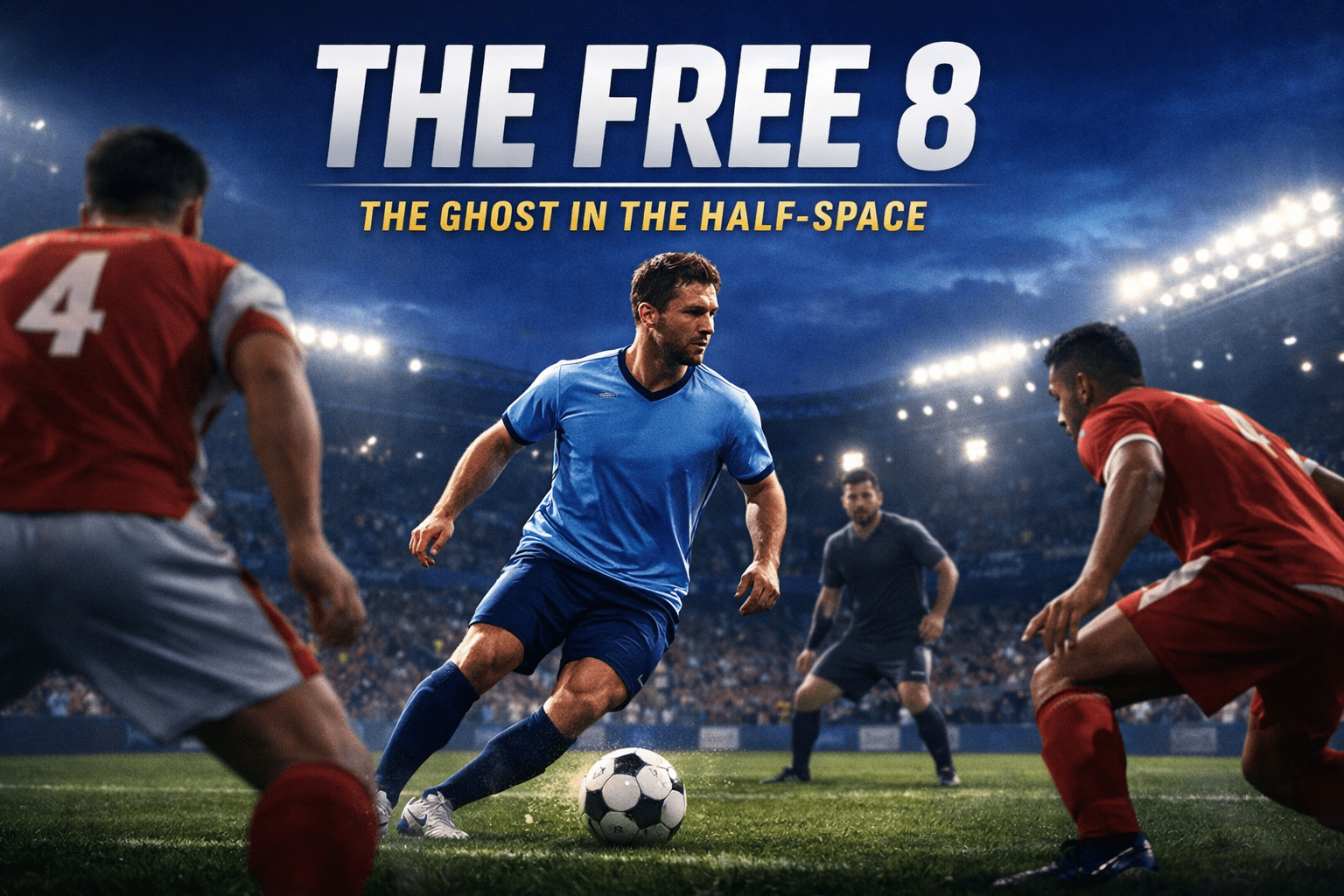

Last updated: September 19, 2026
Between 2022-23 and 2024-25, Premier League teams using dual half-space Free 8s generated 14% more shots from Zone 14 than teams with a single central playmaker. The role isn’t aesthetic. It’s mathematical.
Zone 14. Seventy-second minute. Arsenal trailing by one. Ødegaard drifts five yards wider than a traditional No. 10, collects between Villa’s right-back and right-sided centre-back, and slips a through-ball that nobody on the pitch can legally stop. The full-back can’t tuck in without leaving the winger. The centre-back can’t step out without vacating the striker. That impossible choice is the Free 8 Role, weaponised.
Over the past five seasons, few tactical shifts have been as influential as the move toward dual attacking midfielders operating in the half-spaces. Coaches talk about “control” in football, but the Free 8 Role is really about something more surgical: disruption.
Think of Arteta’s Arsenal, or Guardiola’s Manchester City in the De Bruyne era – two Free 8s operating between the lines, forcing defenders into impossible decisions. Explore the broader shift in our Modern Roles Pillar Page to see how this position bridges the gap between the traditional box-to-box midfielder and the classic Number 10.
In simple terms: The Free 8 is a dual-attacking midfielder who lives in the half-spaces, combining the defensive duty of a No. 8 with the creative license of a No. 10.
Key Takeaways
- Definition: A hybrid midfield role that combines the defensive industry of a #8 with the creative freedom of a #10, typically operating in the “half-spaces”.
- Primary Objective: To create numerical overloads in the final third and exploit the space between the opposition’s fullback and center-back.
- The Template: Kevin De Bruyne and Martin Ødegaard are the two purest archetypes of the Free 8 Role – De Bruyne as a power creator, Ødegaard as a volume creator using La Pausa to manipulate the block.
- Defensive Duty: Unlike a traditional #10, the Free 8 Role must be an elite presser, often leading the first line of the mid-block
Table of Contents
What is the Free 8?
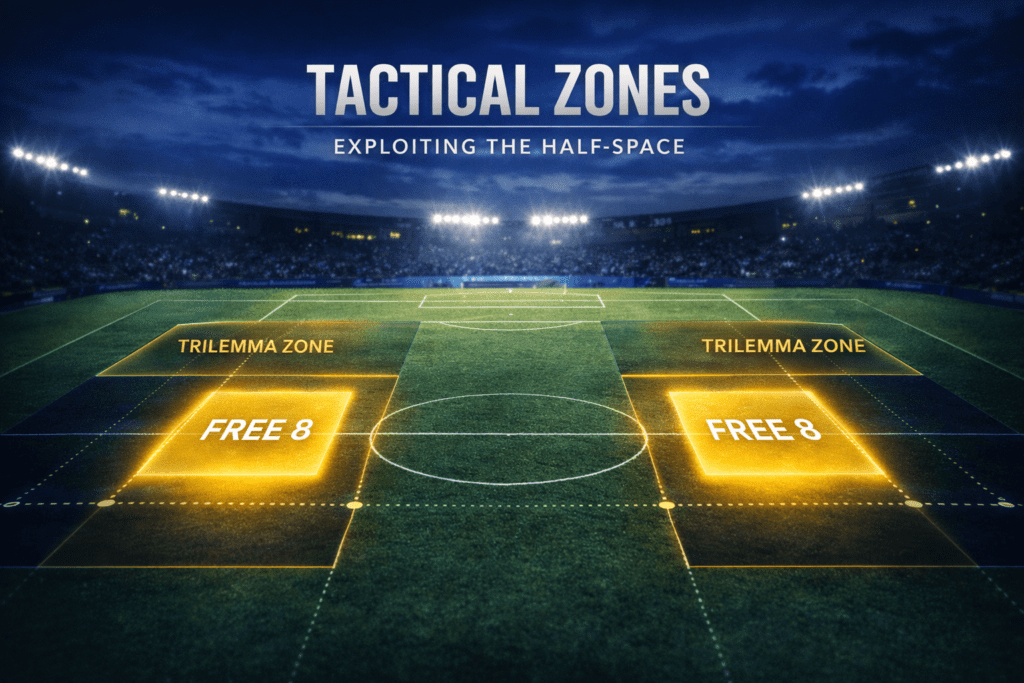
The Free 8 Role is a tactical evolution born out of the death of the Number 10. As teams moved toward compact low blocks and double-pivots, the “static” playmaker found themselves marked out of the game. The solution? Move the playmaker deeper and wider into the half-spaces.
The term “Free” does not imply a lack of defensive responsibility. Rather, it refers to the freedom of movement within the attacking phase. In a typical 4-3-3 or 3-2-2-3 (The Box Midfield), the Free 8 Role occupies the “pockets” of space.
The Half-Space Mechanic The pitch is vertically divided into five lanes: two wings, two half-spaces, and the center. The Free 8 Role lives in the half-space. By positioning themselves here, they create a “trilemma” for the opposition:
- If the Center-back steps out to mark them, they leave a gap behind for a striker to run into.
- If the Fullback tucks in to cover, they leave the winger 1v1 on the flank.
- If the Opposing Midfielder follows them, the center of the pitch opens up for a “Third Man” run.
| Attribute | Traditional #8 | Traditional #10 | The Free 8 Role |
| Primary Zone | Box-to-Box | Central “Hole” | Half-Spaces |
| Defensive Input | High | Low | High (Tactical Pressing) |
| Creative Burden | Moderate | Maximum | Maximum + Goal Threat |
The De Bruyne & Ødegaard Template
To understand the Free 8 Role, you must study Kevin De Bruyne role. He is the blueprint. While a standard midfielder might focus on ball retention, De Bruyne focuses on Value Added. Using On-Ball Value (OBV) and Expected Assists (xA), we can see how the Free 8 Role transforms possession into high-quality chances.

In elite tactical setups, De Bruyne’s movement shows a distinct concentration in the right half-space. From this “Zone 14” adjacent area, he delivers his signature whipped crosses-a ball that is nearly impossible to defend because it originates from an angle that bypasses the midfield line but remains outside the reach of the goalkeeper. For more on how these zones are exploited, check out Wyscout’s advanced analysis on creative zones.
The Data Profile of an Elite Free 8
Below is a conceptual data visualization of what we look for in this role:
| Metric | Elite Threshold (Per 90) | Why it Matters |
| Progressive Passes | 7.5+ | Ability to break lines and find attackers. |
| Passes into Penalty Area | 3.2+ | The “Killer Ball” frequency from half-spaces. |
| xA (Expected Assists) | 0.35+ | Quantifying the quality of chances created. |
| Pressing Actions | 18.0+ | Vital for “Rest Defense” and winning the ball high. |
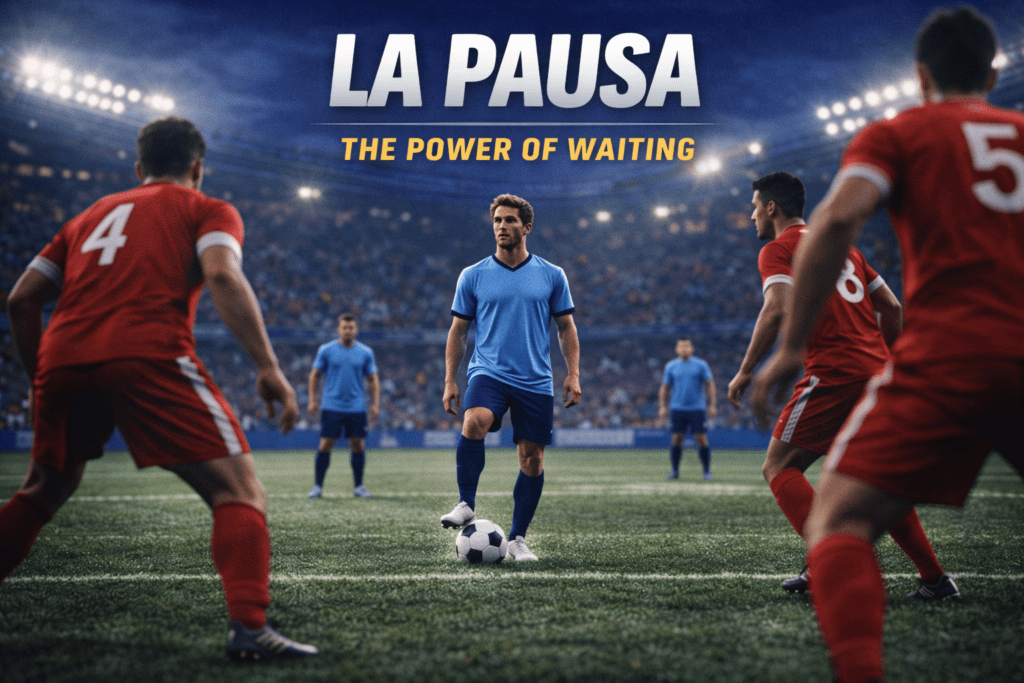
Martin Ødegaard provides a different flavor of the Free 8 Role. While De Bruyne is a “Power Creator,” Ødegaard is a “Volume Creator”. He uses “La Pausa“-the ability to slow down the game to wait for the perfect opening-to manipulate the opposition’s defensive block before sliding a through-ball into the “half-space” runner.
The Weakness / How to Counter
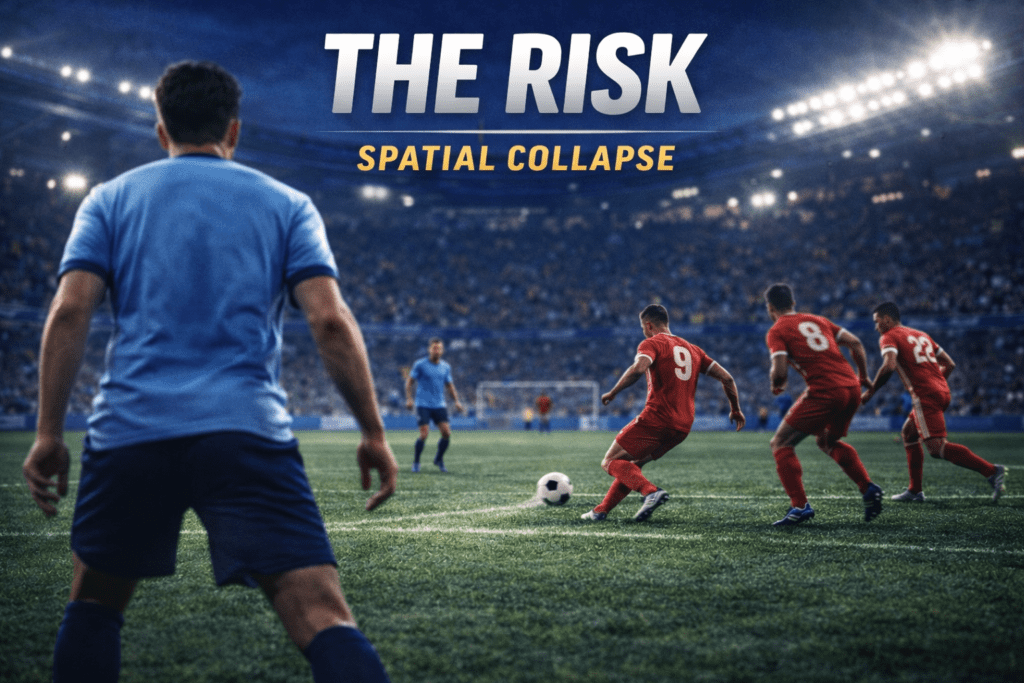
The Free 8 Role’s primary weakness is transition vulnerability – when the ball turns over with both 8s pushed high in the half-spaces, the single pivot is left isolated against the central counter-attack.
Because the Free 8s are pushed high into the half-spaces to support the attack, the “Single Pivot” (the #6) is often left isolated. If the attacking team loses the ball-a “Spatial Collapse“-the opposition has a direct path to counter-attack through the vacated central channels.
How to Neutralize the Free 8 Role:
- The Mid-Block Screen: Instead of man-marking, elite coaches use a compact mid-block where the wingers “tuck in” to block the passing lanes to the half-spaces.
- Tactical Fouls: Stopping the playmaker before they can turn. By nipping at the heels and committing “Dark Arts” fouls in the middle third, you prevent the playmaker from gaining momentum.
- Aggressive Step-Up: Using a “Hybrid Centre-back” (like John Stones) to step into the midfield and occupy the same space as the Free 8, effectively sandwiching them between the lines.
Coaching the Free 8: Training & Game-State Nuance
Coaching the Free 8 Role requires constraint-based environments rather than fixed drills, because the role’s defining actions – half-turn receptions, third-man triggers, body orientation on reception – only emerge under pressure.
At elite level, the most common mistake coaches make is treating the Free 8 as a fixed role rather than a contextual function. The Free 8 does not behave the same way at 0–0 as they do at 1–0, and they certainly do not operate identically against a low block versus a mid-block. This role is deeply game-state dependent.

In training, the Free 8 must be coached through constraint-based environments, not isolated drills. Rondos with directional goals, positional games with asymmetrical overloads, and transition-heavy exercises are essential. Why? Because the Free 8’s defining actions-receiving on the half-turn, delaying defenders, triggering third-man runs-only emerge under pressure. Static passing patterns produce passengers, not conductors.
One of the most important coaching cues is body orientation on reception. The elite Free 8 receives already knowing their second action. Their hips are open, their scan is complete, and their decision window is under one second. If a Free 8 needs two touches to assess options, the advantage of the half-space is already gone.
Game state further sharpens the role. When protecting a narrow lead, the Free 8 must shift from chance creation to territorial control. This is where pressing intelligence becomes decisive. Elite Free 8s understand when to jump to trap the opposition fullback and when to delay to allow the block to reset. Their value without the ball becomes as important as their passing quality with it.
Finally, rotation is non-negotiable. The Free 8 cannot occupy the same vertical lane for extended periods without becoming predictable. Brief rotations with the winger or false nine-sometimes only for a single phase-are enough to distort defensive references. These movements don’t need to be constant; they need to be timed.
The Free 8 is not a role you simply assign. It is a role you enable, protect, and continuously contextualize within the flow of the match.
Pulling It All Together
The Free 8 Role is the personification of the “Ultra-Human” expert on the pitch. It requires more than just technical ability; it requires a deep understanding of space, timing, and defensive triggers. As we move toward a future of “Position-less” football, the distinction between a midfielder and a forward will continue to blur, but the necessity of the half-space creator will remain constant.
If you want to control the game in 2026, you don’t look for a midfield general who stays in the center. You look for the ghost in the half-space who can kill you with a single pass.
What Do You Think?
The Free 8 model depends on a hybrid centre-back like John Stones stepping up, or a single pivot like Rodri covering the whole pitch. But when City lost Rodri to injury in 2024-25, their structure collapsed. So: is the Free 8 a durable tactical template, or a luxury that only works when one generational pivot is fit? Arsenal built their version around Rice and Zubimendi as a double pivot – safer, but less vertical. Which version holds up better over a 38-game season? Drop your read below.
Want to read any match like this?
The framework behind these breakdowns, in one place. The four phases, a 15-minute method for diagnosing both teams before the drinks break, a printable match-watching worksheet, and 51 terms defined. 40 pages.
Get the pack$9, instant downloadRelated Tactical Breakdowns

Why the Traditional #10 Disappeared – And What Replaced It
Why it connects: The Free 8 Role didn’t emerge in a vacuum. This breakdown traces exactly how compact mid-blocks killed the static No. 10 and forced the playmaker wider and deeper.

Hybrid Centre-Back Explained: How the John Stones Role Redefined Modern Defense
Why it connects: The Free 8 only functions when a hybrid centre-back can step into midfield to protect the single pivot. Stones is the missing piece that makes the whole system run.

Zone 14: The Most Dangerous Space on the Pitch
Why it connects: The half-spaces and Zone 14 are neighbours. Understanding why Zone 14 is defensively sacred explains why teams sacrifice structure to let their Free 8s invade it.
Speak the language of the game
Get the free 47-term tactical glossary. Gegenpress, half-space, xT, low block, each defined in plain language and linked to a full breakdown. It is yours for an email.
Frequently Asked Questions (FAQs)
Is a “Free 8 Role” the same as a “Mezzala”?
Not exactly. While both operate in the half-spaces, a Mezzala often drifts much wider, almost becoming a winger. The Free 8 Role remains more integrated into the central “Box Midfield” structure and has higher defensive “Rest Defense” responsibilities.
Can any midfielder play as a Free 8?
No. It requires a rare combination of high OBV (On-Ball Value) and elite physical engines for counter-pressing. A player who lacks the lateral quickness to defend the half-space will be a liability in the defensive transition.
Why did the traditional Number 10 disappear in favor of the Free 8 Role?
The “No. 10” became too easy to mark in a 4-2-3-1 system. By splitting that creative responsibility between two Free 8s in a 4-3-3, the attacking team creates more “dilemmas” for the defensive line, making it much harder to neutralize the threat.
How is the Free 8 different from a traditional No. 8?
The Free 8 operates exclusively in the half-spaces, not the central box-to-box channel. Per Coaches’ Voice, a traditional No. 8 like Steven Gerrard ran vertical lanes between his own box and the opposition’s. The Free 8 stays in the half-space pocket between the opposition fullback and centre-back, prioritising chance creation through angles a central No. 8 cannot access.