

In football, build-up play is the offensive phase where a team advances the ball from their goalkeeper or defenders into the opponent’s half while maintaining possession under pressure.
Modern football is not decided only by goals or individual moments. It is decided by how teams control space, resist pressure, and progress the ball from defense into attack. At the center of this process lies one of the most important tactical concepts in the game: build-up play.
This guide explains build up play in football clearly and systematically — what it is, why it matters, how teams execute it, and how it connects to pressing, transitions, and overall tactical control. If you want to understand football beyond formations and scorelines, this is where to start.
Table of Contents
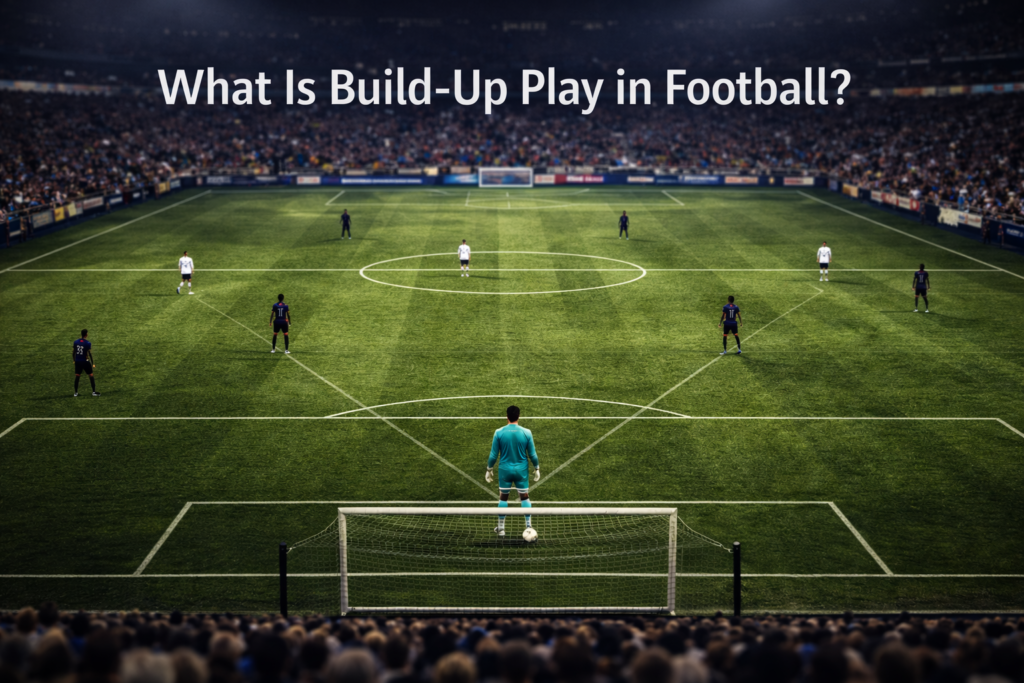
What Is Build-Up Play in Football?
Build up play refers to the structured phase of possession where a team progresses the ball from its defensive third into midfield or attacking areas while maintaining control and balance.
It usually involves:
- The goalkeeper
- Center-backs
- Full-backs or wing-backs
- One or more midfielders dropping deeper
The purpose of build-up play is not simply to keep the ball, but to:
- Advance possession safely
- Attract and manipulate pressure
- Create space higher up the pitch
In modern football, build up play is an active tactical tool, not a passive phase.
Enjoying the analysis?
Don’t Just Watch Football. Understand It.
Join KharaSportsDaily and receive occasional deep tactical insights most fans miss.
Occasional analysis. No match reports. No noise.
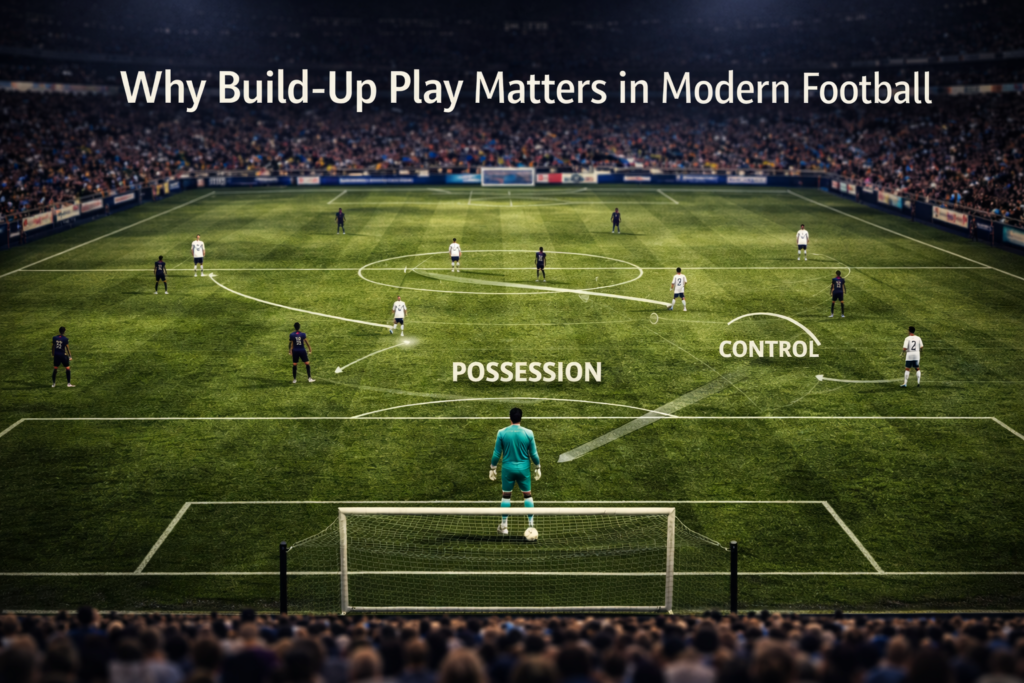
Why Build-Up Play Matters in Modern Football
Football today is faster, more compact, and more aggressive without the ball. Teams press higher, close space quicker, and look to force mistakes close to goal.
Because of this, teams that struggle in build-up:
- Lose territorial control
- Are forced into rushed long balls
- Spend more time defending
- Become vulnerable to sustained pressure
Strong build up play allows teams to:
- Escape high presses
- Control tempo and rhythm
- Dictate where the game is played
- Maintain defensive stability while attacking
In simple terms:
The better a team builds up, the more control it has over the match.
The ultimate goal of effective build-up play is to create high-quality scoring chances, which is why teams with good structures often generate higher Expected Goals (xG).
Build-Up Play vs Playing Out From the Back
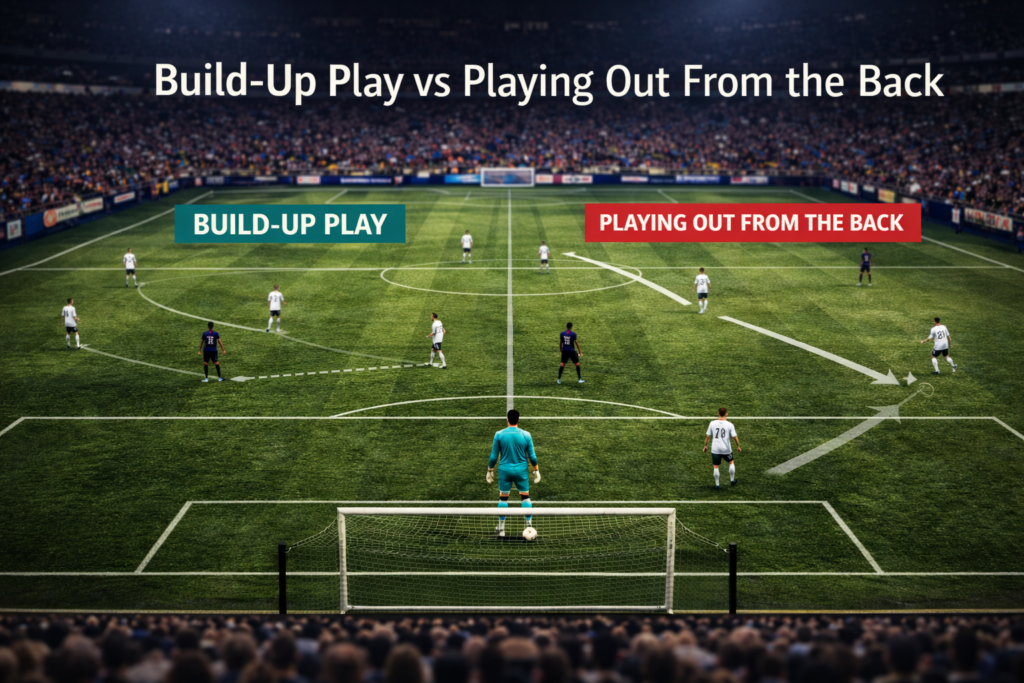
These terms are often used interchangeably, but they are not the same.
- Playing out from the back is a method
- Build-up play is the broader concept
Playing out from the back usually refers to short passing sequences close to goal, often involving the goalkeeper and defenders. Build up play includes:
- Short and long progression
- Central and wide circulation
- Vertical line-breaking passes
- Controlled direct play after drawing pressure
A team can build-up slowly or quickly, short or direct — as long as structure and intention are present.
Core Principles of Effective Build-Up Play
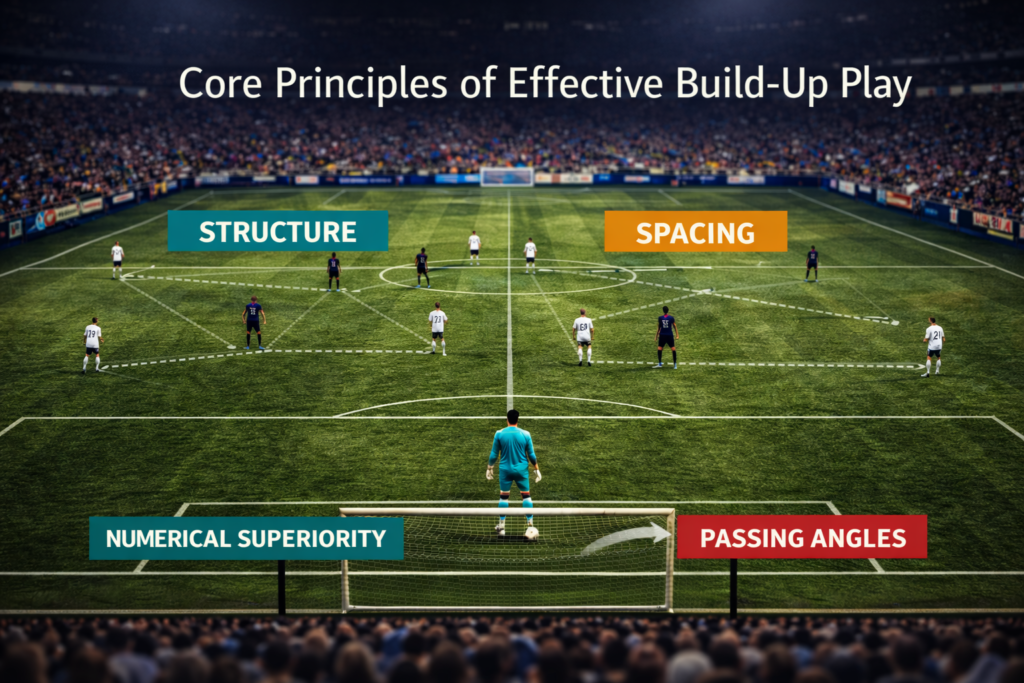
1. Structure
Structure defines how players position themselves during possession.
Good build-up structure:
- Creates multiple passing angles
- Prevents isolation under pressure
- Maintains balance if possession is lost
Common structures include:
- A back three created by a dropping midfielder
- A back four with goalkeeper involvement
- Inverted full-backs forming a midfield line
Without structure, build-up becomes reactive and risky.
2. Spacing
Spacing ensures players are positioned:
- Far enough apart to stretch the press
- Close enough to support each other
Effective spacing:
- Opens central passing lanes
- Forces defenders to choose between pressing or covering space
- Makes pressing less coordinated
Elite teams manipulate space first, then move the ball.
3. Superiority
The goal of build up play is to create advantages:
- Numerical superiority: more players than defenders in an area
- Positional superiority: players positioned between defensive lines
- Dynamic superiority: movement against static defenders
Most successful build-up sequences start by creating one of these advantages.
4. Decision-Making Under Pressure
Modern build-up demands players who:
- Scan before receiving
- Use body orientation effectively
- Make decisions quickly
This is why technical center-backs and ball-playing goalkeepers have become essential in modern football.
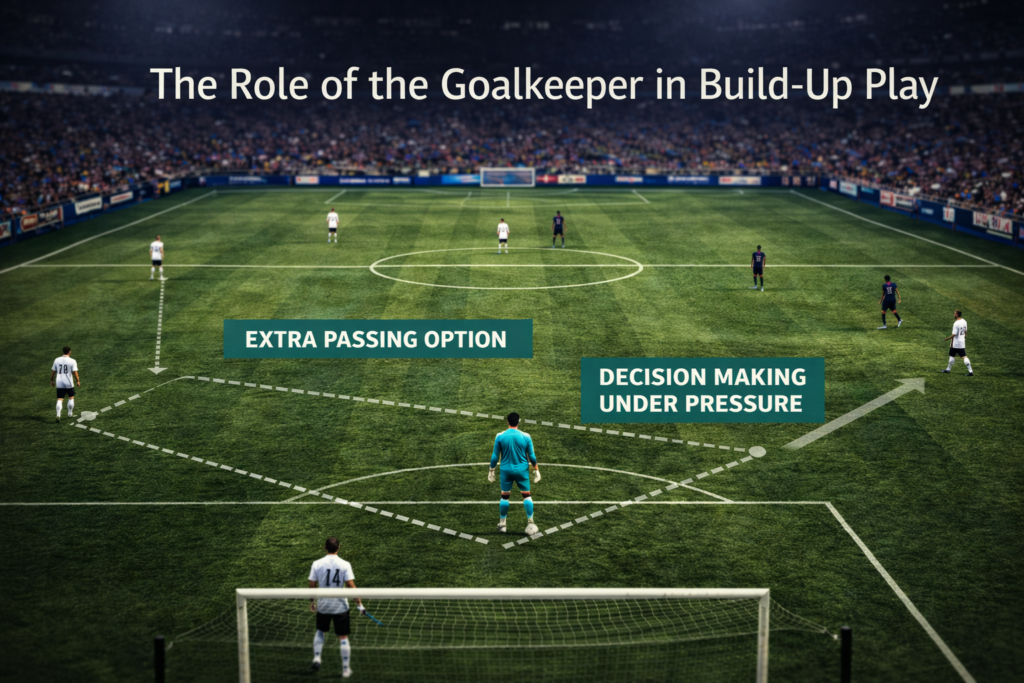
The Role of the Goalkeeper in Build-Up Play
In modern football, the goalkeeper is no longer just a shot-stopper.
During build-up, the goalkeeper:
- Acts as an extra outfield player
- Creates numerical superiority
- Helps circulate possession under pressure
A comfortable goalkeeper allows:
- Center-backs to spread wider
- Pressing teams to commit extra players
- Midfield passing lanes to open
This tactical evolution has reshaped how teams recruit and structure their squads.
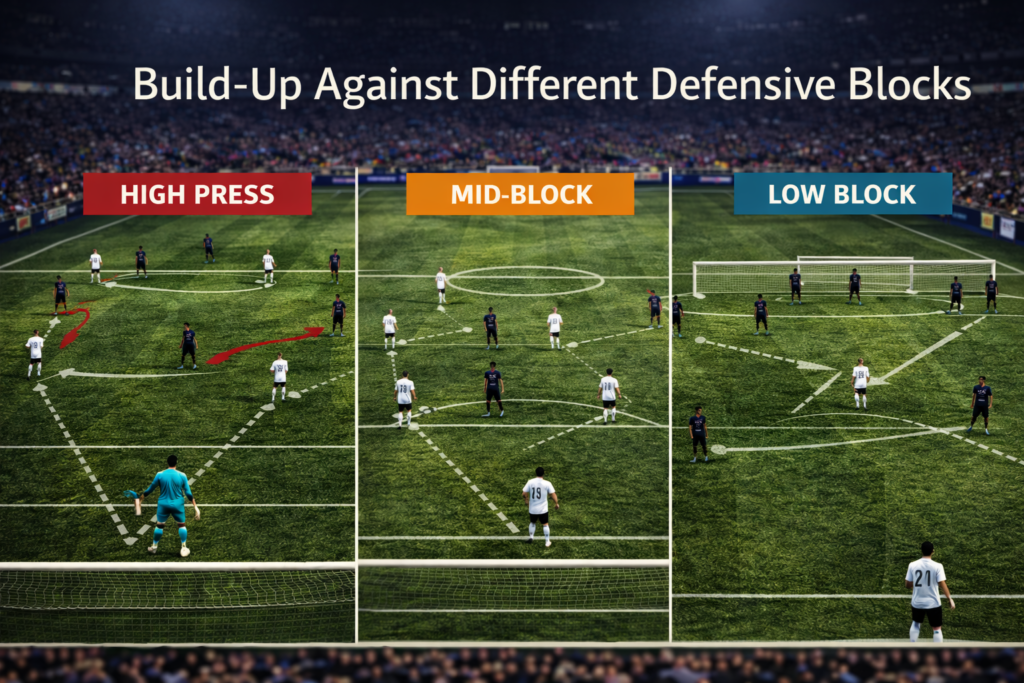
Build-Up Against Different Defensive Blocks
Against a High Press
- Pitch is stretched horizontally
- Goalkeeper involvement increases
- Midfielders drop to support
The objective is to draw pressure, then exploit the space behind it.
Against a Mid-Block
- Patience is key
- Ball circulation shifts side to side
- Vertical passes are timed carefully
The goal is to move the block, not force risky passes.
Against a Low Block
- Build-up becomes less risky but more deliberate
- Defensive line pushes higher
- Full-backs and midfielders advance
Here, build-up sets the platform for sustained attacks.
Common Build-Up Structures and Patterns
Back Three Build-Up
A midfielder drops between center-backs.
Advantages:
- Extra passing option
- Better press resistance
- Strong central control
Inverted Full-Back Build-Up
Full-backs move inside during possession.
Why teams use it:
- Midfield overloads
- Better counter-pressing shape
- Improved defensive stability
This is one of the defining trends of modern football.
Vertical Build-Up
Teams look to break lines early using:
- Third-man runs
- Wall passes
- Quick vertical combinations
This requires high technical quality and precise timing.
Build-Up Play vs Direct Play (Comparison)
| Aspect | Build-Up Play | Direct Play |
|---|---|---|
| Primary Objective | Controlled progression | Rapid territory gain |
| Risk Profile | Lower turnover risk | Higher variance |
| Press Resistance | High | Low |
| Player Profile | Technical defenders & GK | Physical forwards |
| Game Control | High | Situational |
| Best Used When | Dominating possession | Chasing the game |
Modern elite teams often blend both, but build-up play remains the foundation.
How Build-Up Links to Pressing and Transitions
Build-up play is deeply connected to:
- Pressing resistance
- Counter-pressing structure
- Defensive transitions
- Rest defense
Poor build-up often leads to:
- Broken team shape
- Exposed midfield
- Dangerous counter-attacks
This is why build up play in football tactics is a foundational pillar.
👉 For a complete tactical framework, explore our full guide on Football Tactics Explained.
Common Myths About Build-Up Play
“Build-up play is slow.”
It only appears slow when movement and spacing are poor.
“It’s too risky.”
Unstructured long balls often carry higher risk.
“Only possession teams use it.”
Almost all modern teams build-up — just in different ways.
- For deeper tactical context, see FIFA’s technical football insights.
- Additional tactical analysis is available via UEFA’s technical development resources.
Enjoyed this breakdown?
Don’t Just Watch Football. Understand It.
Join KharaSportsDaily and receive occasional deep tactical insights most fans miss.
Occasional analysis. No match reports. No noise.
Frequently Asked Questions
What is build-up play in football?
Build-up play is the structured phase where a team progresses the ball from defense into attack while maintaining control, spacing, and balance.
Why is build-up play important in modern football?
Because modern football is heavily pressed, strong build-up helps teams escape pressure, control tempo, and reduce defensive exposure.
Is build-up play in football risky?
It can be if poorly structured, but organized build up is generally safer than uncontrolled long clearances.
What’s the difference between build up play and long-ball football?
Build-up prioritizes control and structure, while long-ball football focuses on immediate territory and physical duels.
Can teams with less technical quality still build up?
Yes. Teams adapt build up patterns based on player profiles, opposition pressure, and game state.
Final Thoughts
Build up play is not simply about passing from the back—it is about creating stability and access to space under pressure. Effective build up structures allow teams to progress the ball while maintaining balance, spacing, and defensive security behind the play.
The success of build up play depends on how well players interpret pressure, position themselves between lines, and provide clear passing angles. Without coordinated movement and spacing, even technically strong teams struggle to progress against organized presses.
Importantly, build up play shapes everything that follows. It influences where possession is lost, how teams counter-press, and how quickly defensive structures can recover. Understanding build up as part of a broader tactical system reveals why some teams remain in control even under intense pressure.
Part of the Football Tactics Framework
This article is part of KharaSportsDaily’s Football Tactics framework, where we break down how modern teams press, build attacks, and defend space across different phases of play.
Build-up play sits at the core of how teams control matches and manage transitions. To understand how it connects with pressing systems, counter-pressing, and defensive organization, begin with the complete Football Tactics Explained guide.
About The Author
Football Tactician & Analyst. breaking down elite systems for coaches and fans.

[…] pressing is about winning the ball, build-up play is about keeping it. Our in-depth guide on build-up play explained breaks down the structures teams […]
[…] See my full breakdown on how Build-Up Play structures generate high-xG chances […]
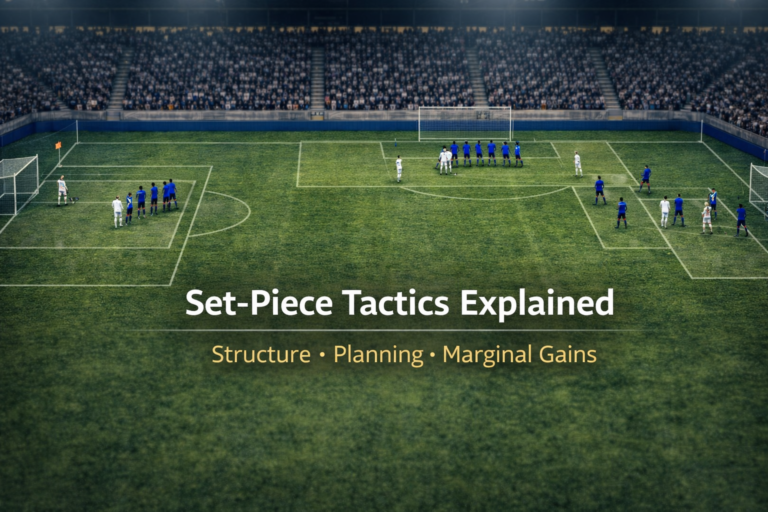
[…] Build-up principles influence short set-piece execution […]
[…] Build-Up Play: The Art of Baiting the Press […]
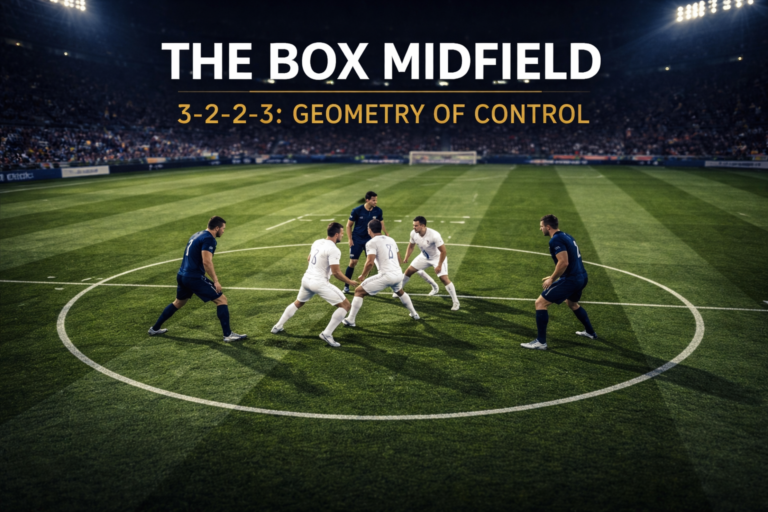
[…] deployed by masterminds like Pep Guardiola and Mikel Arteta, represent a specific evolution in Build-Up & Progression. It is not just about keeping the ball; it is about creating a “box” of four players in […]
[…] we discussed Build-Up Play Explained in our previous guide, we touched on moving the ball from A to B. But football overloads and […]
[…] “+1” Advantage: The Sweeper-Keeper creates a numerical overload in the build-up phase, allowing teams to bypass high […]
[…] further reading on how this integrates with defensive transitions, check out our guide on Rest Defense or see how this structure frustrates Zone 14 […]