
Last updated: September 19, 2026
High press vs mid-block is one of the most important tactical differences in modern football.
This guide explains what each system is, how they work, and when teams use them.
Football matches are no longer decided only by talent or formations.
They are decided by where and how teams defend.
Two defensive approaches dominate modern football:
- the high press
- the mid-block
Understanding the difference between these two systems explains why some teams suffocate opponents, while others stay compact and wait for mistakes.
This guide breaks down high press vs mid-block (This is part of our complete series onFootball Tactics Framework.) in clear, practical terms, so you can recognize them instantly during matches and understand why managers choose one over the other.
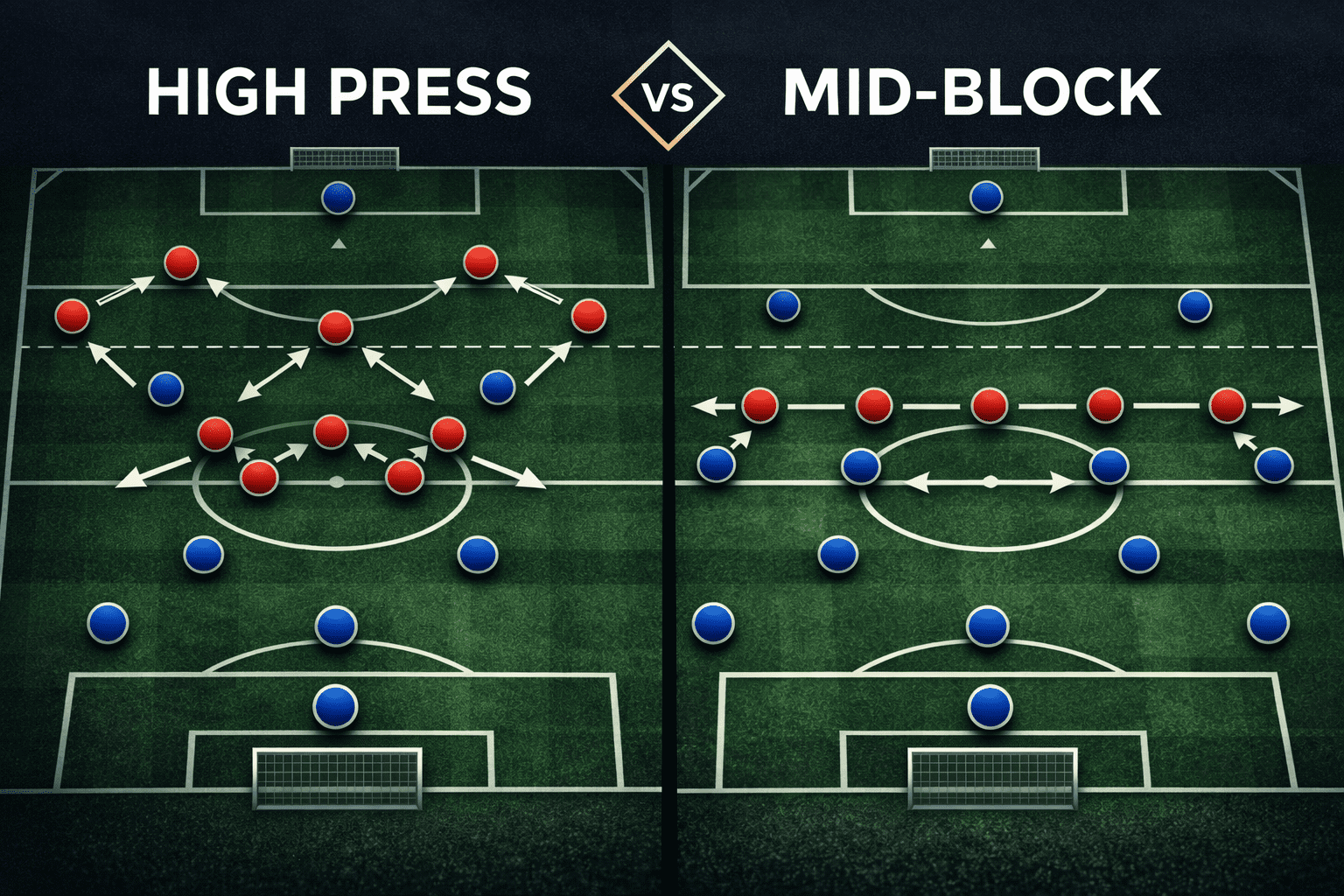
High press = defending high up the pitch to win the ball quickly.
Mid-block = defending deeper to protect space and control the game.
The difference is risk, energy, and timing.
Key Takeaways
- High pressing is aggressive and creates chances but is physically demanding
- Mid-block defending is compact and controlled but concedes possession
- Teams switch between systems depending on game state
- Pressing systems in football is about timing and coordination, not constant pressure
Table of Contents
What Is a High Press?
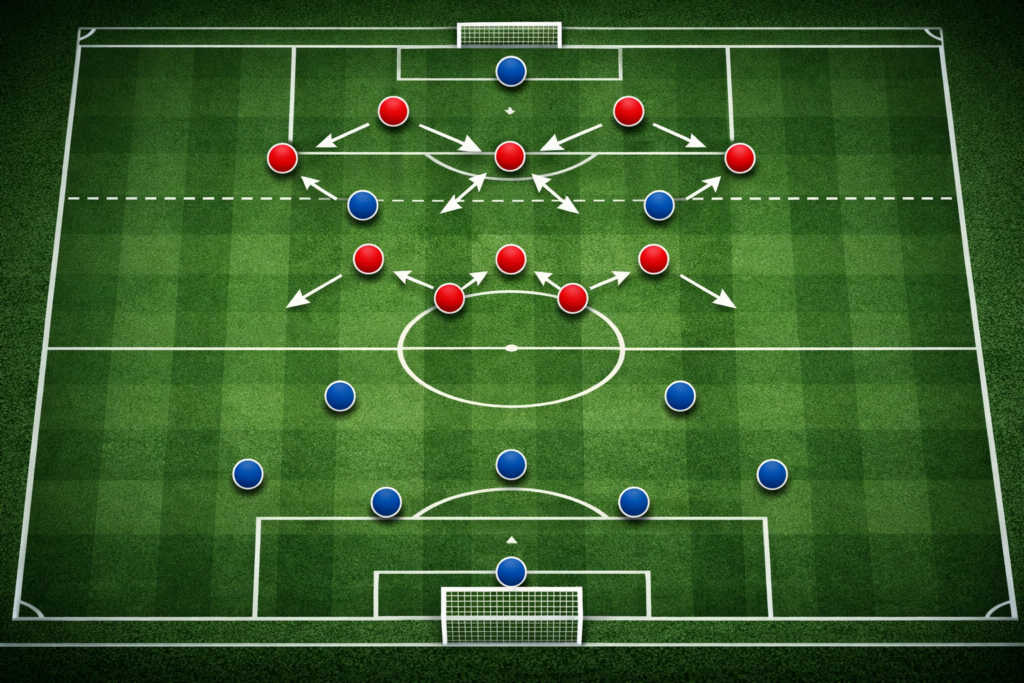
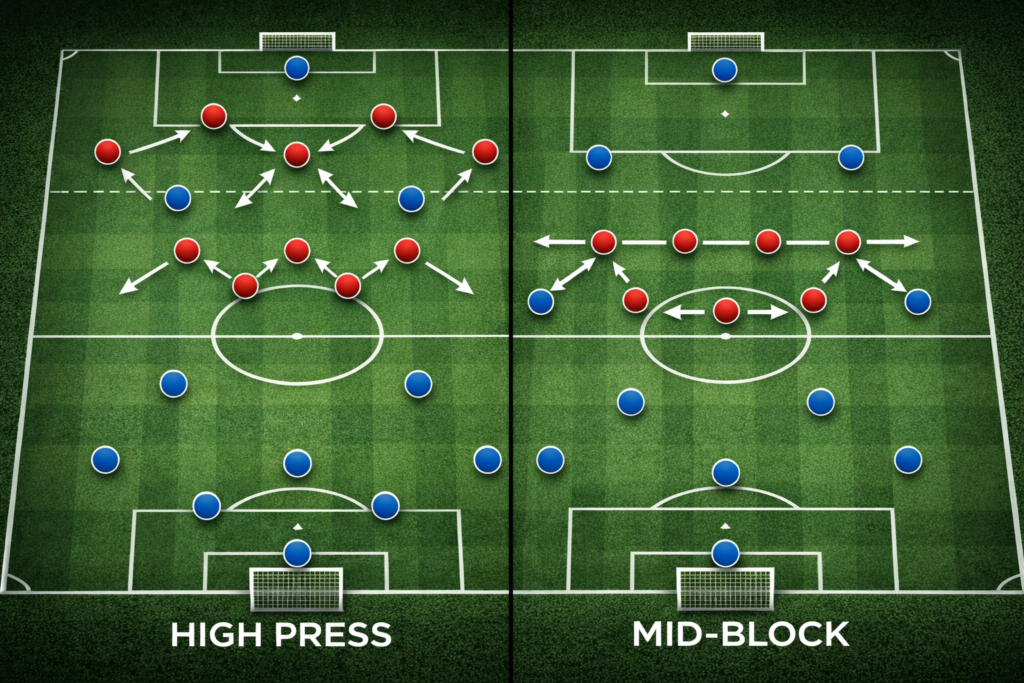
A high press football is a defensive strategy where a team applies pressure high up the pitch, close to the opponent’s goal.
The objective is simple:
- force mistakes during build-up
- win the ball in advanced areas
- create immediate scoring chances
High pressing is aggressive, coordinated, and physically demanding.
Key characteristics of a high press
- Defensive line positioned near midfield
- Forwards initiate pressure
- Passing lanes to central midfield are blocked
- Traps are set near the sidelines
A high press only works when multiple players move together. One player pressing alone is not a system, it’s a gamble.
What Is a Mid-Block?
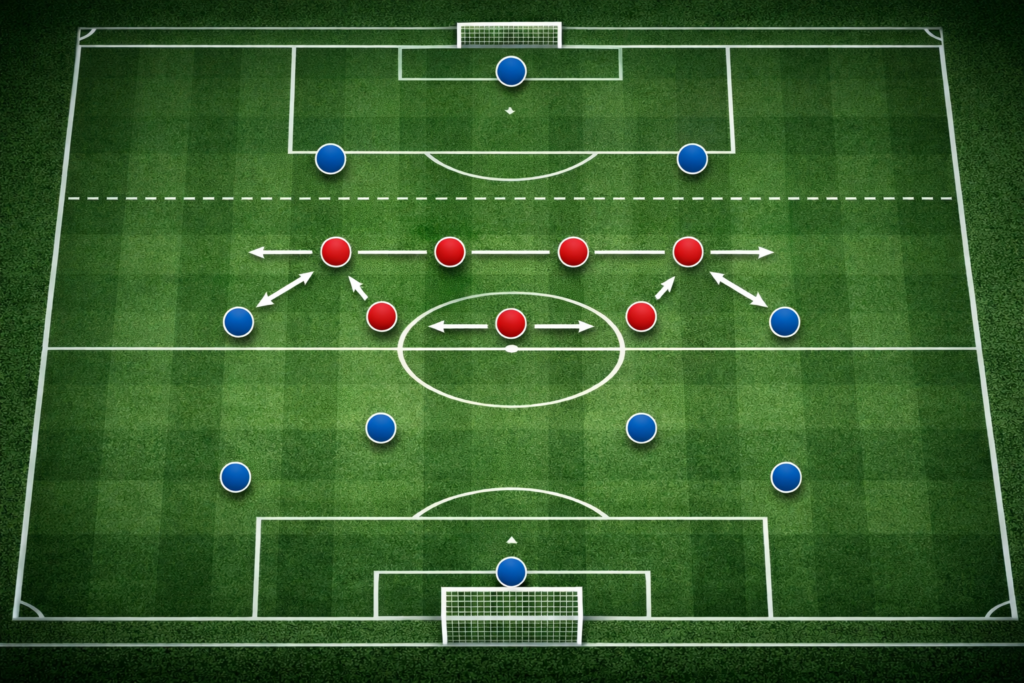
A mid-block football is a more balanced defensive structure where a team defends around the middle third of the pitch.
Instead of pressing immediately, the team:
- stays compact
- protects central spaces
- waits for pressing triggers
Mid-blocks prioritize control over chaos.
Key characteristics of a mid-block
- Defensive line positioned closer to midfield
- Compact shape between defense and midfield
- Pressing begins after specific triggers
- Lower physical risk than a high press
Mid-blocks are especially effective against teams that rely on structured build-up.
| Aspect | High Press | Mid-Block |
|---|---|---|
| Defensive Height | Very high | Medium |
| Risk Level | High | Moderate |
| Physical Demand | Very high | Balanced |
| Ball Recoveries | Near opponent’s box | In midfield |
| Best Against | Weak build-up teams | Possession teams |
| Main Strength | Forces mistakes | Controls space |
| Main Weakness | Vulnerable if beaten | Allows controlled possession |
High Press vs Mid Block comparison explains why managers switch between these systems depending on opponents, scoreline, and squad profile.
Pressing Triggers: The Hidden Detail That Matters
Neither system works without pressing triggers.
Common pressing triggers include:
- a backward pass
- a poor first touch
- a pass to a full-back near the sideline
- a defender receiving the ball with back to play
In a high press, triggers lead to immediate collective pressure.
In a mid-block, triggers signal when to step out without breaking shape.
This is why pressing is about timing, not speed.
For readers who want to explore pressing concepts in more depth, these resources provide additional tactical context:
- For deeper tactical context, see FIFA’s technical football insights.
- Additional tactical analysis is available via UEFA’s technical development resources.
Why Teams Choose a High Press or a Mid-Block
Why Teams Choose a High Press
Managers choose a high press when:
- they want to dominate territory
- they trust their defenders in space
- they have athletic forwards
- they want fast goals, not long possession spells
High pressing is often used:
- early in matches
- after conceding
- against teams uncomfortable on the ball
However, high presses are fragile. One clean pass can break the system that mid-block might not be able to.
Why Teams Choose a Mid-Block
Managers prefer a mid-block when:
- protecting a lead
- facing elite build-up teams
- managing player fatigue
- prioritizing defensive stability
Mid-blocks reduce:
- space between lines
- exposure to counter-attacks
- physical overload over 90 minutes
This makes mid-blocks extremely popular in knockout tournaments.
High Press vs Mid-Block in Real Match Scenarios
A key misconception is that teams use only one system.
In reality:
- teams often start in a mid-block
- shift into a high press during key moments
- drop back again after losing energy
Modern football is about fluid defensive behavior, not rigid systems.
Common Mistakes Fans Make When Watching Pressing
Mistake 1: Judging by one player
Pressing is collective. One forward sprinting means nothing without support.
Mistake 2: Confusing intensity with effectiveness
A team can run a lot and still press poorly.
Mistake 3: Thinking pressing is constant
Even high-pressing teams rest in mid-blocks during matches.
Which System Is Better?
There is no universally “better” system when it comes to High Press vs Mid-Block
- High presses create chaos and quick chances
- Mid-blocks create control and stability
The best teams master both, and know when to switch.
That decision separates elite managers from average ones.
How This Fits Into Modern Football Tactics
High press vs mid block is the foundation of modern tactics.
It influences:
- build-up structures
- counter-pressing
- defensive transitions
- attacking spacing
Next tactical layer:
If pressing is about winning the ball, build-up play is about keeping it. Our in-depth guide on build-up play explained breaks down the structures teams use to progress the ball under pressure. Once you understand this comparison, everything else, from build-up play to low blocks, becomes easier to read.
The Bigger Picture
High pressing and mid-block defending are not opposing philosophies but contextual tools used to manage space, risk, and control. A high press prioritizes immediate pressure and territorial dominance, while a mid-block focuses on compactness, stability, and selective engagement.
The effectiveness of either approach depends less on aggression and more on collective timing, spacing, and role clarity. Teams that press high without structure expose themselves; teams that sit too passively in a mid-block surrender initiative. The balance lies in understanding when to step forward and when to protect space.
Modern football rarely commits to a single defensive height. Instead, teams shift between high press football, mid-block football, and recovery phases depending on game state and opponent behavior. Understanding the principles behind both systems is essential for reading how teams defend, and why they choose one approach over another.
Both systems have a documented history in English football, traced in The Mixer and the other titles on the tactical reading list.
What do you think?
Is high pressing still the most effective defensive strategy – or are mid-block systems becoming the smarter default in modern football? Which teams get this balance right today?
Want to read any match like this?
The framework behind these breakdowns, in one place. The four phases, a 15-minute method for diagnosing both teams before the drinks break, a printable match-watching worksheet, and 51 terms defined. 40 pages.
Get the pack$9, instant downloadRelated Tactical Breakdowns
To understand how pressing fits into the bigger tactical picture:
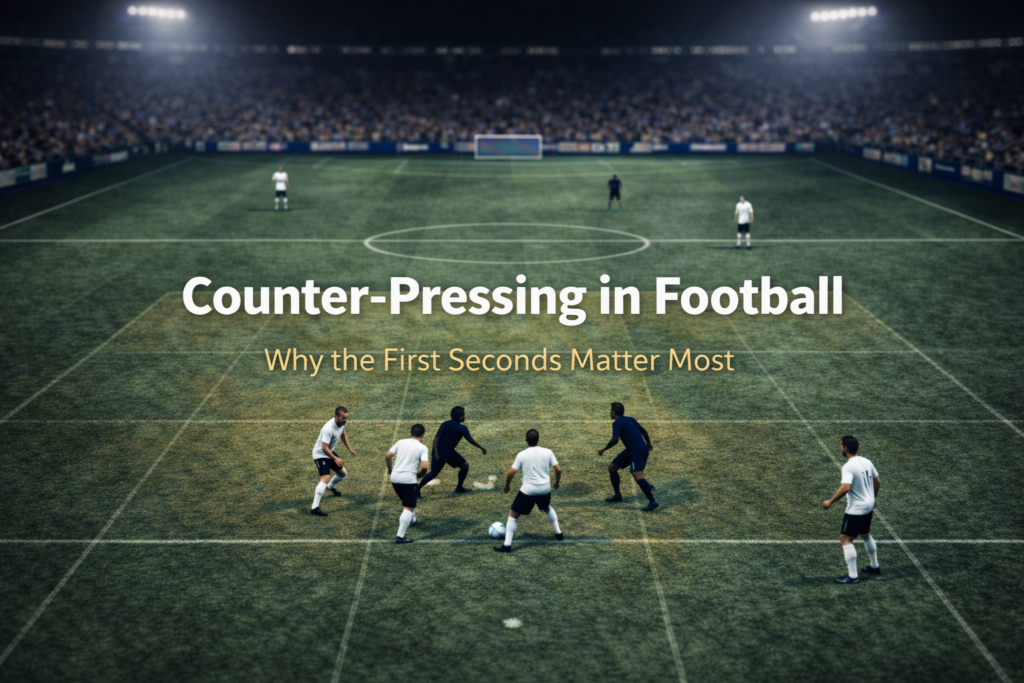
Counter-Pressing in Football
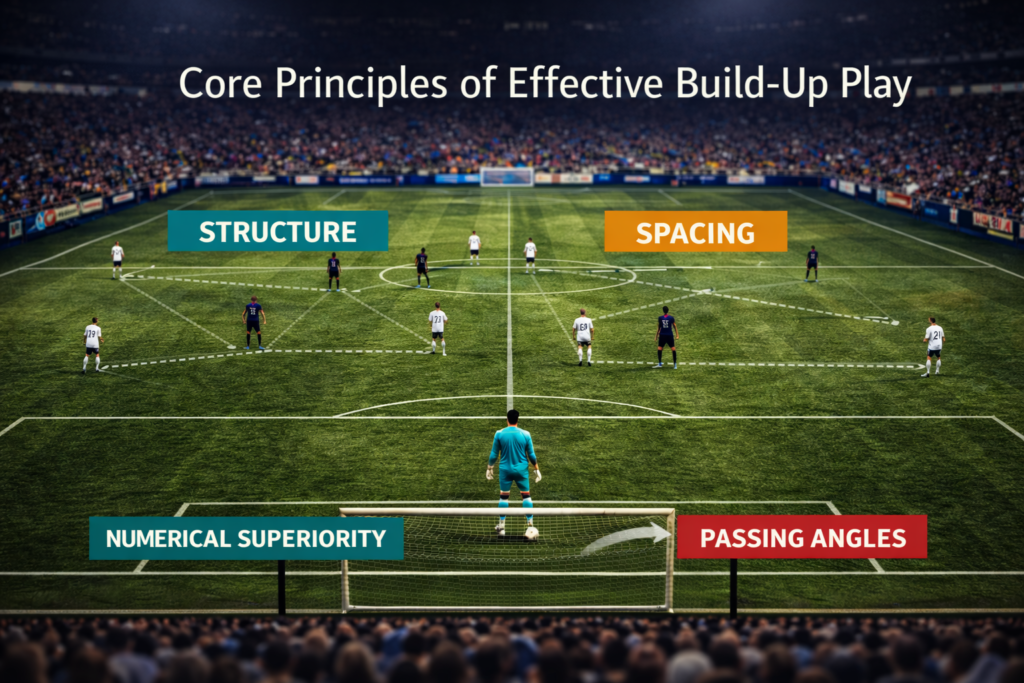
Build-Up Play in Football
Rest Defense Explained

Speak the language of the game
Get the free 47-term tactical glossary. Gegenpress, half-space, xT, low block, each defined in plain language and linked to a full breakdown. It is yours for an email.
Frequently Asked Questions (FAQs)
Is high pressing risky?
Yes. High presses expose space behind the defense. If the press is broken, teams can concede quickly.
Is a mid-block defensive football?
Not necessarily. Mid-blocks can be proactive, intelligent, and aggressive when triggers are used correctly.
Do top teams still use mid-blocks?
Absolutely. Even elite possession teams defend in mid-blocks depending on game state.
Can a team switch between both in one match?
Yes. Most modern teams alternate between systems multiple times per game.