
Introduction
Have you ever watched a match and wondered why a world-class winger, someone who usually glides past defenders for fun, suddenly looks invisible for 80 minutes? Or conversely, why a midfielder seems to have acres of space to sip a coffee before picking a pass?
It isn’t magic. It isn’t luck. It is the deliberate, brutal efficiency of football overloads and isolations.
In my twenty-plus years watching and analyzing the beautiful game, from muddy Sunday league sidelines to the pristine dugouts of European academies, I’ve learned one universal truth: football is a game of space. Specifically, it is about manipulating space to create unfair advantages. If you are playing fair, you are doing it wrong.
This article is part of our Build-Up & Progression pillar, designed to take you from a casual observer to a tactical connoisseur. Today, we aren’t just drawing lines on a pitch; we are dissecting the very heartbeat of modern attacking football.
Key Takeaways
- Symbiosis: You cannot have an effective isolation without a credible overload to distract the defense.
- Patience: Overloads require patience to draw the opponent out of position. Do not force the pass until the shape is broken.
- Speed of Switch: The transition from overload to isolation must be instant. The ball must move faster than the opponent’s defensive block shift.
- Positioning: The isolation player must stay as wide as possible (“chalk on boots”) until the ball is played to maximize the space created by football overloads and isolations.
- Numerical Superiority: Always aim for +1 in the overload zone (3v2, 4v3).
Enjoying the analysis?
Don’t Just Watch Football. Understand It.
Join KharaSportsDaily and receive occasional deep tactical insights most fans miss.
Occasional analysis. No match reports. No noise.
Table of Contents
The Core Concept: What Are They?
At its simplest level, the relationship between football overloads and isolations is a symbiotic one. You cannot effectively have one without the other in a structured possession system.
Think of the pitch like a blanket. If you pull the blanket hard to the left side of the bed to cover two people (the overload), the right side of the bed is left exposed and open (the isolation).
- The Overload: This creates Numerical Superiority. It is the act of concentrating more attackers in a specific zone than the opponent has defenders. If they have two defenders on the left wing, we send three attackers. 3v2. We win.
- The Isolation: This utilizes Qualitative Superiority. By drawing the opponent’s defense to the overload side, we leave our best 1v1 dribbler alone on the opposite flank against a single, terrified fullback.
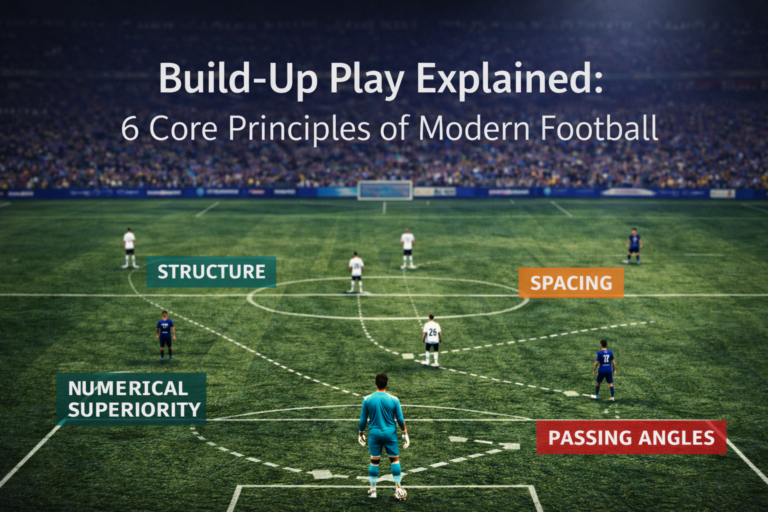
When we discussed Build-Up Play Explained in our previous guide, we touched on moving the ball from A to B. But football overloads and isolations are about how we move the opponent to make that pass from A to B lethal.
The Art of the Overload (Numerical Superiority)
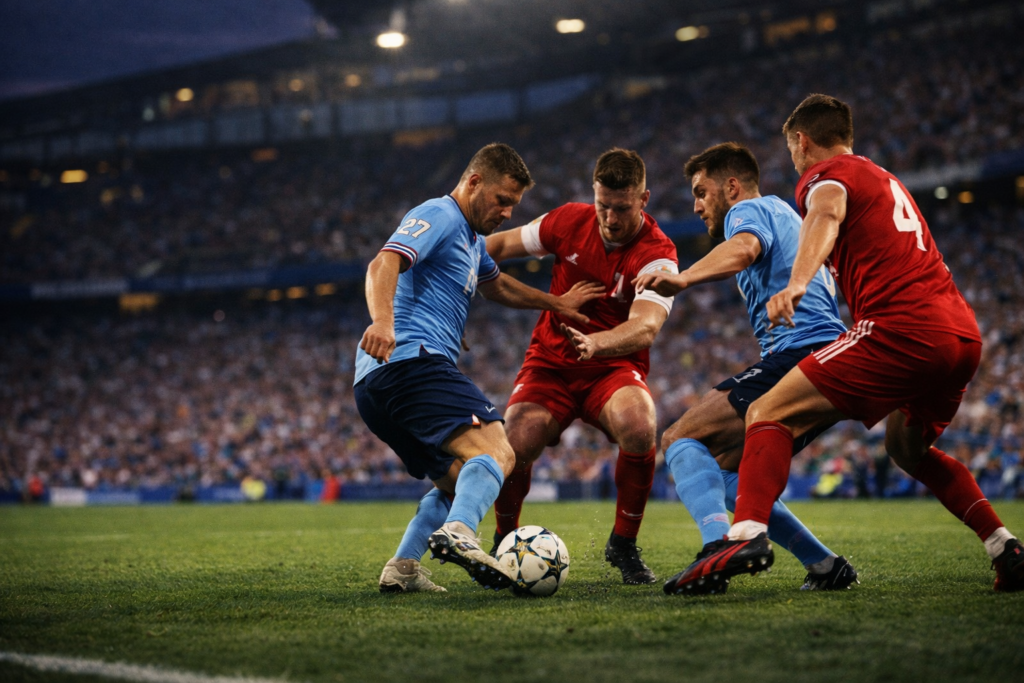
Creating a football overloads and isolations dynamic starts with the “bait.” The overload is the bait.
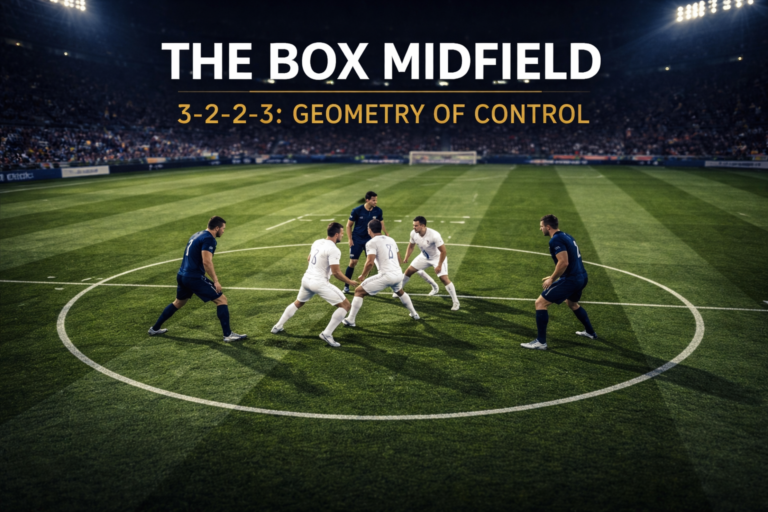
In modern football, especially within the Box Midfield (3-2-2-3) structures we see elite teams using, the goal is to force the opposition to commit bodies. If you are playing against a strict 4-4-2, their lines are rigid. To break them, you overload a specific zone.
The Wing Overload
This is the classic. Your Left Winger stays wide. Your Left Back pushes up. Your Left #8 drifts wide. Suddenly, you have three players in a ten-yard box. The opposition Right Back and Right Winger are outnumbered 3v2.
To cope, the opposition must shift their Central Midfielder over to help. Bingo. They have just vacated the center of the pitch. By committing to the overload, they have compromised their structural integrity elsewhere.
The Central Overload
This is where Inverted Fullbacks earn their paycheck. By moving a fullback into central midfield, a team creates a 4v3 or 4v2 in the central engine room. This forces the opponent’s wingers to tuck inside to help defend the middle.
What happens next? The wide channels open up. This is the constant push-and-pull of football overloads and isolations. You squeeze the opponent in until they suffocate, or you force them to expand until they tear.
I remember coaching a U18 side that refused to shift. We simply played 4v2 rondos on the left flank for 10 minutes until their right back was so exhausted he stopped tracking runs. That is the physical toll of defending an overload.
The Isolations: Creating 1v1 Dominance
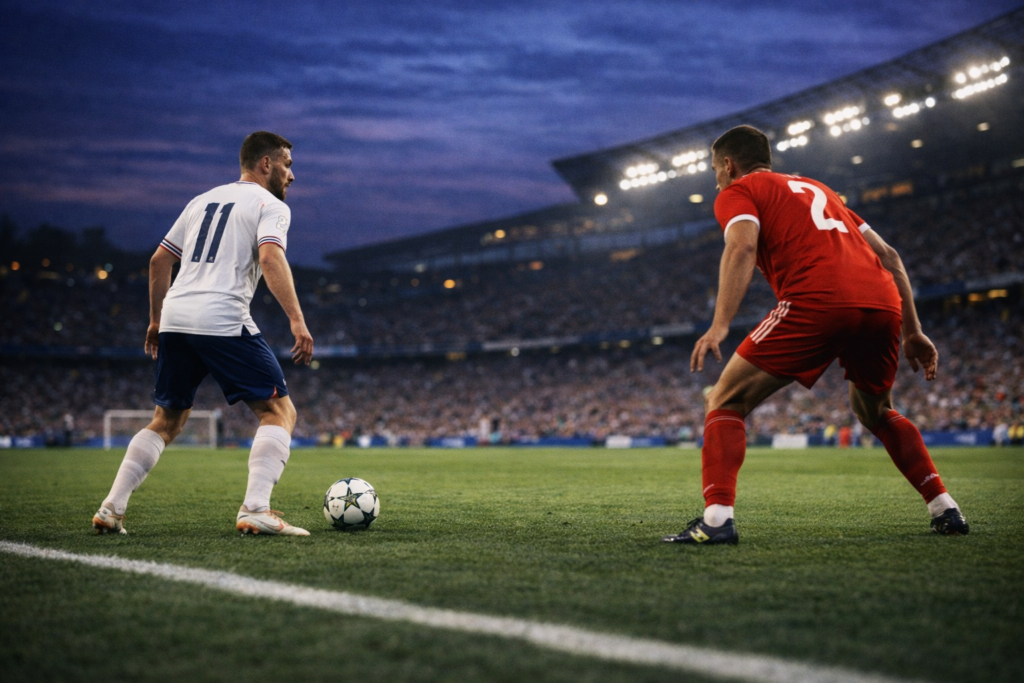
If the overload is the jab, the isolation is the knockout hook.
Once you have successfully implemented the football overloads and isolations strategy and drawn the defense to one side, you need a mechanism to exploit the weak side. This is usually a rapid switch of play—a “diag” (diagonal ball).
The objective here is Qualitative Superiority.
Let’s say you have a winger who is faster and more skilled than the opposing fullback. If that winger is surrounded by two defenders, his skill is nullified. But, if you use an overload on the opposite side to drag the second defender away, you leave your star winger in a pure 1v1 scenario.
Why is this dangerous?
- Space: The isolated winger has room to knock the ball past the defender.
- Fear: Defenders are terrified of being isolated with pacey wingers. They back off, conceding territory.
- No Cover: If the winger beats his man, he is straight into the box. There is no covering center-back because that center-back is busy dealing with the overload on the other side.
In our upcoming breakdown of Pep Guardiola’s Final Third Mechanics, we will see this is the primary way City scores cut-back goals. They overload the right to isolate the left, get to the byline, and cut it back.
Real-World Case Study: The Manchester City Blueprint
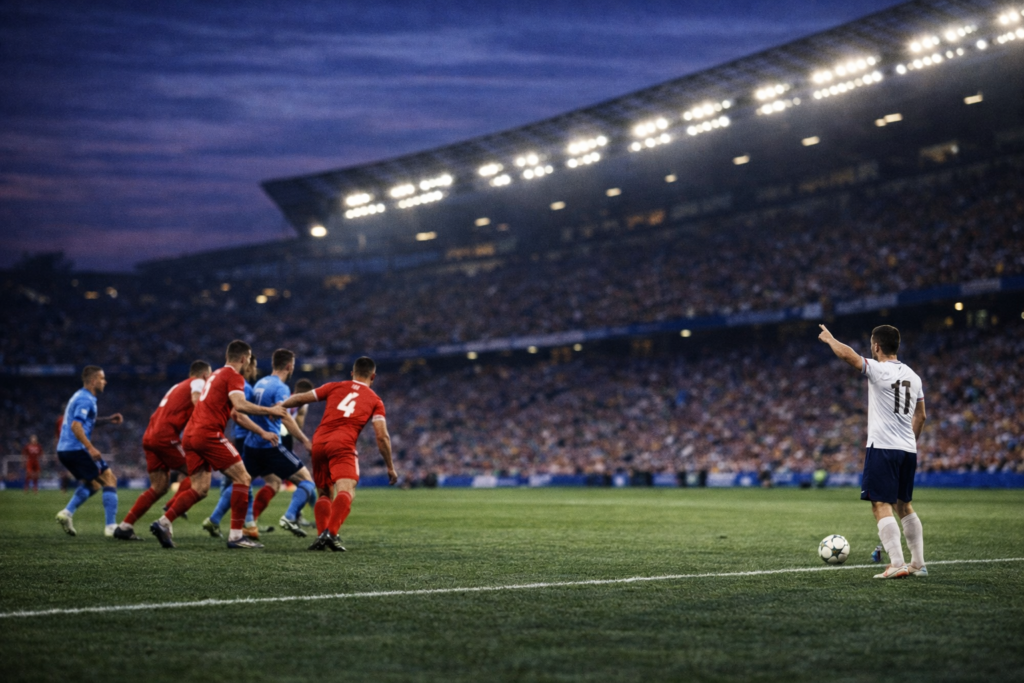
To truly understand football overloads and isolations, we have to look at the masters. Pep Guardiola’s Manchester City, specifically during their treble-winning season, utilized this to perfection.
The Setup:
Jack Grealish (Left Wing) creates the Isolation.
Bernardo Silva, Kevin De Bruyne, and Kyle Walker create the Overload on the right.
City would spend minutes—agonizing minutes for the defense—cycling the ball on the right-hand side. Short passes, triangles, keeping the ball in a phone booth. The opposition defense (let’s say Arsenal or Real Madrid) shifts their entire block to their left to contain De Bruyne and Silva. Total Football Analysis – Overloading to Isolate
The Trigger:
The moment the opposition left-back steps inside to help his center-backs, Rodri or Stones fires a laser-guided diagonal pass to Jack Grealish on the far left touchline.
The Result:
Grealish catches the ball. He is 1v1 against the Right Back. Because the defense shifted so heavily to the right, Grealish has 15 yards of space to drive into the box before a center-back can scramble across. This is the epitome of football overloads and isolations.
Tactical Breakdown: The Switch of Play
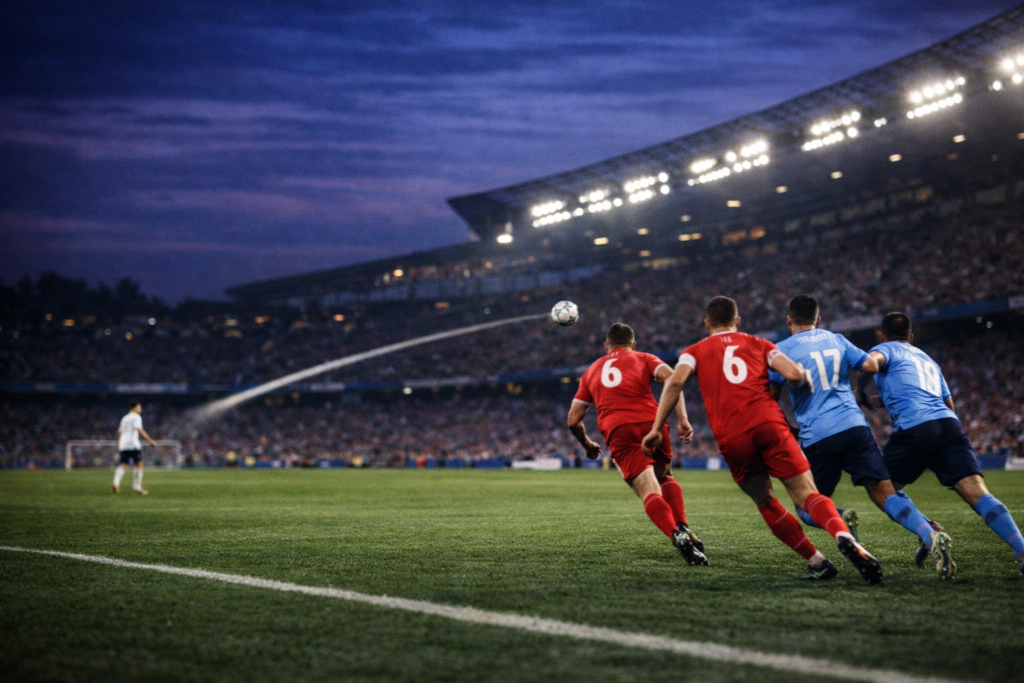
The effectiveness of football overloads and isolations relies entirely on the speed of the switch.
If you create an overload, draw the defense in, and then slowly pass the ball to the other side, the defense will simply shuttle across. You have gained nothing. The ball must travel faster than the defenders can run.
- The Pivot: A defensive midfielder (the #6) is often the fulcrum. The ball comes out of the overload zone to the #6, who instantly hits the isolation player.
- The Skip Pass: A more advanced technique where a player in the overload zone skips the #6 and hits the isolation winger directly. This is high risk, but high reward.
We discuss the defensive countermeasures to this in our article How Elite Teams Defend Without the Ball, but from an attacking perspective, ball speed is non-negotiable.
Comparison: Overload Zones vs. Isolation Zones
Here is a quick reference guide to how players should behave in these distinct phases of the football overloads and isolations tactic.
| Feature | The Overload Zone | The Isolation Zone |
| Player Density | High (3 or more attackers) | Low (1 attacker, usually wide) |
| Touch Limitation | 1 or 2 touches (Quick interplay) | Multiple touches (Dribbling allowed) |
| Primary Objective | Draw defenders in / Keep possession | Beat the defender 1v1 / Score |
| Tempo | Fast, short, sharp | Slow to Fast (Stop-start dribbling) |
| Risk Level | Low Risk (Safety in numbers) | High Risk (Take on the man) |
| Ideal Player Profile | Intelligent passers, high IQ | Explosive pace, trickery |
Coaching the Concept: Drills for Perfection
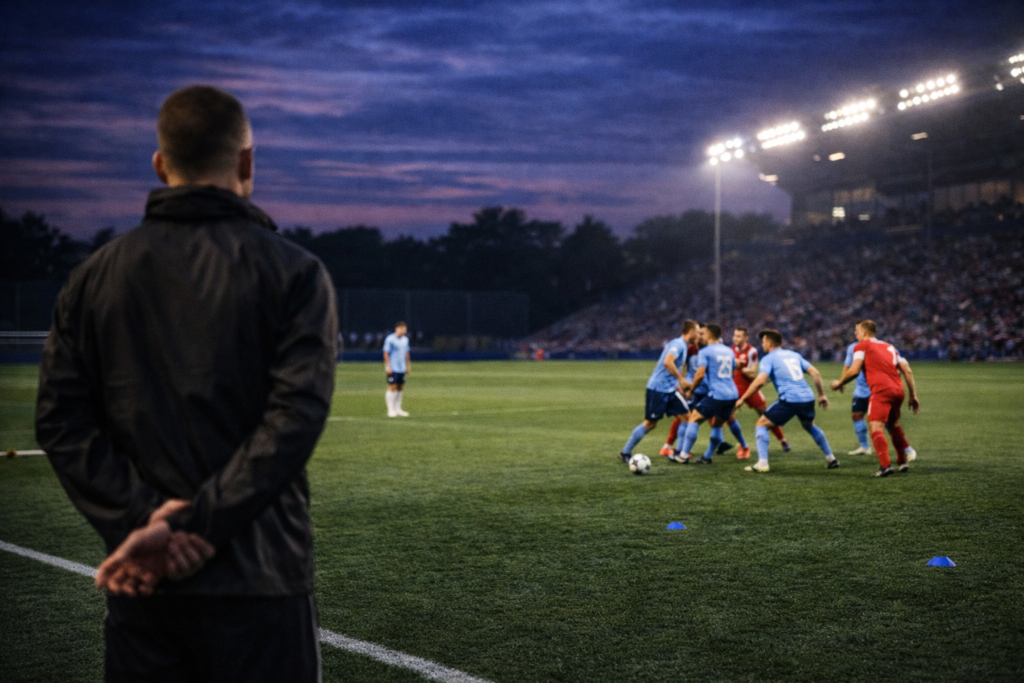
You cannot just tell players to “do football overloads and isolations.” You have to train the muscle memory. Here is a drill I’ve used for years that yields incredible results.
Drill: The 3-Zone Rondo Transition
- Setup: Divide the pitch into three vertical zones. The left and right zones are wide channels; the middle zone is the largest.
- The Overload Phase: Start a 5v3 rondo in the Right Zone. The attacking team must complete 6 passes. The defenders try to intercept.
- The Isolation Trigger: Once 6 passes are completed, the attackers must transfer the ball through the Middle Zone to a single winger waiting in the Left Zone.
- The Finish: The Left Winger is 1v1 against a waiting fullback and has 5 seconds to score in a mini-goal.
Coaching Points:
- Are the players in the overload zone moving constantly?
- Is the switch of play crisp and driven?
- Is the isolated player staying wide (hugging the touchline) to maximize the stretch?
This drill simulates the exact mechanical process of football overloads and isolations in a match environment. Spielverlagerung – Juego de Posición
Final Thoughts
Mastering football overloads and isolations is the difference between a team that retains possession aimlessly and a team that uses possession as a weapon. It is a concept that transcends formations. Whether you are coaching a Sunday league team or analyzing Xabi Alonso’s Bayer Leverkusen, you will see this pattern everywhere.
The beauty of the game lies in this deception. Look left, pass right. Crowd one area to vacate another. It is a chess match played at 100 miles per hour, and understanding this concept is your key to checkmate.
If you are ready to dig deeper into the metrics that quantify these attacks, I suggest reading our next breakdown on PPDA Explained to understand the defensive intensity required to stop these moves.
Enjoyed this breakdown?
Don’t Just Watch Football. Understand It.
Join KharaSportsDaily and receive occasional deep tactical insights most fans miss.
Occasional analysis. No match reports. No noise.
Frequently Asked Questions (FAQs)
Can you create overloads centrally?
Absolutely. As mentioned in the Inverted Fullbacks Explained guide, moving fullbacks inside creates a central overload, forcing opposition wingers narrow, which then creates isolations for your own fullbacks or wingers on the outside.
How do you defend against football overloads and isolations?
It requires a disciplined Low Block Defense or a very aggressive High Press to prevent the switch. If you sit in a mid-block and don’t slide quickly enough, you will get picked apart.
What is the best formation for this?
While any formation can do it, the 4-3-3 and the 3-2-2-3 (Box Midfield) are naturally suited for football overloads and isolations because they naturally place triangles of players on the wings while keeping width on the opposite side. FourFourTwo – The Overload
Why is xG relevant here?
What Is xG? teaches us that shots created from cut-backs after an isolation play have a much higher probability of scoring than crosses from deep. Overloads and isolations are designed to generate high-xG chances.
About the Author
Football Tactician & Analyst. breaking down elite systems for coaches and fans.