

Introduction
In my whole experience of analyzing football, I’ve seen teams that attack, and I’ve seen teams that suffocate. Pep Guardiola’s Manchester City doesn’t just score goals; they dismantle the opponent’s will to defend. It is not chaos; it is a surgical procedure performed by eleven men in sky blue.
When we talk about Pep Guardiola final third tactics, we aren’t talking about luck or individual brilliance—though he has plenty of that. We are talking about a mechanical, repeatable system designed to create high-probability chances while making it mathematically impossible for the opponent to counter-attack.
I often compare Guardiola’s final third approach to an anaconda. It wraps around you, slowly tightening its grip. You think you are safe because you are in a low block, but suddenly, the air is gone. In this tactical case study, I am going to peel back the layers of this system.
Key Takeaways
- The “Pocket” Invasion: How City players occupy the half-spaces to break defensive lines.
- Overload to Isolate: The art of dragging a defense to one side to create 1v1s on the other.
- The Cutback King: Why Guardiola prefers low, pull-back crosses over high, hopeful crosses.
- Rest Defense: The 3-2 or 2-3 structure that kills counter-attacks before they start.
- La Pausa: The weapon of patience used to freeze defenders.
Enjoying the analysis?
Don’t Just Watch Football. Understand It.
Join KharaSportsDaily and receive occasional deep tactical insights most fans miss.
Occasional analysis. No match reports. No noise.
Table of Contents
The Half-Space Invasion (The “Pockets”)
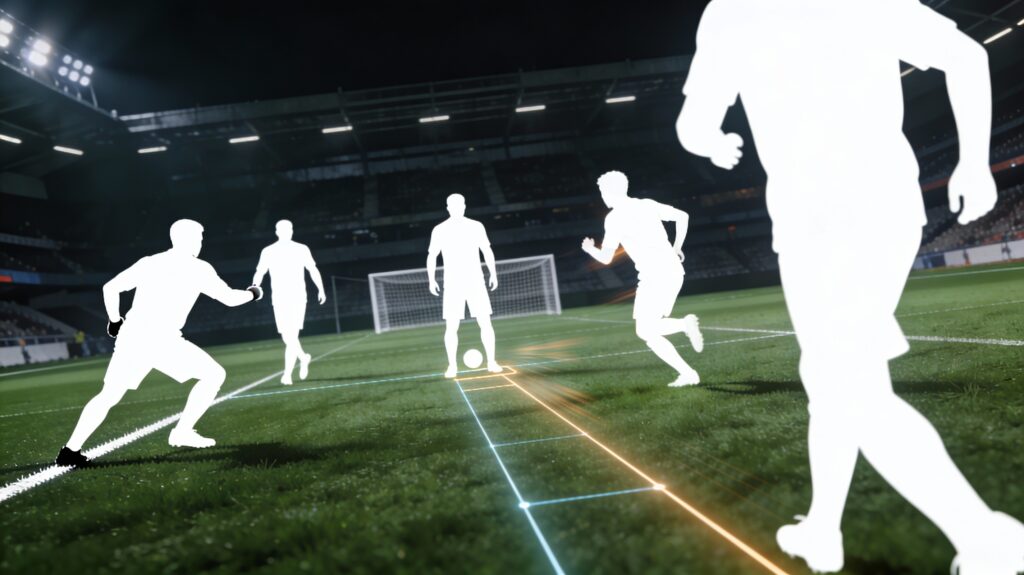
If you want to understand Pep Guardiola final third tactics, you must look at the grass. Specifically, the vertical channels running between the wing and the center. We call these the Half-Spaces.
In my coaching days, we called this “Zone 14’s neighbor.” Guardiola views these zones as the most dangerous areas on the pitch. Why? Because when a player like Kevin De Bruyne or Phil Foden receives the ball here, the opposition center-back and full-back are paralyzed by indecision.
- If the Center-Back steps out: He leaves a gap for Haaland to run into.
- If the Full-Back tucks in: He leaves the winger wide open.
City floods these zones. They don’t just stand there; they arrive there. You will often see a midfielder make an “underlap” run into this pocket while the winger pins the fullback wide. It creates a “damned if you do, damned if you don’t” scenario for the defender.
Overload to Isolate (The 1v1 Kill)
This is a classic concept I’ve seen evolved from his Bayern Munich days. The principle is simple: Overload one side to isolate the other.
Imagine the pitch divided vertically. City might push four or five players to the left side—Jack Grealish, Bernardo Silva, and a fullback. They play short, intricate passes (Tiki-Taka style). Naturally, the opponent’s defensive block shifts over to suffocate the space.
- The Trap: The moment the defense shifts, City switches the ball rapidly to the opposite wing.
- The Result: Suddenly, a dynamic winger like Jeremy Doku or Savinho is 1v1 against an isolated fullback with acres of space.
This is why you see City wingers often hugging the touchline. They are waiting for the overload to do its job. As discussed in our High Press vs Mid-Block article, moving a defensive block requires coordination. Guardiola exploits the split second it takes for a defense to slide across.
The Cutback Zone (The “City Goal”)
If you have watched City for the last five years, you have seen the same goal scored a hundred times. A winger drives to the byline (the end of the pitch) and, instead of crossing it high into the air, he cuts it back to the penalty spot or the edge of the box.
Why? Because statistics—and Pep Guardiola final third tactics are heavily data-driven—show that low cutbacks have a much higher xG (Expected Goals) than high crosses.
- Blind Spots: Defenders running back towards their own goal have to look at the ball and the man. A cutback forces them to turn 180 degrees, often losing the attacker.
- Late Runners: Midfielders (like Gündogan used to do, or Kovacic now) arrive late into the box. They are unmarked because the defenders have collapsed deep to cover Haaland.
Rest Defense (Attacking While Defending)
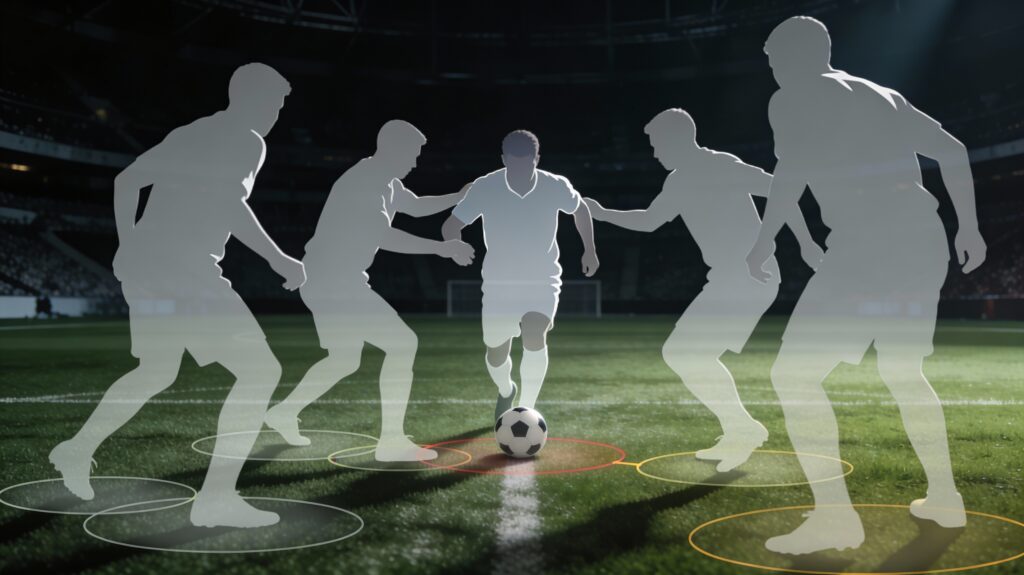
The most underrated aspect of City’s attack is their defense. It sounds contradictory, but in Guardiola’s system, you are never more focused on defending than when you have the ball in the opponent’s box. This is Rest Defense.
As City suffocates the opponent in the final third, they typically adopt a 3-2 or 2-3 shape at the back to “lock” the exit routes. However, in late 2025 and into 2026, we’ve seen Pep evolve this into a hyper-aggressive 3-1-6 during sustained sieges.
- The 3 Defenders: Usually a “back three” spread wide to cover the channels and track long balls into the corners.
- The Single or Double Pivot: While Rodri + 1 (the 3-2) provides maximum security, City now frequently utilizes a 3-1 structure. This leaves Rodri as the lone sentry, allowing a fifth or even sixth attacker to crash the “Cutback Zone.”
- The Trap: This structure doesn’t just prevent counter-attacks; it encourages them. By leaving a seemingly “open” passing lane, City baits the opponent into a clearance that a waiting Rodri or Rico Lewis can intercept instantly.
This creates a cycle of relentless pressure. By the time the opponent wins the ball, they are already surrounded. It isn’t just a defense; it’s a cage.
The “Box” Midfield (3-2-2-3)
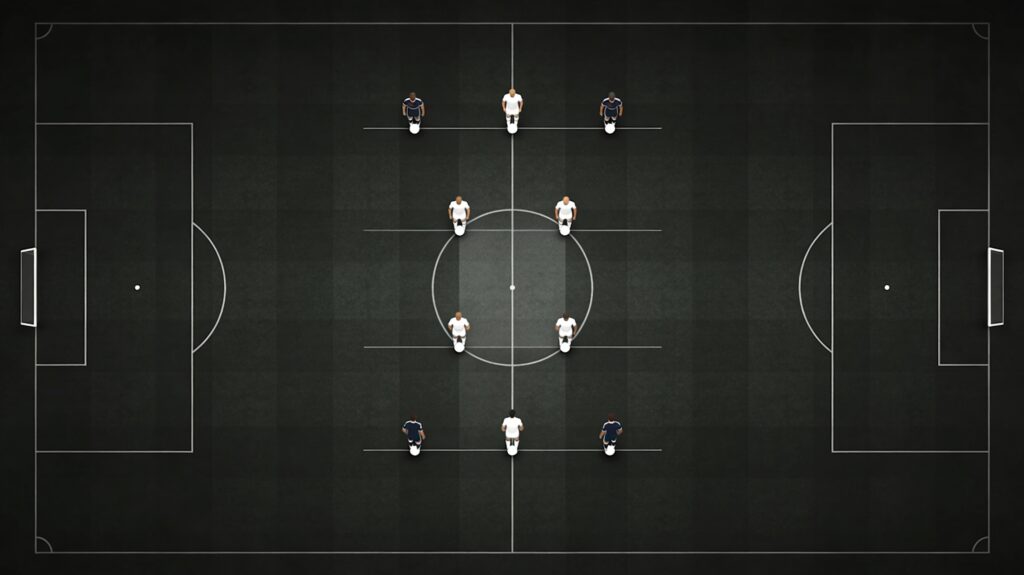
The evolution of the “Box Midfield” has been fascinating to watch. In recent seasons, Guardiola has inverted a defender (often John Stones or Rico Lewis) into midfield to create a square or “box” shape in the center of the pitch.
This creates a 4v3 or 4v2 overload in the central areas.
- The Benefit: It ensures City always has a “free man” in midfield to progress the ball.
- The Final Third Impact: By dominating the center, they force the opposition narrow, which opens up the wings for the “Overload to Isolate” tactic we discussed earlier.
Analyst Note: This requires players with immense technical intelligence. You cannot play this system if your defender isn’t comfortable receiving the ball under pressure.
La Pausa (The Weapon of Patience)
“La Pausa” is a Spanish term for “The Pause.” It is the ability to slow the game down, put your foot on the ball, and wait for the defender to commit.
In the final third, most teams rush. They panic. Pep Guardiola final third tactics preach the opposite. You will see Bernardo Silva or Phil Foden stop completely with the ball. They are waiting for a teammate to make a run or a defender to step out of position. It is psychological warfare. It forces the defender to stay concentrating for 90 minutes, and eventually, the defender blinks.
The Haaland Pivot (Evolution from False 9)
For years, Pep played without a striker (The False 9). Then came Erling Haaland.
The mechanics changed slightly. Instead of the striker dropping deep to create midfield superiority—as Messi did—Haaland stays high to pin the center-backs back. In modern analysis, this is referred to as Tactical Gravity.
Haaland acts as a gravity well, sucking defenders toward him. By forcing the defensive line deeper, he artificially enlarges the space in Zone 14 (the area just outside the penalty box). This creates the pockets of space that players like Foden and De Bruyne invade. He may touch the ball less than a False 9, but his movement dictates exactly where the defenders are allowed to stand.
Comparison: The Evolution of Pep Guardiola final third tactics
| Era | Primary Shape | Key Final Third Mechanic | Key Player Profile |
| Barcelona (2008-2012) | 4-3-3 (False 9) | Messi dropping deep, rapid 1-2s in central zones. | Dribblers & Passers (Messi, Iniesta) |
| Bayern Munich (2013-2016) | 2-3-5 / W-M | Extreme width, wingers hugging touchlines, cutbacks. | 1v1 Wingers (Robben, Ribery) |
| Man City (Early) | 4-3-3 (Free 8s) | De Bruyne/Silva in half-spaces, low crosses. | Free 8s (KDB, David Silva) |
| Man City (Current) | 3-2-5 / 3-Box-3 | Rest defense control, Haaland pinning, patient recycling. | Controller-Defenders (Stones, Rodri) |
Real World Example: City vs. The Low Block
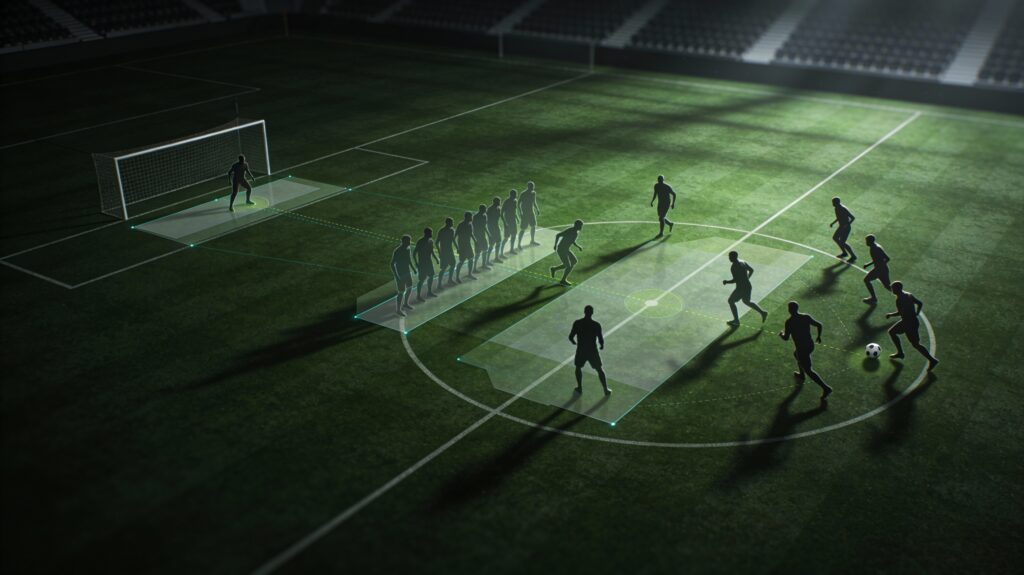
Let’s look at a typical scenario—City playing against a team defending with 10 men behind the ball (a Low Block Defense).
- Circulation: City moves the ball U-shape around the box. Center-back to Wing-back to Winger to Midfielder.
- The Trigger: A winger (e.g., Grealish) receives the ball wide left. He pauses (La Pausa).
- The Overload: Bernardo Silva runs into the half-space (underlap). The fullback follows him.
- The Isolation: Grealish recycles the ball back to Rodri, who switches it instantly to the right.
- The Execution: Foden catches it, drives at the isolated left-back, gets to the byline, and cuts it back.
- The Goal: Haaland taps it in from 6 yards out.
It looks simple, but the coordination required to move the opponent’s block is immense.
Final Thoughts
Understanding Pep Guardiola final third tactics changes how you watch football. You stop looking at the ball and start looking at the space. You realize that every pass backward is often a trap to pull the opponent forward, and every pause is a calculated move to freeze a defender.
It is a ruthless, efficient machine. While other managers rely on moments of magic, Guardiola relies on probability and geometry. And as the trophy cabinet shows, the math usually wins.
Next up in our Tactical Blueprint, we will look at the metric that helps quantify this dominance: 12. PPDA Explained Metrics & Models.
Enjoyed this breakdown?
Don’t Just Watch Football. Understand It.
Join KharaSportsDaily and receive occasional deep tactical insights most fans miss.
Occasional analysis. No match reports. No noise.
Frequently Asked Questions (FAQs)
Why does Pep Guardiola use inverted fullbacks in the final third?
Inverted fullbacks move into midfield to provide protection against counter-attacks (Rest Defense) and to create numerical superiority in the center, allowing the creative midfielders to push higher into the “pockets”.
What is the “Half-Space” in Guardiola’s tactics?
The half-space is the vertical channel between the wing and the center of the pitch. It is the sweet spot for attacking because it forces defenders to make a choice between stepping out or staying deep.
How does Haaland fit into the possession style?
Haaland pins the opposition defense back, creating space in front of the defensive line for players like Foden and De Bruyne to operate. He finishes the chances created by the cutbacks.
How do I replicate this in my own team?
Start with the Rest Defense. Ensure your team is structured to win the ball back immediately after losing it. Then, focus on occupying the five vertical lanes (2 wings, 2 half-spaces, 1 center) to stretch the opponent.
About the Author
Football Tactician & Analyst. breaking down elite systems for coaches and fans.
[…] our upcoming breakdown of Pep Guardiola’s Final Third Mechanics, we will see this is the primary way City scores cut-back goals. They overload the right to isolate […]