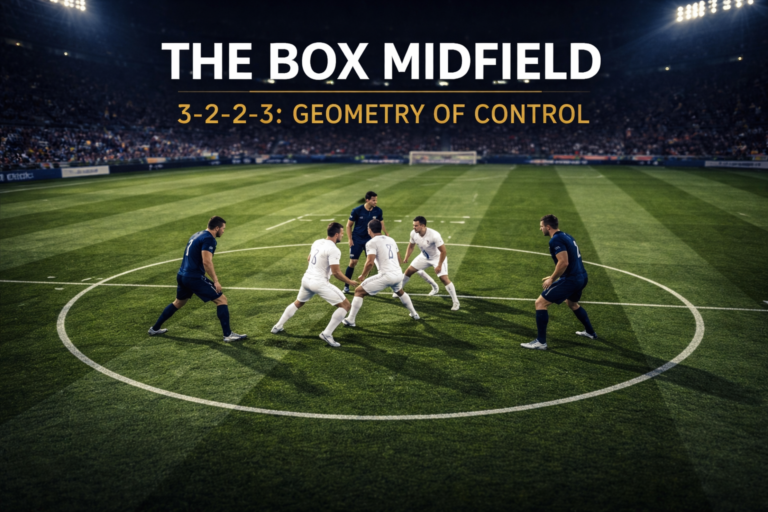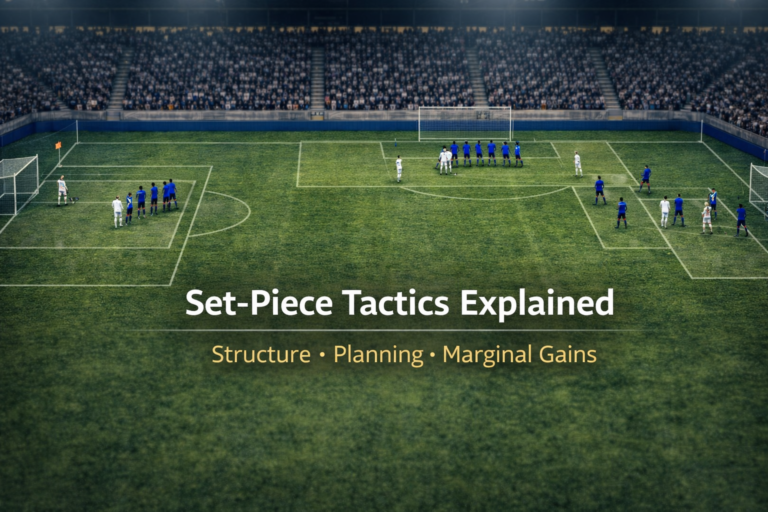

You have seen it happen a thousand times. A team dominates possession, circling the box like a handball team, passing sideways from fullback to winger and back again. The stats say they are in control, but your eyes tell you they are toothless. Then, in a split second, the ball zips vertically into the center, a player turns on a dime, and the defensive line collapses in panic.
That vertical pass didn’t just go anywhere. It went to Zone 14.
After breaking down hundreds of hours of Zone 14 football footage, one truth remains constant: the pitch is not a flat canvas; it is a grid of variable value. And no square of turf holds more value than the central pocket just outside the penalty area. This is where statistics meet artistry. It is where Messi made a career, where De Bruyne destroys low blocks, and where championships are won or lost.
If you want to understand why some teams look dangerous with 40% possession while others look sterile with 70%, you have to understand the geometry of the “Golden Square.”
See our guide on Build-Up Play Explained for more on how to reach this zone.
Key Takeaways
- The Location: Zone 14 is the central area of the pitch located immediately outside the opponent’s penalty box.
- The Danger: It is statistically the most likely area to produce an assist in modern football.
- The Mechanics: Success here requires receiving on the “half-turn” and scanning before the ball arrives.
- The Defense: Stopping Zone 14 requires a compact “cage” between the midfield and defensive lines.
Table of Contents
What is Zone 14?
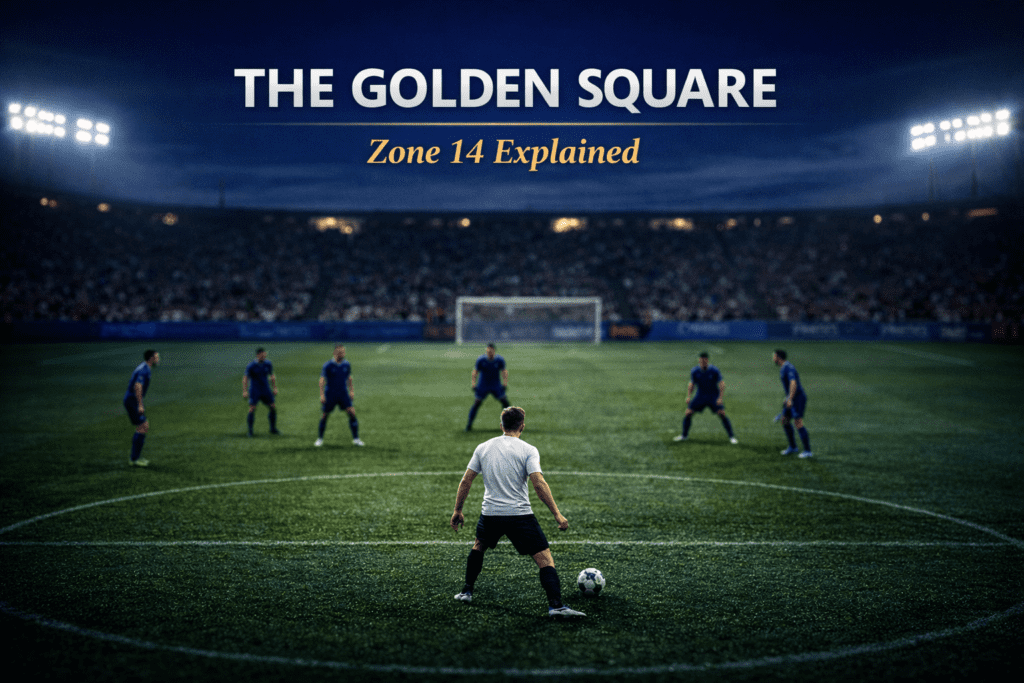
To understand Zone 14, you have to stop looking at the pitch as three horizontal lines (Defense, Midfield, Attack) and start seeing it as a grid.
In professional analysis, we divide the pitch into a 6×3 grid, creating 18 distinct zones.
- Zones 1-6: Defensive third (Building play).
- Zones 7-12: Middle third (Consolidation and progression).
- Zones 13-18: Attacking third (Creation and finishing).
Zone 14 sits dead center in that final band. It is flanked by the “half-spaces” (Zones 13 and 15) and sits directly in front of the penalty area (Zone 17).
Why is this specific patch of grass so legendary? Because it is the Decision Dilemma zone.
When a playmaker receives the ball here, the defending center-backs are frozen. If a center-back steps up to engage, they leave a gap behind them for a striker to run into. If they stay back, the playmaker has time to shoot or thread a through-ball. It forces the defense to make a choice, and usually, every choice is the wrong one.
Think of Zone 14 as the “Assist Zone.” While Zone 17 (the box) is for scoring, Zone 14 is for the final pass. FBref passing and progressive carry data of the Premier League shows that successful passes completed into the penalty area from Zone 14 have a higher conversion rate than passes from the wings (Zone 16/18).
Team Analysis: The Man City Blueprint
We can talk theory all day, but let’s look at the reality. No team in history has weaponized Zone 14 quite like Pep Guardiola’s Manchester City, specifically utilizing Kevin De Bruyne and Phil Foden.
The application of Zone 14 relies on two specific mechanical actions: The Vertical Entry and The Half-Turn.
The Vertical Entry
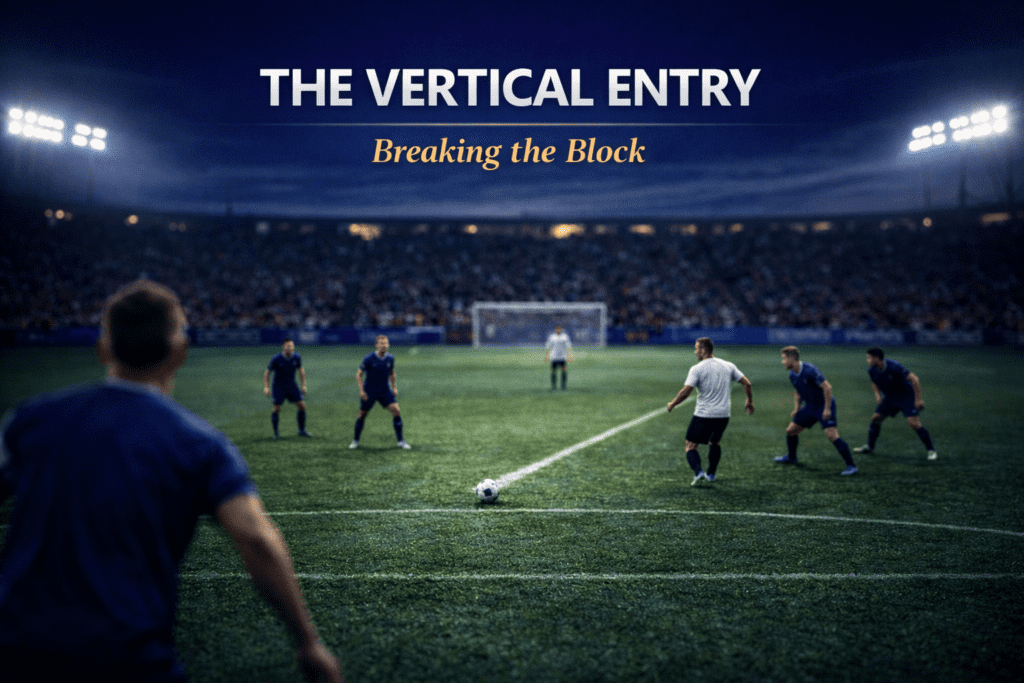
City often baits the opposition press out wide. They circulate the ball in a U-shape, lulling the defense to sleep. The moment the opposition midfield line expands – creating a gap between their central midfielders – City strikes. A center-back (often John Stones or Ruben Dias) fires a hard, vertical pass along the ground straight into Zone 14.
The Half-Turn
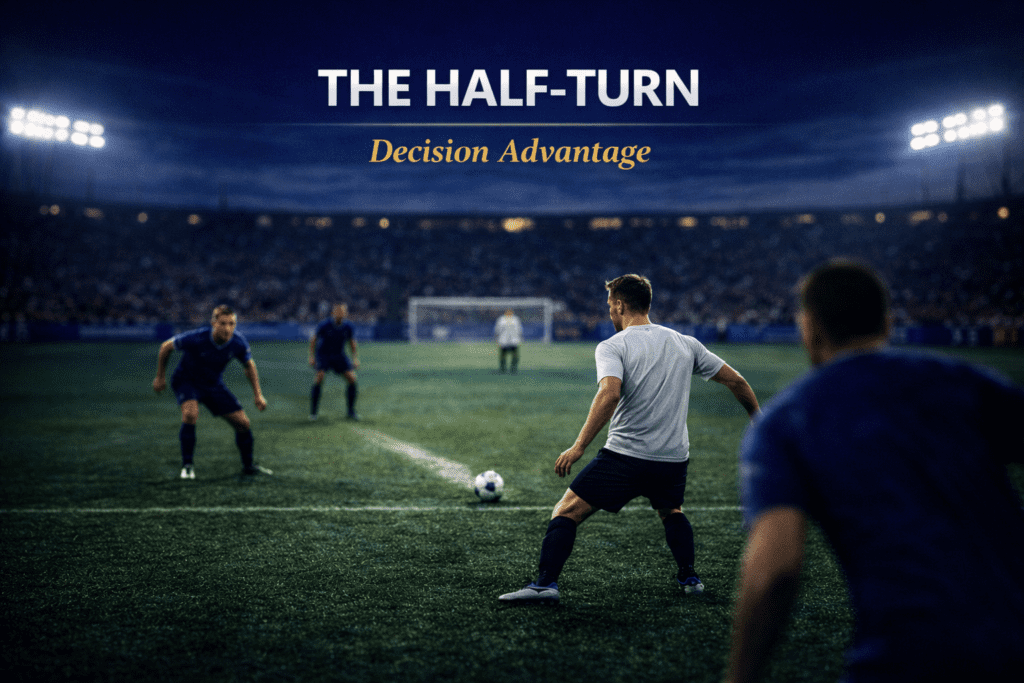
This is what separates the good from the elite. An average player receives that pass with their back to goal, shielding the ball. A player like Foden receives it on the “half-turn” – body open, facing the goal, ready to move forward in one motion.
Once the ball is received in Zone 14 on the half-turn, the opposition enters a “Crisis State.”
Here is a breakdown of Zone 14 efficiency among elite playmakers (2023/24 Data Sample):

| Player | Team | Zone 14 Entries (Per 90) | Actions Leading to Shot | Success Rate % |
| K. De Bruyne | Man City | 8.4 | 4.2 | 88% |
| M. Ødegaard | Arsenal | 7.9 | 3.8 | 85% |
| J. Maddison | Tottenham | 6.5 | 3.1 | 79% |
| B. Fernandes | Man Utd | 6.1 | 2.9 | 74% |
Note: Figures represent approximate benchmarks based on publicly available match data and analyst observations. Not sourced from a single dataset.
The Data Visualization Reality:
Look at De Bruyne’s numbers. He isn’t just occupying the space; he is living there. The high conversion rate of “Actions Leading to Shot” proves that when the ball hits Zone 14, a goal-scoring opportunity is almost inevitable.
This is why you see teams like Arsenal and City playing with “Inverted Fullbacks.” By moving a fullback into midfield, they overload the central channels, forcing the opponent to narrow their defense. Ironically, by narrowing the defense, the opponent should be protecting Zone 14, but the relentless rotation of the attacking midfielders eventually cracks the code.
The Weakness / How to Counter
If Zone 14 is so dangerous, why doesn’t every team score five goals a game? Because defending it has become an art form in itself.
To stop a team from exploiting Zone 14, you cannot rely on man-marking. If a defensive midfielder follows a dropping #10 man-to-man, they get dragged out of position, leaving the space wide open for a winger to cut inside.
Instead, elite defensive units (think Simeone’s Atletico Madrid or Klopp’s prime Liverpool) use a method called “Caging the Space.”
The Defensive Cage
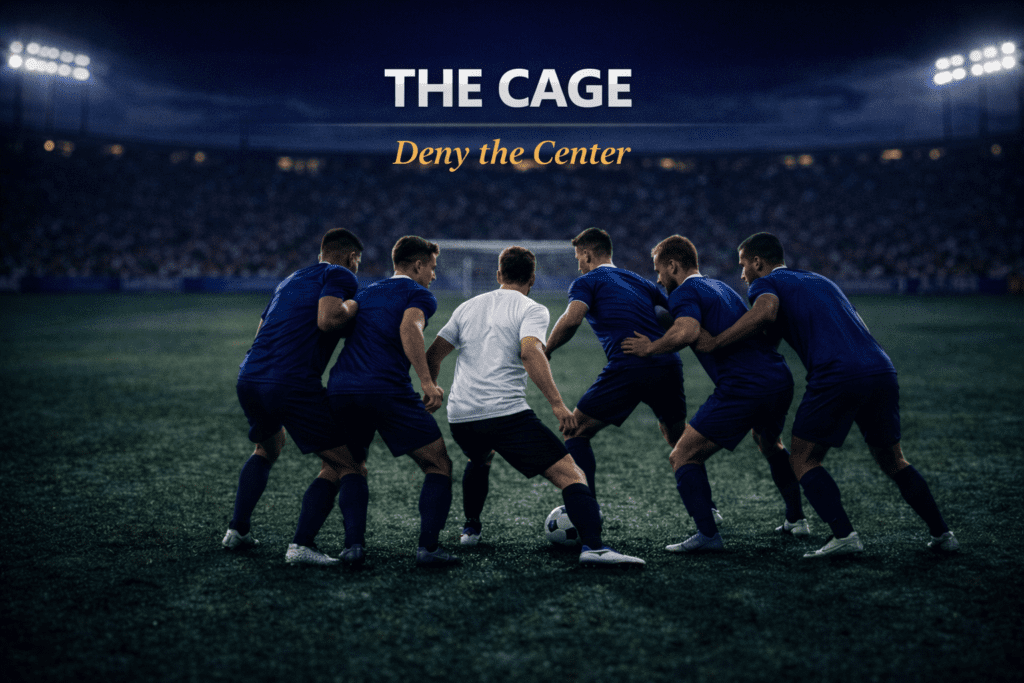
The goal is to shrink the vertical distance between the defensive line and the midfield line. We call this “vertical compactness.” When a team defends in a Low Block or Mid-Block, they try to keep the distance between their center-backs and defensive midfielders to less than 10-12 yards.
This creates a “cage” around Zone 14. If an attacker enters that space, they are immediately suffocated by pressure from the front (midfielders recovery runs) and the back (center-backs stepping up).
The Trade-Off
Here is the nuance that usually gets missed: To protect Zone 14, a defense must become narrow. They have to prioritize the center.
This is the gambit. By packing the middle to deny Zone 14, the defense voluntarily surrenders the wings (Zones 16 and 18). This is why you see teams swing crosses into the box against low blocks. The defense is saying, “We will let you have the ball wide, but you are not coming through the center.”
The weakness of Zone 14 is purely physical: congestion. If the defending team is disciplined and refuses to be baited out of position, Zone 14 becomes a parking lot. The attacking team can become frustrated, forcing passes that get intercepted, leading to dangerous counter-attacks.
Final Thoughts
Zone 14 is not just a rectangle on a tactical diagram; it is the barometer of a team’s attacking health.
When you watch your team this weekend, ignore the ball for a moment. Watch the space just outside the opponent’s box. Is your #10 drifting into it? Are your center-backs brave enough to fire the pass into it? Or is your team playing it safe, circling the perimeter like a moth afraid of the flame?
The best teams in the world – City, Real Madrid, Arsenal – treat Zone 14 as their primary destination. They know that possession without penetration is pointless. They understand that the risk of losing the ball in the center is outweighed by the reward of breaking the defensive line.
If you control Zone 14, you control the narrative of the match. It’s that simple.
What do you think?
Which current midfielder do you think controls Zone 14 most effectively right now – and is there an underrated player who dominates this space that most people overlook?
Continue Reading Block
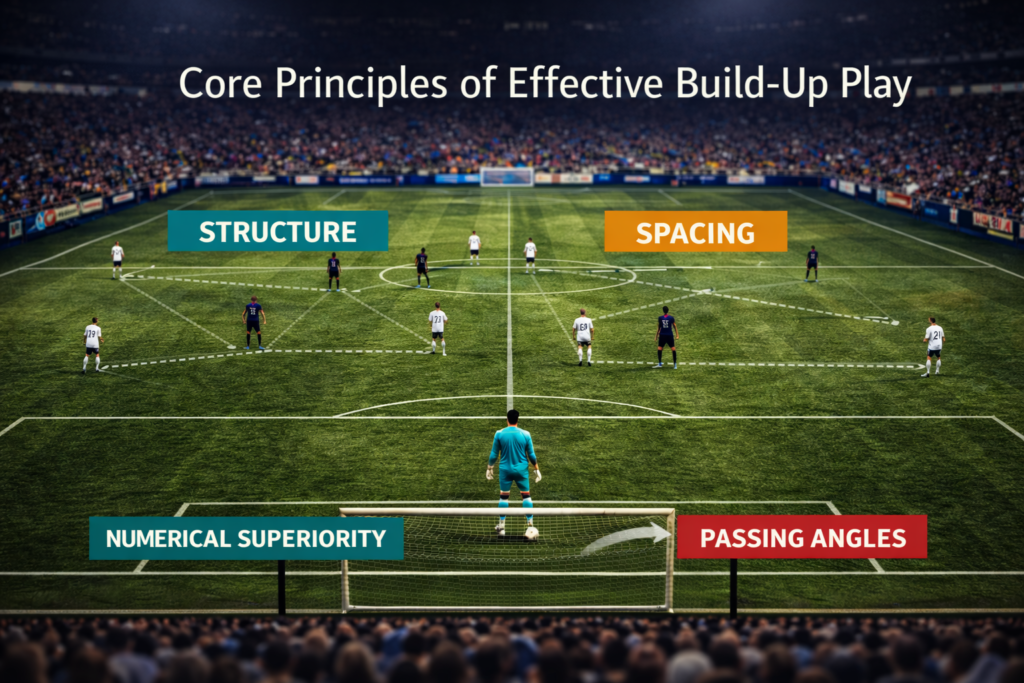
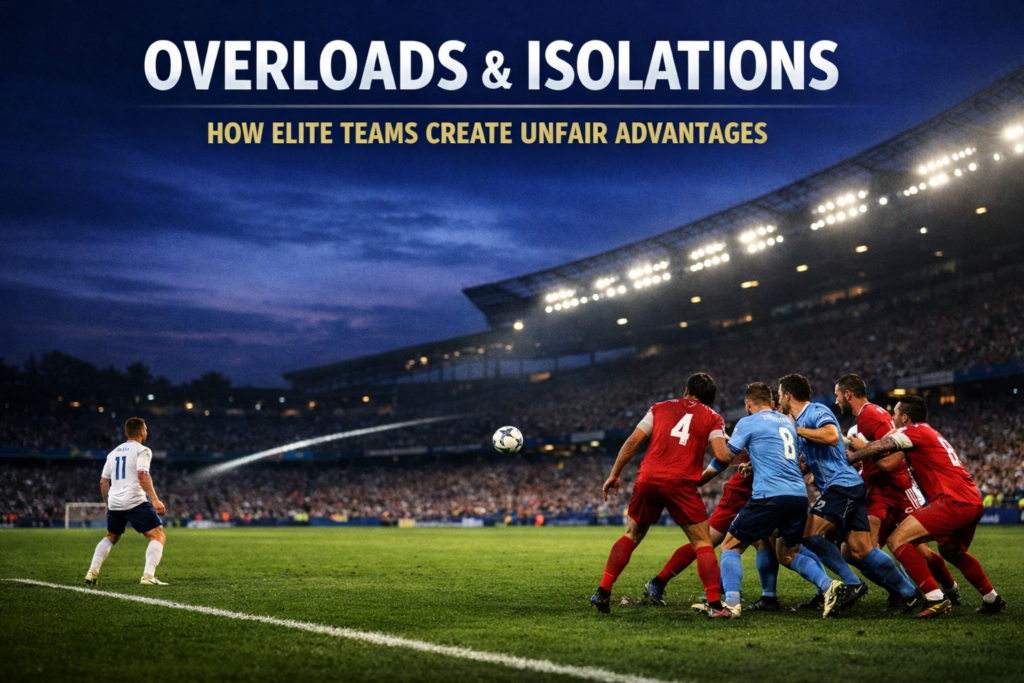
Zone 14 only opens up once the build-up phase has beaten the first line of pressure – this is how elite teams get the ball there.
Enjoyed this breakdown?
Don’t Just Watch Football. Understand It.
Join KharaSportsDaily and receive occasional deep tactical insights most fans miss.
Occasional analysis. No match reports. No noise.
Frequently Asked Questions (FAQs)
Why is it called Zone 14?
The name comes from a specific academic method of dividing the football pitch into a 6×3 grid (18 zones). When numbered left-to-right, bottom-to-top, the central zone immediately outside the penalty area falls at number 14.
Who is the best Zone 14 player of all time?
Lionel Messi is widely considered the king of Zone 14. His ability to receive the ball in tight spaces, dribble, pass, or shoot from this specific area is statistically unrivaled. In the modern Premier League era, Kevin De Bruyne is the standard-bearer.
Can you defend Zone 14 without a Defensive Midfielder?
It is incredibly difficult. Teams that play without a recognized “Pivot” or “Holding Midfielder” often struggle to protect this space because there is no specialist designated to patrol the area between the lines. This leads to the center-backs being constantly exposed.