

Last updated: September 18, 2026
Brighton didn’t beat Liverpool that day. They manipulated them. Every press was invited. Every run was baited. Every movement was calculated.
I still remember watching Brighton’s 3-0 victory over Liverpool at the Amex on January 14, 2023. Not destroy in a scrappy, lucky way. Destroy with precision. Lewis Dunk had the ball in his own box. Liverpool attackers were closing in, frantic. And Dunk just… stopped. Planted his boot on top of the ball like he owned the stadium, waited two full seconds, and then clipped a pass into space that didn’t exist a moment ago. Brighton were in behind before I even realized what happened.
The core concept: De Zerbi Baiting Press uses deliberate pauses in his own box to bait opponents into pressing, then exploits the space they vacate.
Note: De Zerbi has since coached Olympique Marseille (2024-26) and, from March 2026, Tottenham Hotspur, where he continues to deploy variations of this structure. The Brighton examples below remain the clearest film study of the baiting press in action at the highest level.
Key Takeaways
- The Studs-On-Ball Trigger: Stopping the ball dead is a deliberate provocation to lure the opponent into breaking their defensive shape.
- Artificial Transitions: De Zerbi manufactures counter-attacking scenarios by inviting the press, rather than waiting to win the ball back.
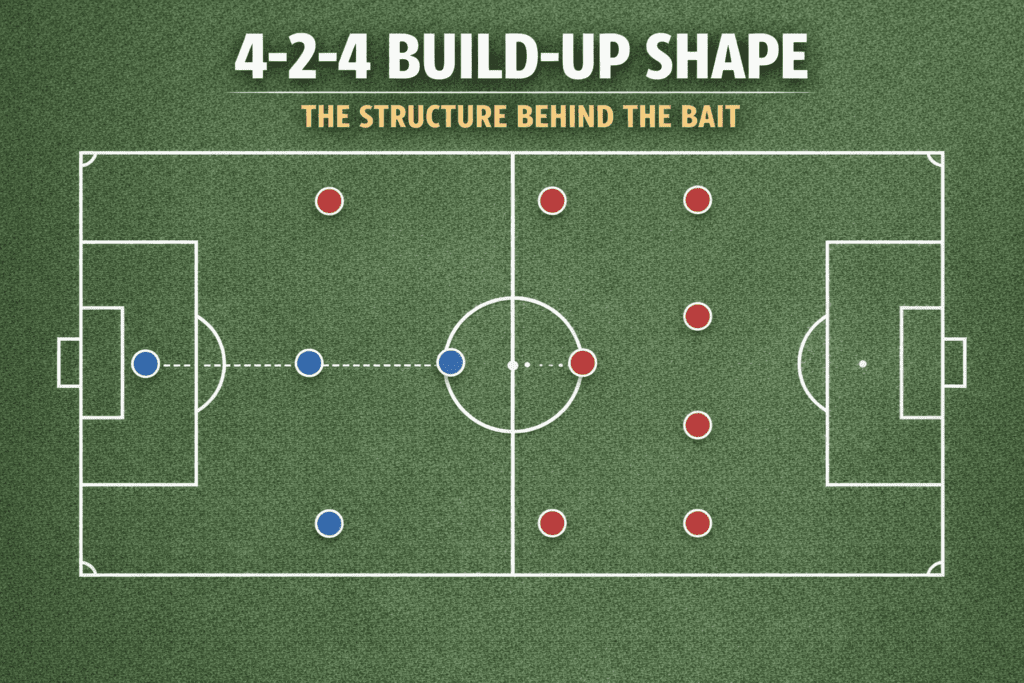
- The 4-2-4 Build-Up: Four attackers pin the backline while a double pivot controls the middle, forcing defenders into impossible choices.
- Third Man Combinations: Once the center-back draws the press, one touch from the pivot bypasses the pressure and releases the free man.
- Risk vs. Reward: The entire system relies on center-backs and goalkeepers operating with the passing range and composure of elite midfielders.
In this breakdown, we are going to deconstruct the mechanics of this “artificial transitions football.” Understanding how this fits within the broader football tactics framework gives you the full picture of how modern teams structure every phase of play., but if you are ready to learn why pausing on the ball is the ultimate weapon, keep reading.
Table of Contents
What is the De Zerbi Baiting Press Structure?
At its core, the De Zerbi baiting press structure is a philosophy of provocation. Traditional possession play – think of the classic Spanish “Tiki-Taka” – relies on moving the opponent by moving the ball laterally. You pass left, they shift left; you pass right, they shift right. You do this until a gap opens.
De Zerbi argues that this is too slow for the modern game. Instead of moving the ball to move the opponent, he uses the ball carrier to move the opponent.
The concept relies on “Artificial Transitions“. A normal transition happens when possession changes hands – for example, if Liverpool loses the ball, their shape is disorganized, and Brighton can counter-attack. By pausing with the ball deep in their own defensive third, his defenders “bait” the opposition into pressing, effectively creating a counter-attack scenario while maintaining controlled build-up play. But De Zerbi asks: Why wait for the opponent to lose the ball?
By pausing with the ball deep in their own defensive third (often inside the penalty box), his defenders “bait” the opposition into pressing. When the opponent jumps to press, they leave their defensive structure. At that exact moment, De Zerbi’s team breaks the press with a vertical combination, creating a “transition” attack against a disjointed defense, all while maintaining 100% control of the ball.
It is psychological warfare. The De Zerbi baiting press structure tells the opponent: “Come and get it.” And when they do, they are already dead.
Roberto De Zerbi Tactics: Why Press Baiting Defines His Philosophy
De Zerbi’s tactical identity extends beyond the baiting press structure. At Sassuolo, Brighton, and now Marseille, three principles remain constant: positional overloads in the half-spaces, goalkeeper integration as an 11th outfield player, and the deliberate provocation of the opponent’s pressing triggers. The baiting press is not an isolated trick – it is the logical extension of his belief that controlling when the opponent presses is more valuable than controlling where the ball travels. The full tactical framework that contextualises this approach is covered in the football tactics framework guide.
How De Zerbi’s Baiting Press Works: Brighton’s Mechanical Breakdown
To truly master the De Zerbi baiting press structure, we have to look at the mechanics he instilled at Brighton and Hove Albion. It wasn’t just about intent; it was about rigid geometric precision.
1. The “Sole of the Foot” Trigger
This is the most recognizable trademark of De Zerbi’s teams. You will see center-backs like Lewis Dunk or Levi Colwill receive the ball and immediately put the sole of their boot on top of it.
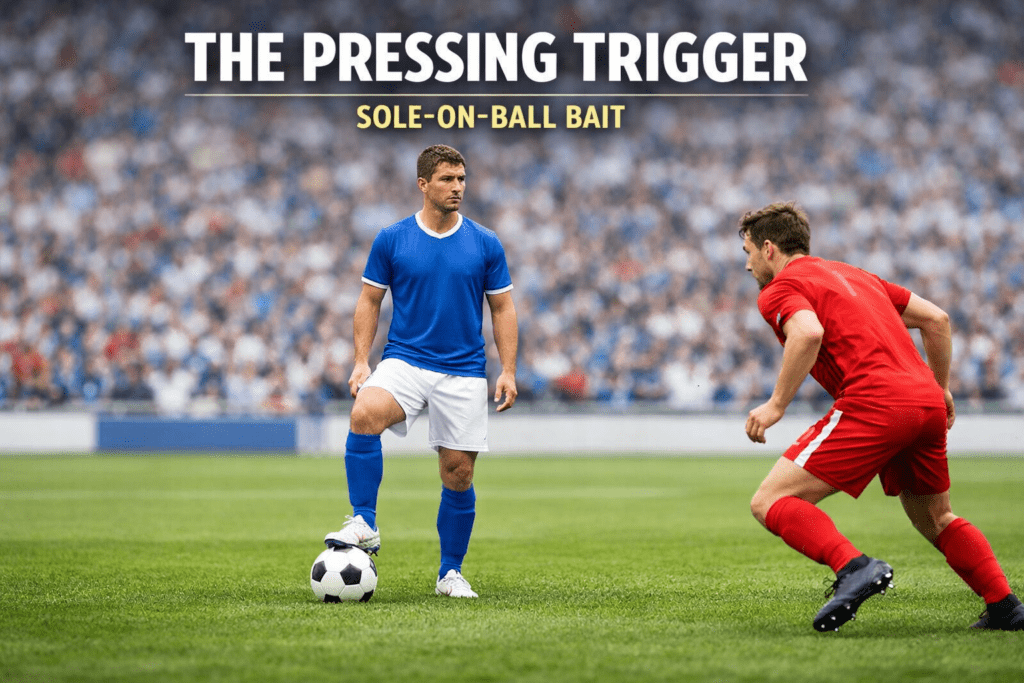
This does two things:
- Stops Momentum: It kills the spin and speed of the ball, allowing for a perfect next pass.
- Signals the Press: It is a visual trigger for the opponent. It looks arrogant. It invites pressure. It creates a “Pressing Trigger” for the striker.
As the striker accelerates to close down the motionless defender, the defender waits until the distance is critical – usually within 2-3 yards. This commits the striker fully. Once the striker is committed, he cannot change direction. The defender then passes past him to a teammate who is now in free space.
2. The Double Pivot “Box”
The engine room of the De Zerbi baiting press structure is the double pivot. As part of De Zerbi Brighton tactics, this was often Moises Caicedo and Alexis Mac Allister (or later, Billy Gilmour and Pascal Groß).

Unlike other systems where midfielders rotate or drift wide, De Zerbi’s pivots stay incredibly central and close to each other. They position themselves essentially on the toes of the opposition midfielders. This creates a dilemma for the opponent:
- If you mark the pivots tightly: You leave the passing lanes to the strikers (the “10s”) open.
- If you block the passing lanes: You leave the pivots free to receive the ball, turn, and drive.
3. The “Third Man” Release
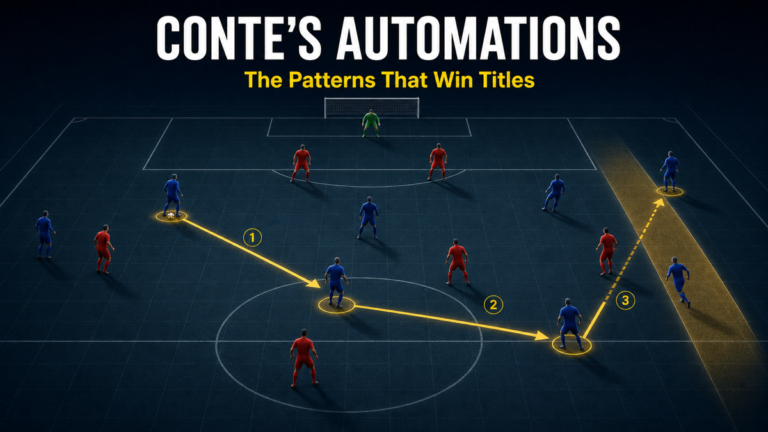
This is where the magic happens. The bait (the defender) draws the press. The connector (the pivot) offers a bounce pass. The target (the free man) receives the ball in space.

Typically, the pass goes from Center-Back -> Pivot -> Full-Back or Winger. Because the opponent pressed the Center-Back, the rest of the team has to shift over. This shift creates massive gaps on the far side or behind the midfield line. By using a “Third Man” combination – where the pivot touches the ball purely to redirect it – Brighton bypasses entire defensive lines in seconds.
Data Comparison: Vertical Efficiency
Let’s look at how this impacted Brighton’s progression numbers compared to a traditional possession side during the 22/23 season peak.
This is where De Zerbi’s system breaks traditional logic:
| Metric | Traditional Possession (Avg) | De Zerbi’s Brighton (22/23) |
| Avg. Time on Ball (CBs) | 1.8 Seconds | 3.2 Seconds |
| Passes Per Sequence | 6.5 | 5.1 |
| Vertical Distance per Pass | 12.4m | 16.8m |
| Press Resistance (Pass Completion) | 84% | 89% |
Comparison of possession metrics showing the distinct “pause and verticality” of the De Zerbi baiting press football structure.
This is not slower football. It’s delayed acceleration.
You can see the anomaly in the data: Brighton defenders held the ball longer (the bait), but their passing sequences were shorter and more vertical. They weren’t keeping the ball for the sake of it; they were holding it to launch a spear.
4. The 4-2-4 Pinning
Why doesn’t the opponent’s defense just step up to compress the space? Because of the front four.
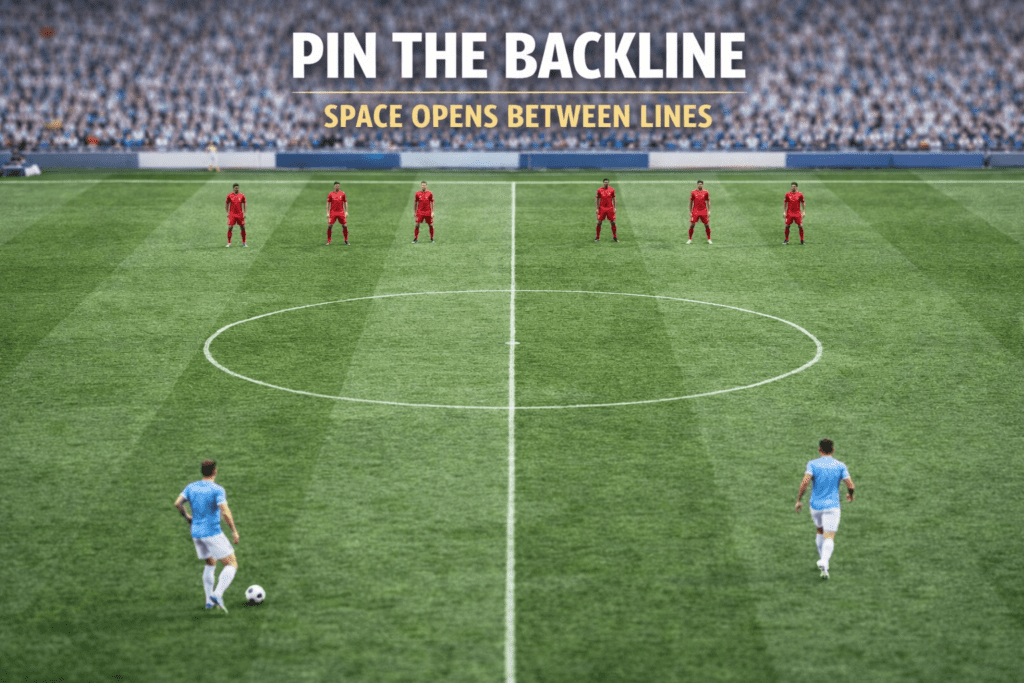
De Zerbi usually deploys two wide wingers (like Mitoma and March) and two central “10s” or strikers (like Ferguson and Welbeck/Pedro). These four players stand very high, right on the offside line. This “pins” the opposition back four. They cannot step up to help their midfield press because if they do, a single long ball over the top puts Mitoma through on goal.
This stretches the pitch vertically. The opposition forwards press high (taking the bait), but their defenders stay deep (pinned by the 4-2-4). The result? A massive, empty space in the midfield for De Zerbi’s pivots to dominate.
5. The Goalkeeper as the First Playmaker
The entire system only works if the goalkeeper is comfortable acting as the first outfield player. Brighton’s keeper doesn’t just recycle possession – he becomes part of the bait. By positioning high and offering a passing option under pressure, he stretches the press even further, creating the extra angle that makes the first line impossible to lock.
Countering De Zerbi’s Press Bait: Tactical Weaknesses Exposed
No system is unbeatable. The De Zerbi baiting press structure has been cracked – not often, but enough to reveal exactly where it breaks. If you’re a coach or analyst, these are the fault lines you need to know.
The system’s core vulnerability is the pass from center-back to pivot. That’s the hinge the entire mechanism depends on. If you sever that connection – without pressing the center-back recklessly – Brighton have nowhere to go.
Everton’s 5-1 win at the Amex in 2023 is the textbook case study. Sean Dyche did the one thing most managers are too proud to do – he refused to play De Zerbi’s game. Everton dropped into a compact low block and physically man-marked Caicedo and Mac Allister out of the match. When Dunk put his sole on the ball and waited for the press trigger, Everton’s striker did nothing. Just stood there. Blocked the passing lane, held position.
Brighton’s entire build-up mechanism jammed. No press meant no artificial transition. No artificial transition meant no vertical space. Brighton ended up playing sideways passes into stagnation. The bait had been ignored – and without the press, De Zerbi had no trap to spring.
The Bigger Picture
Roberto De Zerbi has undeniably changed the tactical landscape. The De Zerbi baiting press structure is more than just a setup; it is a philosophy that prioritizes courage over safety. It asks defenders to be comfortable with chaos, to invite the enemy into their house, and to trust that they have the skill to escort them out the back door.
For you, the viewer or the coach, the lesson is clear: Possession is not just about moving the ball. It is about manipulating the opponent’s mind. The next time you watch a team build from the back, watch the defender’s feet. If you see that sole on the ball, and that momentary pause, you know exactly what they are doing. They are setting the trap.
The question is: Will the opponent take the bait?
What Do You Think?
If you were managing against this system, do you risk the man-to-man high press to disrupt the pivot – or do you swallow your pride, sit in a low block, and refuse the bait entirely?
Related Tactical Breakdowns
De Zerbi’s baiting press only works when the double pivot and build-up structure are operating perfectly – these breakdowns cover both the formation that enables it and the defensive shape that holds when the transition fires.
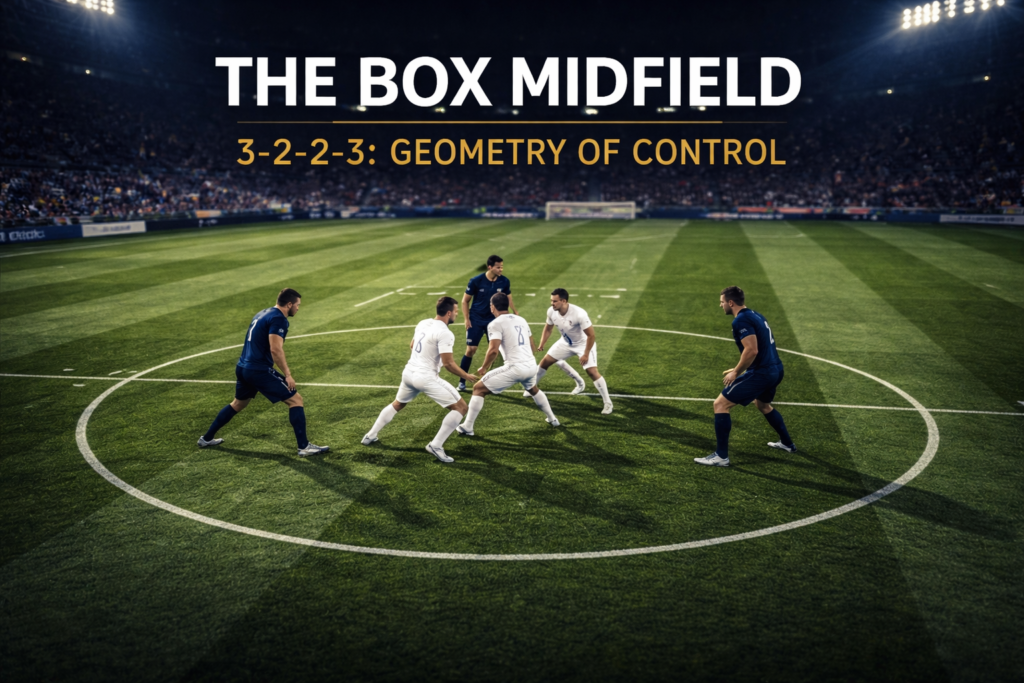
Box Midfield Tactics (3-2-2-3)
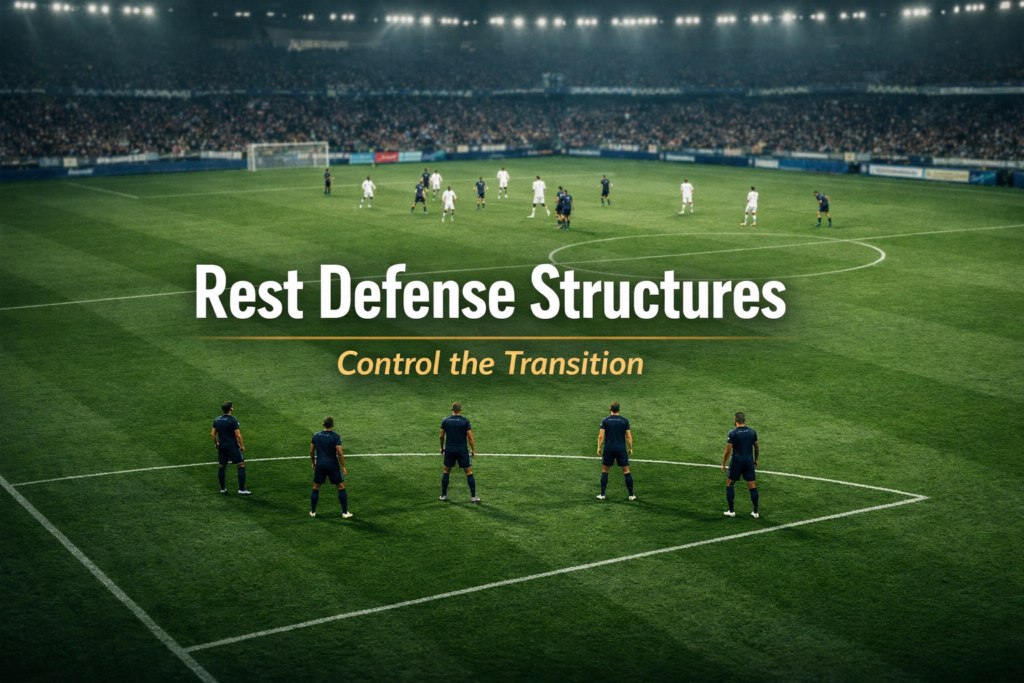
Rest Defense Explained
Want to read any match like this?
The framework behind these breakdowns, in one place. The four phases, a 15-minute method for diagnosing both teams before the drinks break, a printable match-watching worksheet, and 51 terms defined. 40 pages.
Get the pack$9, instant downloadSpeak the language of the game
Get the free 47-term tactical glossary. Gegenpress, half-space, xT, low block, each defined in plain language and linked to a full breakdown. It is yours for an email.
Frequently Asked Questions (FAQs)
What is the main goal of the De Zerbi baiting press structure?
The primary goal is to provoke the opposition into pressing, thereby breaking their defensive structure. By drawing players out of position, De Zerbi’s team creates “artificial transitions” where they can attack vertical spaces quickly, similar to a counter-attack, but starting from a controlled possession phase.
Which formation works best for the De Zerbi baiting press structure?
De Zerbi typically utilizes a base 4-2-3-1 which morphs into a 4-2-4 or 2-4-4 in possession. The key is having two center-backs and two holding midfielders (the “box”) to control the build-up, while four attackers pin the opposition’s defensive line deep, creating space in the middle.
How do you defend against the De Zerbi baiting press structure?
The most effective way to stop it is to refuse the bait. Teams that sit in a passive mid-block or low-block and refuse to press the center-backs often neutralize the system. By man-marking the pivots and not jumping at the defenders, opponents can force De Zerbi’s side into harmless lateral passing, denying them the vertical spaces they crave.