


Last updated: October 1, 2026
The Hybrid Centre-Back is a defender who becomes a central midfielder the moment his team wins the ball – and John Stones is the blueprint.
Key Takeaways
- Numerical Superiority: The Hybrid Centre-Back creates a 3-2 build-up structure, overwhelming opposition midfields.
- Cognitive Load: The role requires elite scanning abilities to transition between defense and midfield instantly.
- The “Stones” Benchmark: John Stones revolutionized the role by operating vertically rather than just laterally.
- Rest Defense Risk: Pushing a CB into midfield leaves significant gaps that require disciplined cover (Rest Defense).
- Evolution: This role is the natural successor to the ball-playing defender, moving from progression to creation.
It used to be simple. If you were a centre-back, your job was to defend the box, win aerial duels, and occasionally pass the ball five yards to your nearest fullback. That era is dead.
When I look at the elite level of the game today – specifically at what Pep Guardiola achieved with Manchester City during their treble-winning campaign – I don’t just see better defenders. I see a fundamental shift in the geometry of the pitch. We are witnessing the rise of the Hybrid Centre-Back, a role so cognitively demanding that it effectively asks one player to play two positions simultaneously.
This isn’t just about a defender dribbling forward; we saw that with the great liberos of the past like Beckenbauer. This is different. The modern Hybrid Centre-Back – epitomized by John Stones – is a player who starts in the defensive line out of possession but becomes a genuine central midfielder the moment his team secures the ball.
Why does this matter? Because it breaks the traditional numerical logic of football. By moving a defender into midfield, teams can overload the center of the pitch without sacrificing width. It creates a “plus-one” advantage that leaves opposition pressing structures chasing shadows. However, implementing this requires a specific tactical infrastructure. If you get it wrong, you leave your defense wide open to transition attacks.
In this breakdown, we are going to dissect the mechanics of this role, analyze why the “Stones Role” is the current benchmark, and look at the tactical risks involved. For context on how this metric sits within the complete football tactics framework, the full guide covers every phase from pressing to build-up to defensive structure.
Table of Contents
What is the Hybrid Centre-Back?
To understand the Hybrid Centre-Back, you have to first understand the problem it solves. In modern football, teams are pressing with higher intensity and better organization than ever before. If you try to build play with a standard back four and a single pivot (a 4-3-3), the opposition can easily match you man-for-man or set traps in the wide areas.
The Hybrid Centre-Back is the cheat code to bypass this pressure.
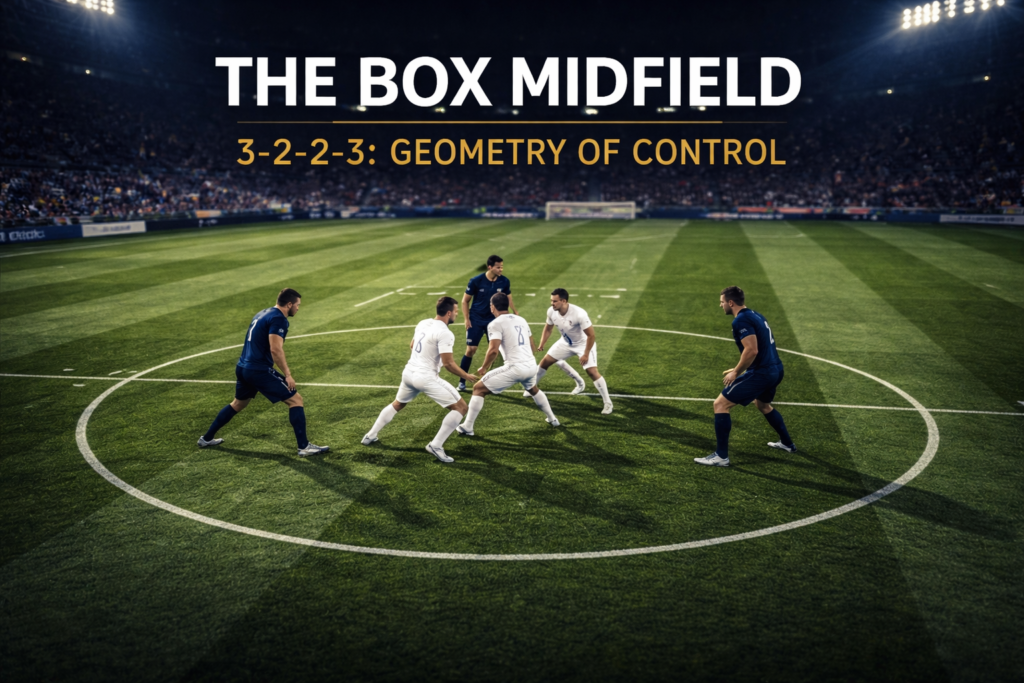
Definitionally, this role involves a central defender who steps up into the defensive midfield line during the build-up phase. This movement transforms the team’s shape. A standard 4-3-3 becomes a 3-2-2-3 (or the famous “Box Midfield”).
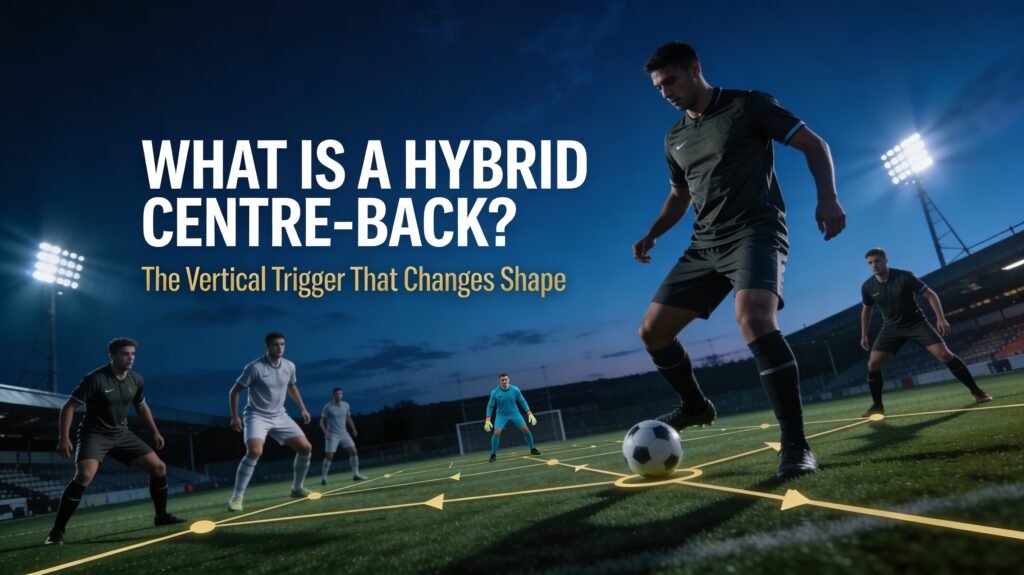
The critical distinction here is intent. A traditional ball-playing defender might carry the ball forward to provoke pressure and then release it. The Hybrid Centre-Back stays there. They become a pivot. They circulate possession, receive the ball under pressure, and dictate the tempo.
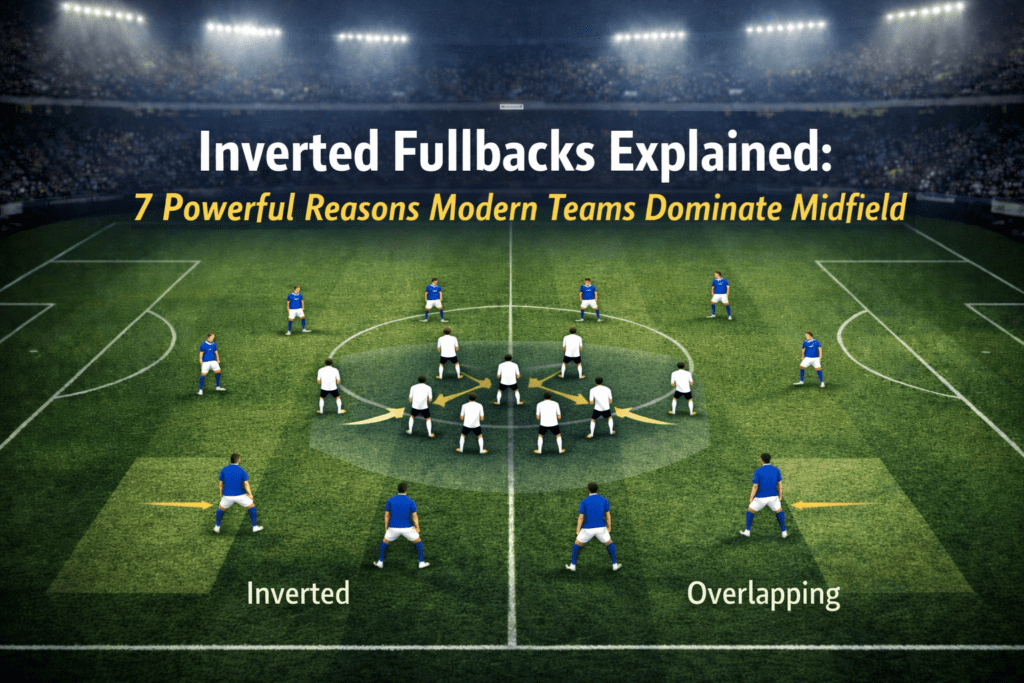
We often talk about the “Inverted Fullback” (think Zinchenko or Trent Alexander-Arnold) doing this from wide areas. The Hybrid Centre-Back does it from the heart of the defense. This is infinitely more dangerous – and more difficult – because the movement is vertical. When a centre-back drives straight up the pitch, they are moving through the most congested zone (Zone 14 and the central channel).
This requires “La Pausa” – the ability to wait for the right moment. If the defender steps up too early, they block the passing lane for their goalkeeper. If they step up too late, the passing angle is gone. It is a role defined not by tackling, but by timing.
Analysis: The John Stones Case Study
When we analyze the application of this role, all roads lead to John Stones role in the 2022/2023 season. Pep Guardiola didn’t just ask Stones to step into midfield; he built the entire system around his ability to do so.
The “Barnsley Beckenbauer” in the Box
In the Champions League Final against Inter Milan, Stones produced one of the most tactically influential performances of the match – operating as a de facto midfielder despite being listed as a defender. Here is how it worked mechanically.

Manchester City set up defensively in a disciplined 4-4-2 block. Stones was the right-sided centre-back. However, the moment Ederson (the goalkeeper) had the ball, Stones triggered his movement. He didn’t just drift; he sprinted into the space alongside Rodri.
This movement created a “double pivot” in front of a back three (Aké, Dias, Akanji).
- The Effect: Inter Milan played with two strikers. Usually, two strikers can press two centre-backs. But with Stones moving into midfield, Inter’s strikers were left confused. Do they follow Stones? If they do, they leave a massive gap in the middle for Dias to drive into. Do they stay? If they stay, Stones is free in midfield to turn and pass.
Manipulation of Space
The brilliance of the Hybrid Centre-Back is that it forces the opposition midfielders to make a choice they don’t want to make.
When Stones steps up, the opposition #10 or central midfielders have to narrow their shape to deal with him. This naturally creates space in the wide areas for the wingers (Grealish or Bernardo Silva). It is the classic principle of “using the center to open the flanks.”
Furthermore, Stones possesses the technical quality to receive the ball on the half-turn. This is rare for a defender. Most defenders are used to seeing the whole game in front of them. When you step into midfield, the game is 360 degrees. You have pressure coming from behind, left, and right. Stones’ ability to scan and retain possession in tight areas allowed City to sustain attacks for minutes at a time.
We also have to credit the surrounding structure. You cannot play a Hybrid Centre-Back without a specialized “Rest Defense.” The remaining three defenders must cover the entire width of the pitch. If Stones loses the ball, the team is essentially playing without a right-sided centre-back.
Below, we look at the statistical difference between a standard elite defender and what Stones provided in this hybrid function.
Hybrid vs Traditional Centre-Back: Key Stats Compared
The data below illustrates the shift in responsibility. We are comparing a traditional “stopper” profile against the metrics of a Hybrid Centre-Back like Stones or Arsenal’s William Saliba (when he steps up).
| Metric (Per 90) | Traditional Centre-Back (Avg) | Hybrid Centre-Back (Elite Avg) | Tactical Implication |
| Passes Received (Opp. Half) | 12.5 | 38.4 | The Hybrid operates primarily in midfield zones during possession. |
| Progressive Carries | 1.8 | 4.2 | They drive the ball to break the first line of pressure. |
| Pass Completion (Under Pressure) | 82% | 91% | Must possess midfielder-level resistance to pressing. |
| Touches in Central Channel | 45 | 78 | They dictate play rather than just recycling it wide. |
| Rest Defense Recoveries | 4.1 | 2.2 | Lower raw defensive numbers because they defend by keeping the ball. |
Note: Figures represent approximate benchmarks illustrating the positional shift between roles, based on publicly available match data and analyst observations. Not sourced from a single dataset.
As you can see, the Hybrid Centre-Back is effectively a midfielder who happens to be good at heading. The spike in “Passes Received in Opposition Half” is the key indicator. They are not staying back; they are joining the siege.
How to Counter the Hybrid Centre-Back: Tactical Weaknesses Exposed
No tactical system is invincible. While the Hybrid Centre-Back offers immense control, it introduces a specific fragility that smart teams can exploit.
1. The Transition Trap
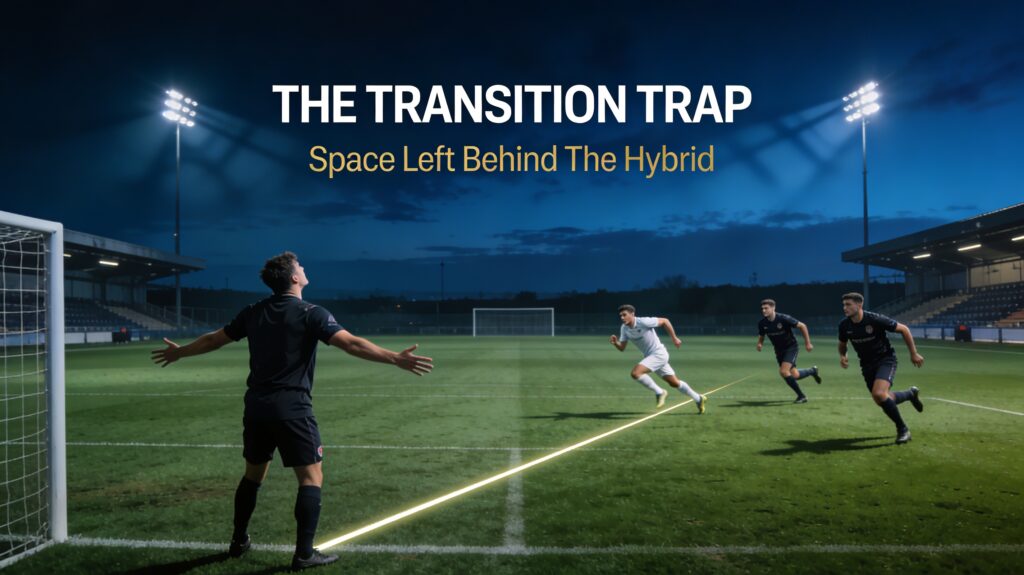
The biggest risk is the moment of turnover. When the Hybrid Centre-Back is in midfield, the defensive line typically consists of three players spreading wide to cover the pitch. This leaves massive gaps in the “channels” – the space between the wide centre-backs and the touchline.
If the opposition wins the ball and immediately plays a diagonal ball into the space the Hybrid vacated, the defense is in trouble. We saw teams like Liverpool exploit this against City by using rapid wingers (Salah, Diaz) to run directly at the wide defenders before the Hybrid could recover his position.
2. Man-Marking the Hybrid
The “Stones Role” relies on being the “spare man.” If the opposition decides to sacrifice a striker or a #10 to strictly man-mark the Hybrid Centre-Back, the advantage is nullified.
If a team puts a tenacious marker on Stones – someone who follows him everywhere – he cannot turn and dictate play. This forces the team to revert to a standard structure or forces the goalkeeper to go long, which is often a lower-percentage play. We have seen Arsenal struggle with this when teams go man-to-man on Zinchenko or their stepping defenders; it turns the game into a series of 1v1 duels rather than a structural chess match.
3. The Physical Toll
We cannot ignore the physical aspect. Asking a player to win aerial duels against a 6’3″ striker and then sprint 40 yards to join the attack every single time possession changes is exhausting. Fatigue leads to mental errors. In the dying minutes of a game, a tired Hybrid Centre-Back might be slow to drop back into the defensive line, leaving the team exposed to a simple through ball.
Inverted Centre-Back vs Hybrid Centre-Back Explained: What’s the Difference?
The terms are often used interchangeably, but there is a meaningful distinction. An inverted centre-back is the broader tactical family – any centre-back who moves inward or forward from the defensive line to support build-up play. A hybrid centre-back is the specific Guardiola iteration: a defender who physically occupies a midfield position during possession phases, requires progressive passing ability, and is expected to function as a pivot under press. Every hybrid centre-back is an inverted centre-back. Not every inverted centre-back is a hybrid. Stones operates at the furthest end of the spectrum – vertically, centrally, and under direct pressure. Players like Colwill or Schlotterbeck are developing toward that benchmark but haven’t yet demanded the same positional responsibility in a possession-dominant system.
The Tactical Takeaway
The Hybrid Centre-Back is not a fad. It is the logical next step in the evolution of “Total Football.” It represents the final erosion of specialized positions. In the future, I believe we will see fewer “defenders” and “midfielders” and more “universal” players who can operate in multiple zones depending on the phase of play.
John Stones and Pep Guardiola have set the template, but we are already seeing evolutions of it with players like Levi Colwill at Chelsea or Nico Schlotterbeck in Germany. The requirement for technical excellence in the backline has never been higher.
In the 2025-26 season, Manuel Akanji, who had covered the role at City when Stones was absent, spent the year on loan at Inter Milan (a move made permanent in May 2026), while Jurrien Timber at Arsenal represents the most technically complete version of the concept outside of the Etihad.
Editor’s note (updated October 2026): Stones left City when his contract expired on 1 July 2026 and joined Inter Milan on a free transfer on 30 July, so he and Akanji are now teammates in Serie A.
For coaches and analysts, the takeaway is clear: you can no longer analyze a formation by looking at the team sheet. A 4-3-3 on paper is a lie. The game is fluid, and the Hybrid Centre-Back is the catalyst that allows that fluidity to flourish. It demands bravery, technical arrogance, and tactical intelligence.
The era of the “no-nonsense” defender isn’t over, but at the elite level, if you can’t play in midfield, you might find yourself left behind.
What Do You Think?
Which current centre-back do you think is closest to mastering the Stones role – and is there a team outside the top six doing a version of this that nobody is talking about?
Want to read any match like this?
The framework behind these breakdowns, in one place. The four phases, a 15-minute method for diagnosing both teams before the drinks break, a printable match-watching worksheet, and 51 terms defined. 40 pages.
Get the pack$9, instant downloadRelated Tactical Breakdowns
The hybrid centre-back only works when the structure behind him holds – these breakdowns cover the exact systems that make it possible and what happens when the press gets through.
Box Midfield Tactics (3-2-2-3)
Rest Defense Explained

Inverted Fullbacks Explained
Speak the language of the game
Get the free 47-term tactical glossary. Gegenpress, half-space, xT, low block, each defined in plain language and linked to a full breakdown. It is yours for an email.
Frequently Asked Questions (FAQs)
What is the difference between a Hybrid Centre-Back and a Ball-Playing Defender?
A Ball-Playing Defender (like Virgil van Dijk) stays in the defensive line and uses their passing range to launch attacks. A Hybrid Centre-Back physically leaves the defensive line to join the midfield, changing the team’s actual formation during possession.
Can any centre-back play the “Stones Role”?
No. It requires a specific skill set: high-level press resistance, 360-degree awareness, elite passing accuracy, and the stamina to cover large vertical distances. Traditional “stoppers” often struggle with the scanning required in midfield.
Which teams currently use a Hybrid Centre-Back system?
Manchester City under Guardiola (John Stones/Manuel Akanji) were the definitive example, though Stones announced in April 2026 that he would leave the club after ten years, and joined Inter Milan on a free transfer in July 2026. However, Arsenal (via Ben White or Timber shifting inside), Bayer Leverkusen (under Xabi Alonso), and occasionally Liverpool (Konaté stepping up) utilize variations of this concept to create midfield overloads.