
This Arsenal vs Chelsea tactical analysis reveals how yesterday’s Carabao Cup clash wasn’t just a win, but a textbook example of controlled space.. While the headlines will focus on the 1–0 scoreline, the real story was how Arsenal’s defensive shape nullified Chelsea’s pivot (see official match stats) in the second half. In a match defined by fine margins, Mikel Arteta’s side proved that defensive organization is just as potent a weapon as attacking flair.
For those looking for a deep Arsenal tactical breakdown, this match was a live demonstration of the “Mid-Block” concepts we discuss in our Tactical Guides. Here is how it worked.
1. Arsenal vs Chelsea Tactical Analysis: The Pressing Trap
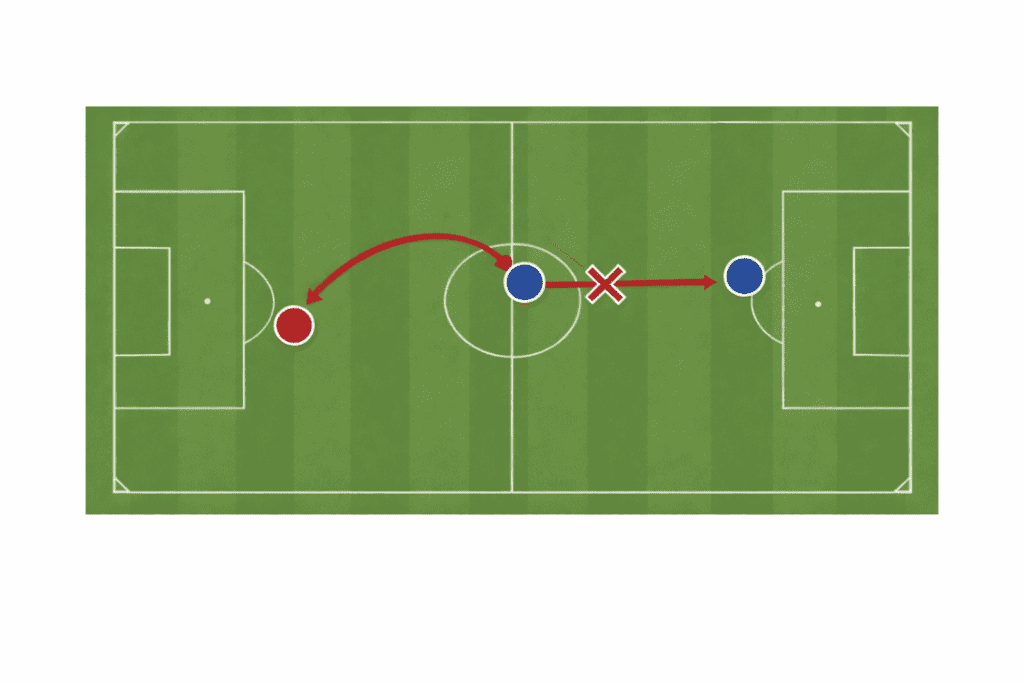
We often talk about pressing triggers—the specific moment a team decides to stop “containing” and start “hunting.” Yesterday, Arsenal set their trap wide to disrupt Chelsea’s build-up play.
In the 23rd minute, we saw the blueprint. Instead of pressing Chelsea’s center-backs immediately (which creates gaps), Arsenal’s front line waited. The moment the ball was rolled out to the Chelsea full-back, Gabriel Martinelli triggered the press.
- The Key Detail: He didn’t run in a straight line. He curved his run to block the passing lane back to the center-back.
- The Result: Chelsea was forced to play a long, hopeful ball up the line, which William Saliba easily intercepted. This is the difference between running hard and running smart.
Enjoying the analysis?
Don’t Just Watch Football. Understand It.
Join KharaSportsDaily and receive occasional deep tactical insights most fans miss.
Occasional analysis. No match reports. No noise.
2. The Goal: Creating Space Without the Ball
The winning goal wasn’t just individual brilliance; it was a structural overload in the “Half-Space.”
In the build-up, watch the movement of Martin Ødegaard. He didn’t drop deep to get the ball. Instead, he made a vertical run that dragged Chelsea’s holding midfielder out of position.
- Why this matters: This movement vacated the space at the edge of the box.
- The Execution: When the ball was cut back, it arrived in an empty zone—not because Chelsea forgot to defend, but because Ødegaard had manipulated their shape moments earlier.
3. Closing the Game: The 4-4-2 Shape
A key part of Arteta’s tactical setup in the final 15 minutes was switching from their usual 4-3-3 to a compact 4-4-2 defensive block.
This is a classic “game management” structure. By dropping Kai Havertz deeper alongside Declan Rice, Arsenal created two banks of four that were incredibly narrow.
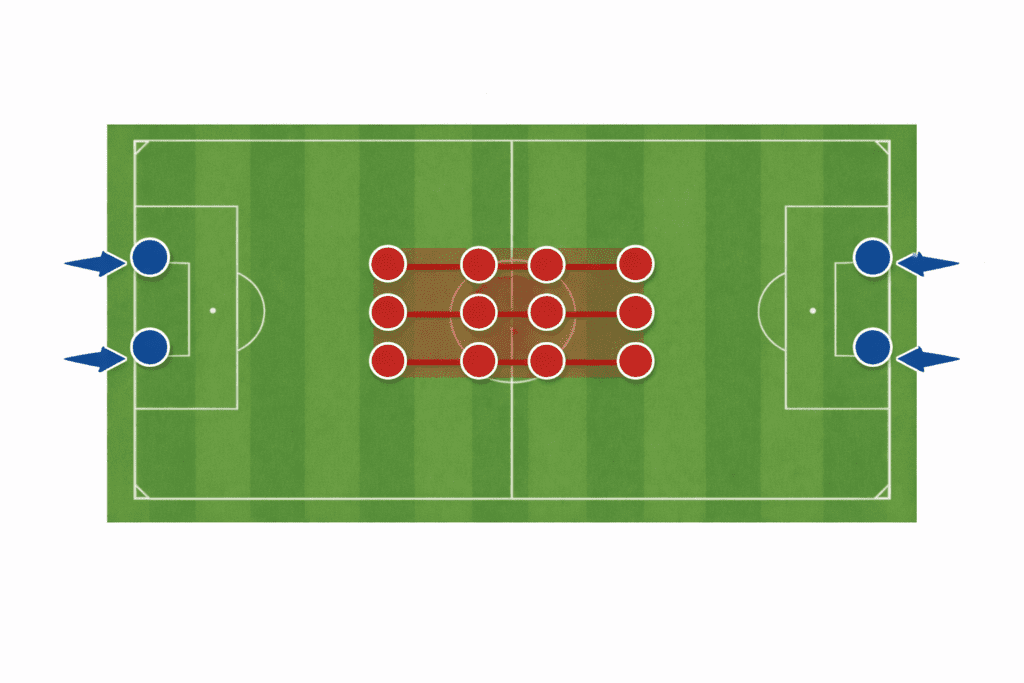
- The Stat: Chelsea attempted 12 passes into the central “Zone 14” in the final 20 minutes. Only 1 was successful. Arsenal forced them wide, effectively allowing Chelsea to have the ball in non-dangerous areas while protecting the 1–0 lead.
4. The Key Battle: Rice vs. Caicedo
While the tactical shape was the headline, the individual battle in the center of the park defined the tempo. We cannot ignore the performance of Declan Rice, who effectively played two positions at once.
In possession, Rice operated as a standard #6, recycling the ball and allowing Ødegaard to roam. But out of possession, his role was unique. Instead of man-marking Chelsea’s #10, Rice focused entirely on cutting the supply line to Moisés Caicedo.
- The Data: Caicedo finished the first half with only 18 touches—his lowest in the competition this season.
- The Tactic: Whenever Chelsea tried to play through the middle, Rice stepped up to “shadow” Caicedo, forcing Chelsea’s center-backs to go wide to the full-backs. This was a calculated gamble by Arteta: he dared Chelsea to beat them from the wings, knowing that Saliba and Gabriel could deal with the crosses. It worked.
5. Statistical Reality Check: Did Chelsea Deserve More?
It is easy to look at the last 10 minutes of pressure and argue that Chelsea deserved an equalizer. However, the underlying numbers paint a different picture of Arsenal’s defensive dominance.
- xG (Expected Goals): Arsenal created 1.42 xG compared to Chelsea’s 0.38. This suggests that despite Chelsea’s possession, they created almost no high-quality chances.
- Field Tilt: For 60 minutes, 65% of the game was played in Chelsea’s defensive third. Arsenal didn’t just park the bus; they kept the danger far away from their own goal until the final tactical switch.
This data validates the “eye test.” Arsenal’s 1–0 win wasn’t a “smash and grab”; it was a controlled strangulation of the opponent’s offense.
Conclusion
As this Arsenal vs Chelsea analysis shows, Mikel Arteta didn’t reinvent the wheel. He just executed the basics of the Mid-Block to perfection. For fans watching, the lesson is simple: Don’t just follow the ball. Watch how the defending team shifts when the ball moves sideways. That is where the game is won.
Enjoyed this breakdown?
Don’t Just Watch Football. Understand It.
Join KharaSportsDaily and receive occasional deep tactical insights most fans miss.
Occasional analysis. No match reports. No noise.
About The Author
Football Tactician & Analyst. breaking down elite systems for coaches and fans.