
Last updated: October 17, 2026
Cole Palmer collects the ball on the edge of the box with a defender on his shoulder, and before the pass arrives his hips are already turned toward goal. One touch later he is facing the penalty area, not his own corner flag, because he took it on the back foot. The defender never got the chance to commit, since the contest was settled a half-second before the ball landed.
That half-second is the whole skill. The best players treat the first touch as orientation, not control, and the habit behind it is receiving on the back foot. This is the quiet mechanic underneath almost every piece of progressive football tactics you admire, from a Barcelona midfield turn to a centre-back stepping into space.
In simple terms: Receive on the back foot, open your body before the ball arrives, and your first touch travels forward, not back toward your own goal.
Key Takeaways
- Orientation beats control: The first touch is a chance to face forward, not just to tame the ball. The best receivers decide their body angle before the pass arrives.
- One touch, one line broken: A closed player needs a touch to control and another to turn. Receiving on the back foot fuses both, removing a full touch from every forward action.
- The data is measurable: Cole Palmer opens his body, receiving on the back foot, on 23.9 percent of his receptions, the highest rate in the Premier League, per PFF FC.
- Scanning feeds it: The half-turn is useless without the picture gathered in the seconds before the ball arrives.
- It carries a risk: An open body slightly hides one shoulder, and pressing teams spring blindside runners to punish exactly that.
Table of Contents
What Is Receiving on the Back Foot?
It means taking the ball on the back foot, the foot furthest from the passer, while your body is already half-open to the pitch. The back foot becomes the controlling foot, so the ball runs into the space ahead of you instead of getting stuck under your standing leg. Coaches’ Voice defines body shape as the way a player faces and uses their frame to gain an advantage, in attack and defence alike.
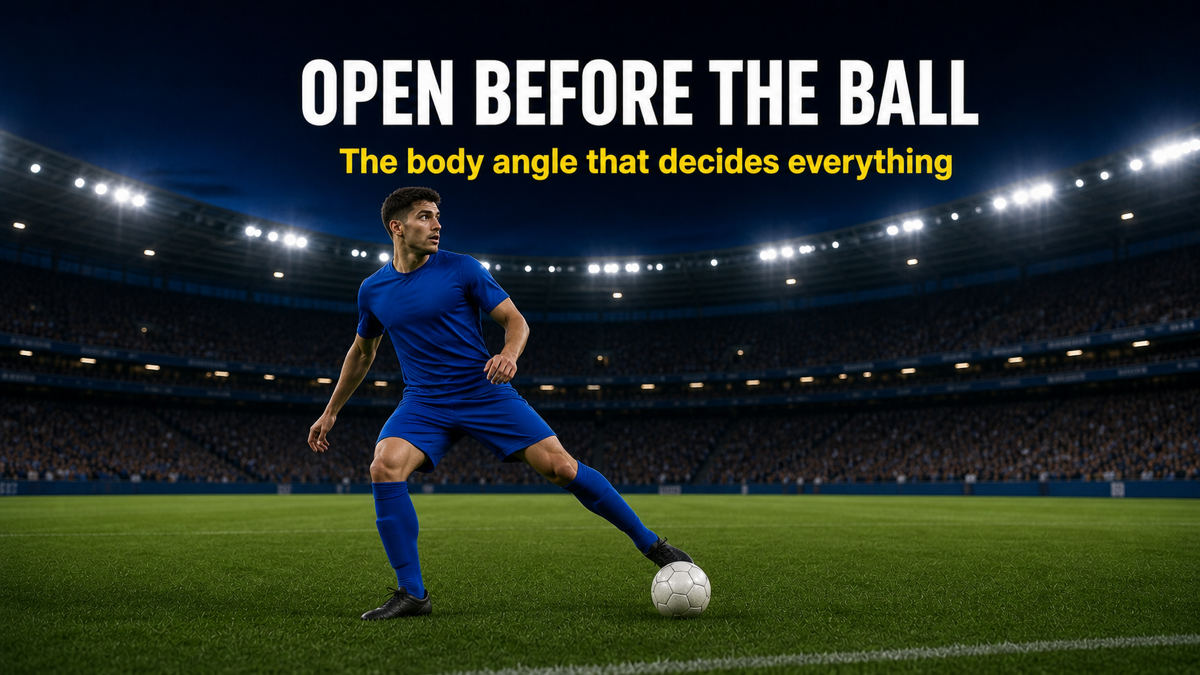
Picture a midfielder with a pass coming from the right. A closed player plants the right foot and stops the ball dead, back to goal. A player receiving on the back foot lets it run across to the left foot, and the same touch now points at the opponent’s box.
The difference looks tiny on television. On the pitch it is the gap between recycling possession and breaking a line. Body orientation in football is the hidden variable that decides which of those two outcomes happens.
The word back is literal. If the pass comes from your right while you face your own goal, your left foot is the one further from the ball, and letting it run to that back foot rotates you toward the field. The foot you choose is the foot that decides which way you end up pointing.
The Half-Turn Is a Decision Made Before the Ball Arrives
The half-turn starts with the eyes, not the feet. A player who scans the space behind them in the two seconds before a pass can pre-set their hips toward the most useful direction. That early information is what lets the body open without a panicked second look.
This is where scanning before the ball arrives and body shape become one connected action. Scanning supplies the picture, and the open body acts on it.
Pedri does this as well as anyone in world football. The Barcelona midfielder takes the ball already turned on the back foot, so his first touch into space carries him past a presser before the press has even formed.
Elite academies have started timing this. Coaches increasingly track how often a player checks their shoulder in the seconds before receiving, because that scan rate predicts how cleanly they get onto the back foot. The habit is trainable, and it is taught earlier every year.
How One Touch Becomes a Line Break
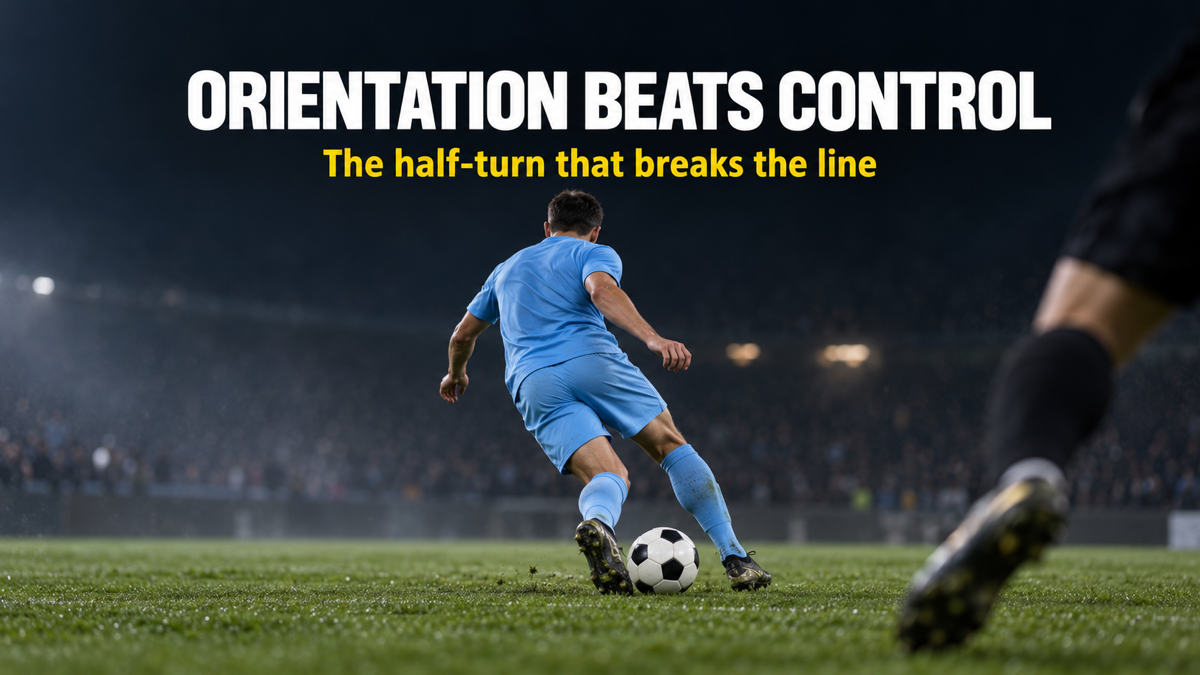
A back-foot reception removes a touch from every forward action. The closed player needs one touch to control and a second to turn, which gives the defender time to close the angle. The back-foot receiver merges both into a single movement, and the line is broken before the defence resets.

Watch a deep-lying playmaker like Rodri receive under a striker’s pressure. The Manchester City midfielder opens toward the far side, takes the ball on the back foot, and the press dies the instant the ball moves into the channel he already saw.
Frenkie de Jong turns this into territory. He carries through the half-turn, so an open body shape becomes ten yards of progression that a square first touch would have surrendered.
The margin is brutal at the top level. A defender needs only a moment to close the gap, so a touch spent turning is a touch that invites a tackle. The back-foot receiver never offers that window.
What the Data Says About Opening to Goal
The best receivers open their body toward goal, receiving on the back foot, far more often than they close it. PFF FC records each player’s body orientation at the moment a pass is played and again as it arrives. By that tracking, Palmer opens his body on 23.9 percent of his receptions, the highest rate in the Premier League.
The gap between how often he opens versus closes his body, 17.5 percentage points, is the largest in the division, per PFF FC. That margin is not a quirk of one fixture. It is a repeated habit that shows up week after week.
The table below shows why the orientation matters more than the touch itself. It compares what typically follows each reception type, drawn from illustrative benchmark patterns rather than a single match.
| Reception Type | Touches Before Release | Forward Pass Unlocked | Tactical Implication |
|---|---|---|---|
| Square, back to goal | 2 to 3 | Low | Forces a sideways or backward release; the press resets |
| Back foot, open body | 1 | High | One touch carries forward and beats the first line |
| Full turn under pressure | 3 or more | Variable | High turnover risk when the early scan was missed |
Data reflects average metrics across illustrative benchmark samples. Individual team and season variance applies.
FBref tracks the downstream effect through progressive passes and progressive carries, the actions that move the ball meaningfully toward goal. Players who make a habit of receiving on the back foot post higher progression numbers because they waste fewer touches just facing the right way. You can see the pattern in any elite midfielder’s progressive passing profile on FBref.
The lesson is not that Palmer is uniquely gifted at it. It is that body orientation is now measured, ranked, and coached like any other elite skill. What used to be invisible craft is now a column in a dataset.
The Weakness: When an Open Body Invites the Blindside Press
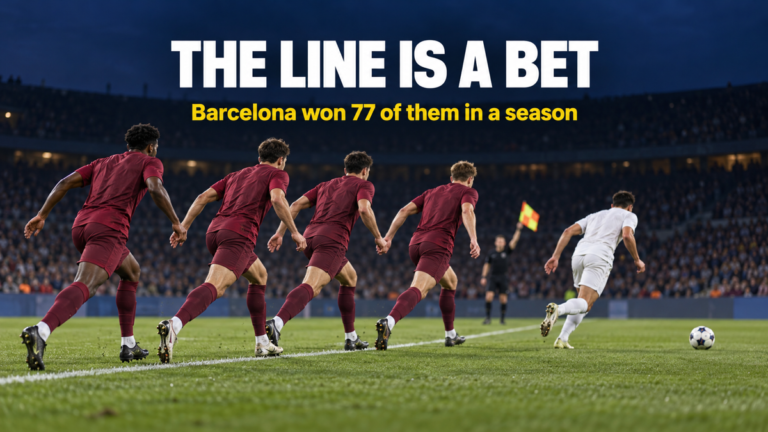
An open body is a bet, and pressing teams have learned to call it. The same orientation that lets a player see forward, the very thing the back foot buys, also turns their back slightly to one shoulder. A presser arriving from that blindside can steal the ball as it travels across the body.

This is what Diego Simeone’s Atlético Madrid hunt for. They let a midfielder receive on the back foot, then spring a defender from the blind side the moment the first touch leaves the foot. This is what pressing triggers are built to exploit.
The counter is not to abandon the back foot. It is to pair the back foot with a touch away from pressure, and with the scan that tells the player which shoulder the danger is coming from before they commit.
Manchester City under Pep Guardiola show the resolution. Their midfielders receive on the back foot but keep the ball moving on the first touch, so the blindside runner arrives into empty space. The bet only fails when the receiver freezes.
The Final Word
Receiving on the back foot is the least glamorous habit in football and quietly one of the most decisive. It does not fill highlight reels the way a through ball does, yet it is the reason the through ball was ever possible.
Coaching academies now teach the back foot before they teach the killer pass, and the data is starting to reward the players who internalise it. The orientation is the skill. The pass is just the receipt.
What Do You Think?
Cole Palmer opens his body on nearly a quarter of his receptions, yet Atlético Madrid’s blindside pressing shows the back foot can be punished. Is receiving on the back foot a habit every academy should drill into defenders too, or a risk that only elite scanners should take in the defensive third? Drop your take below.
Want to read any match like this?
The framework behind these breakdowns, in one place. The four phases, a 15-minute method for diagnosing both teams before the drinks break, a printable match-watching worksheet, and 51 terms defined. 40 pages.
Get the pack$9, instant downloadRelated Tactical Breakdowns

Scanning in Football: How the World’s Best Decide Before the Ball Arrives
Why it connects: Scanning supplies the information that body orientation acts on; the half-turn is useless without the picture gathered before the ball arrives.

The Third Man Run: 3 Secrets Elite Teams Use to Shatter Defensive Lines
Why it connects: A back-foot reception is what makes the third-man run reachable, turning an open first touch into a line-breaking release.
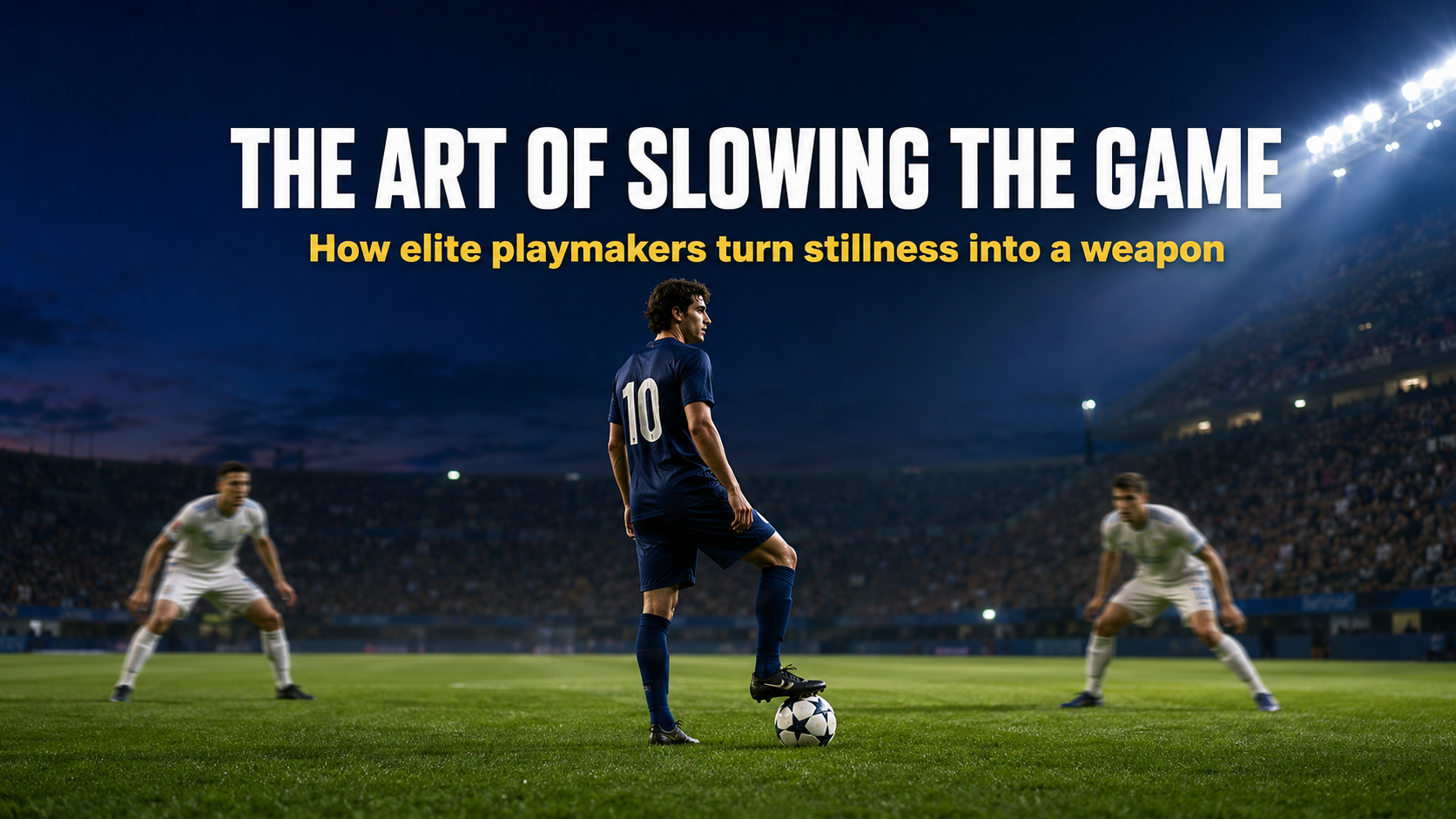
La Pausa Football: The Tactical Art of Slowing the Game to Speed It Up
Why it connects: Receiving open is what buys the half-second of La Pausa, letting a player slow the game precisely because they are already facing forward.
Speak the language of the game
Get the free 47-term tactical glossary. Gegenpress, half-space, xT, low block, each defined in plain language and linked to a full breakdown. It is yours for an email.
Frequently Asked Questions
What does it mean to receive on the back foot in football?
Receiving on the back foot means controlling the ball with the foot furthest from the passer while your body is already half-open to the pitch. This lets the first touch travel forward into space instead of getting trapped behind your standing leg. It saves a full touch and a turn, which is often the difference between progressing and recycling.
Why is an open body shape so important when receiving?
An open body shape lets a player see the ball and the space behind them at once. It allows the first touch to point toward goal, hides the player’s next intention from the defender, and shields the ball from pressure. Coaches treat it as the foundation that unlocks scanning, turning, and passing.
How does the back foot differ from the half-turn when receiving?
They describe the same action from two angles. The back foot is the controlling foot that lets the ball run across the body, while the half-turn in football describes the body angle, roughly 45 degrees to the passer, that makes that touch possible. One is the foot, the other is the frame.
Can defenders exploit a player who always opens their body?
Yes, defenders can punish an open body with a blindside press. Because the back foot slightly hides one shoulder, a presser arriving from that side can steal the ball as it travels across the body. Teams like Atlético Madrid trigger their press the instant the first touch leaves the foot to exploit exactly this.