

Last updated: September 19, 2026
Quick Answer: A tactical foul is a deliberate, low-risk infringement – typically in midfield – used to stop a counter-attack and allow the defending team to reset their shape. It trades a free kick for defensive stability.
Think back to the Euro 2020 final, played in July 2021. Before the penalty shootout even began, Chiellini grabbed Saka by the collar as he jogged toward the centre circle. It wasn’t a transition foul. It wasn’t defensive shape. It was something colder – deliberate psychological disruption, designed to break a 19-year-old’s focus before the biggest kick of his life.
Was it ugly? Yes. Was it within the rules? No. Did it work? Italy won the shootout.
That moment is the purest example of “The Dark Arts” – the manipulation of a game’s psychological and physical rhythm, one infringement at a time. And in elite football, it comes in two forms: the psychological foul that breaks a mind, and the tactical foul that breaks a counter-attack. This breakdown covers both.
For decades, coaches have whispered about “game management” or “clever play,” but let’s call it what it is: Tactical Fouls. It is the art of breaking the rules without breaking the game-stopping a dangerous transition before it becomes a goal, all while managing the referee’s patience.
In this breakdown, we aren’t just looking at red cards and brawls. We are analyzing the systematic, intelligent application of fouls that defines the modern Defensive Control structure.
Key Takeaways
- The Definition: A tactical foul is a low-impact, high-value infringement designed to stop a transition (counter-attack) in its infancy.
- The Zone: Most effective tactical fouls occur in the middle third (Zone 8-11), preventing the opponent from entering the final third at speed.
- The Rotation: Elite teams (like Man City 2018-2022) rotate the fouler to prevent any single player from accumulating yellow cards too early.
- The Trade-off: The “Dark Arts” sacrifice possession or field position to reset the defensive shape, prioritizing stability over the ball.
Table of Contents
What Is a Tactical Foul? Definition and Purpose
Let’s strip away the moral judgment for a second. In a tactical sense, a foul is a resource. Just like stamina, substitutions, or time, you have a finite amount of “referee goodwill” to spend.
The “Dark Arts Football” refers to the manipulation of game flow. It is not about injuring opponents; it is about injuring their rhythm.
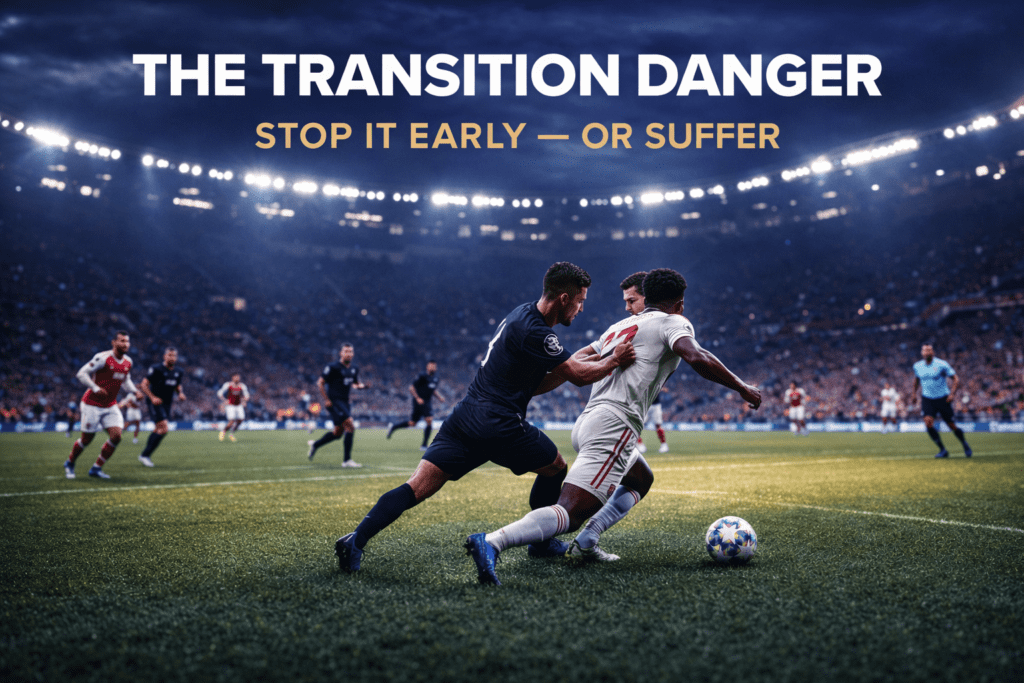
When a team like Liverpool or Bayer Leverkusen loses the ball, they immediately engage in a counter-press. But what happens if that press fails? What happens if the opponent breaks that first line of pressure and has 40 yards of green grass ahead of them?
This is the “Transition Danger Zone.”
At this specific moment, the defending team is disorganized. Their fullbacks might be high (inverted or overlapping), and their center-backs are exposed. This is where the tactical fouls come in. It is the emergency brake.
The Mechanics of the Perfect Tactical Foul:
- Timing: It must happen within 3 seconds of losing possession. Any later, and the opponent has built too much momentum, making the foul look dangerous (risking a Red Card).
- Location: Ideally, this happens in the opponent’s half or the center circle. If you foul 70 yards from your own goal, the referee perceives it as “harmless.” If you foul 20 yards out, it’s a scoring opportunity.
- The Technique: You don’t slide tackle. Sliding looks aggressive. You use the upper body-a tug of the shirt, a “clumsy” trip, or a body check. It looks accidental to the untrained eye, but it is surgically precise.
Think of it as “Defensive Resetting.” The foul allows your team 30 seconds to walk back, breathe, organize the defensive block, and pick up their marking assignments. You trade a free-kick (static threat) for a counter-attack (dynamic threat). Statistically, that is a winning trade every single time.
Tactical Foul vs Professional Foul: What’s the Difference?
A tactical foul and a professional foul are often confused but differ significantly in severity and intent. A tactical foul is a minor infringement – a shirt pull, a clip of heels, or a body check – used to disrupt rhythm and stop a transition. It usually results in just a free kick. A professional foul denies an obvious goal-scoring opportunity (DOGSO) and typically results in a yellow or red card. Think of Suárez’s handball against Ghana in 2010 (professional foul – red card, penalty) versus Fernandinho’s midfield trip on a breaking attacker (tactical foul – free kick, game reset). The difference is location, timing, and whether a clear scoring opportunity existed at the moment of the infringement.
How Manchester City Perfected the Tactical Foul System (2018–2024)
If we are talking about the masters of this craft, we have to talk about Pep Guardiola’s Manchester City, specifically the era dominated by Fernandinho.
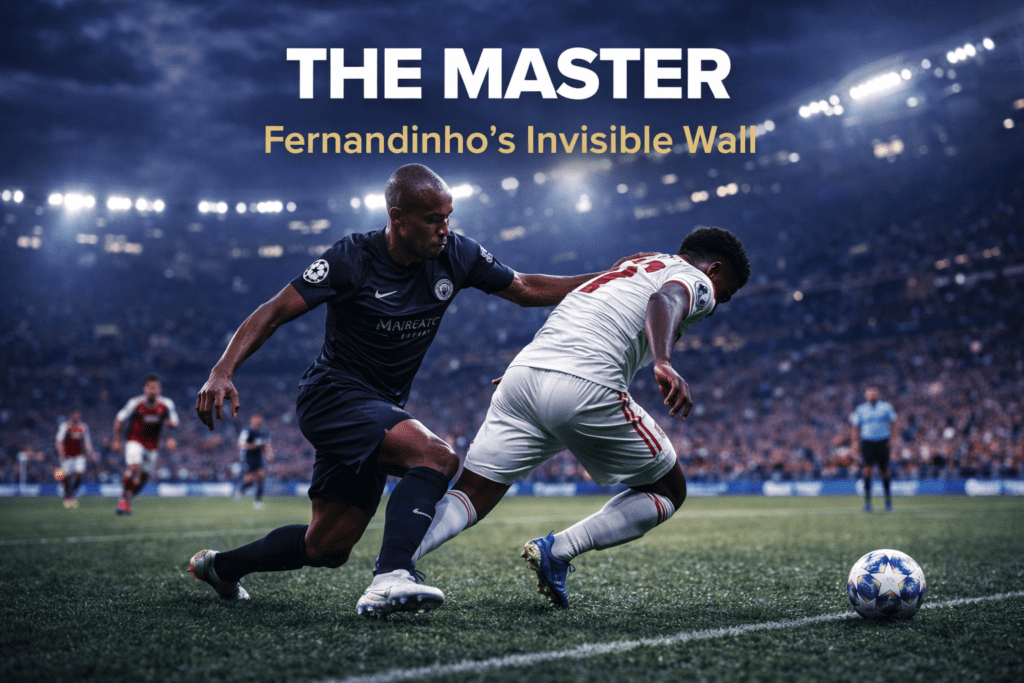
Guardiola’s teams are famous for possession. But the secret sauce that allowed them to keep 70% possession wasn’t just their passing – it was how they terrified teams into not countering.
Fernandinho was the undisputed king of the “tactical nip.” He wasn’t a brutal player like Roy Keane; he was a smart player. He understood that his role as the lone ‘6’ (Pivot) left huge spaces beside him.
The “City Break” Strategy:
Between 2017 and 2021, Manchester City consistently committed among the fewest total fouls in the Premier League – yet their fouls in transition were disproportionately concentrated in the opponent’s half. This was not an accident.
Here is how they did it:
- Immediate Disruption: As soon as City lost the ball, the nearest player (often Silva or De Bruyne, not just Fernandinho) would swarm the carrier.
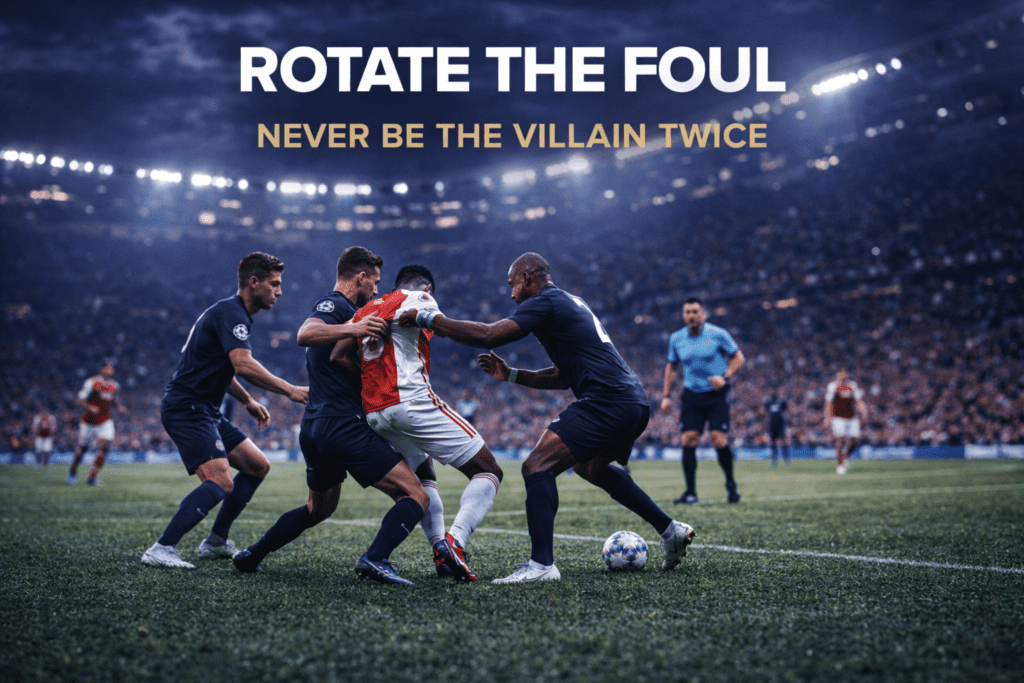
- The Rotation: They rarely let the same player commit two tactical fouls in a row. By rotating the “fouler,” they kept the referee from identifying a single villain.
- The Apology: Watch the body language. After the foul, City players would immediately help the opponent up or look confused. It psychological warfare against the official.
Let’s look at the positional breakdown between a standard defensive midfielder and a “Dark Arts” specialist. The figures below are based on zone and transition analysis across multiple Premier League seasons and are intended as directional indicators rather than single-source statistics.
Table: The “Enforcer” vs. The “Manager” (Season Average)
| Metric | Traditional Destroyer (e.g., Palhinha) | Tactical Manager (e.g., Fernandinho/Rodri) |
| Total Tackles | 4.5 per game | 2.1 per game |
| Interceptions | 1.8 per game | 1.2 per game |
| Fouls Committed | 1.5 per game | 1.2 per game |
| Fouls in Opponent Half | 20% | 65% |
| Yellow Cards | 10+ per season | 4-6 per season |
| xG Prevented (Transition) | Moderate (estimated) | High (estimated) |
Note: xG prevented from transition disruption is not a standard published metric. These values represent directional analysis based on transition frequency and foul location data.
Notice the “Fouls in Opponent Half” metric. That is the smoking gun. The Tactical Manager kills the play miles away from their own goal. They don’t have to tackle hard because they tackle early.
Fernandinho (2017–2022) pioneered the role at City before departing for Brazil. Watch him today. When he loses the ball, he doesn’t sprint 40 yards back. He takes one step forward, initiates contact, and stops the game. It is not pretty, but it wins Premier League titles.
Rodri, Declan Rice, and the Modern Tactical Fouler
Since Fernandinho’s departure from City in 2022, Rodri has refined the role even further – combining greater technical range with the same forensic understanding of when to stop play. Declan Rice at Arsenal has adapted quickly, averaging over one tactical disruption per 90 in transition phases during the 2024-25 season. Palhinha at Bayern Munich brings a more physical version of the same discipline. What connects all three is positional intelligence: they foul in the right zone, at the right moment, with enough theatrical restraint to avoid the yellow card. The dark arts have never been more calculated.
How to Beat Tactical Fouling: Counter-Strategies That Work
Is the tactical foul unbeatable? Not quite.

While it is the ultimate weapon for possession-heavy teams, it has a distinct weakness: The Quick Restart.
The “Dark Arts” rely on the game stopping. The fouling team needs the referee to blow the whistle, lecture the player, and allow the defense to reset. This entire strategy crumbles if the referee plays “Advantage” or allows a quick free-kick.
The Antidote: Chaos & Pace
Teams like Jurgen Klopp’s Liverpool (at their peak) or Arteta’s Arsenal counter the “Dark Arts” by refusing to accept the stoppage.
- Play Through Contact: Players are coached to stay on their feet even when tugged. If you go down, you give City exactly what they want – a pause. If you stay up, you force the referee to play advantage, leaving the fouler (who has now stopped running) out of position.
- The Quick Free-Kick: If the whistle blows, the ball must be moving again within 2 seconds. You don’t wait for the center-backs to come up. You hit the ball into the space the fouler just vacated.
Furthermore, the introduction of VAR and stricter “accumulation” rules has made this harder. Referees are now briefed pre-game on teams that rotate fouls. If a referee identifies a “team strategy” of fouling, they are quicker to book the first offender, which puts the entire defensive game plan on a tightrope for the remaining 80 minutes.
Should Tactical Fouling Be Punished More Harshly?
You might hate “The Dark Arts.” You might think it ruins the flow of the beautiful game. But if you want to understand why teams like Manchester City, Real Madrid, and Simeone’s Atletico dominate, you have to respect the utility of the foul.
It is the invisible wall that protects the castle.
Tactical fouling is the difference between a chaotic 4-4 draw and a controlled 1-0 win. It transforms a physical disadvantage (being out of position) into a mental advantage (control).
As a fan or a coach, watch the next big match closely. Don’t just watch the goals. Watch what happens three seconds after a turnover in the center circle. Watch the shirt pull. Watch the “accidental” trip. That, my friends, is where the game is actually won.
What Do You Think?
Fernandinho averaged 1.2 fouls per game across City’s dominant era and Rodri has refined the role even further – is tactical fouling an underrated title-winning weapon, or are VAR and accumulation rules making it obsolete?
Want to read any match like this?
The framework behind these breakdowns, in one place. The four phases, a 15-minute method for diagnosing both teams before the drinks break, a printable match-watching worksheet, and 51 terms defined. 40 pages.
Get the pack$9, instant downloadRelated Tactical Breakdowns
Tactical fouling only works when the defensive structure it protects is already in place – these breakdowns cover the pressing and defensive systems that make it the final piece of the puzzle.
Counter-Pressing Explained
Rest Defense Tactics
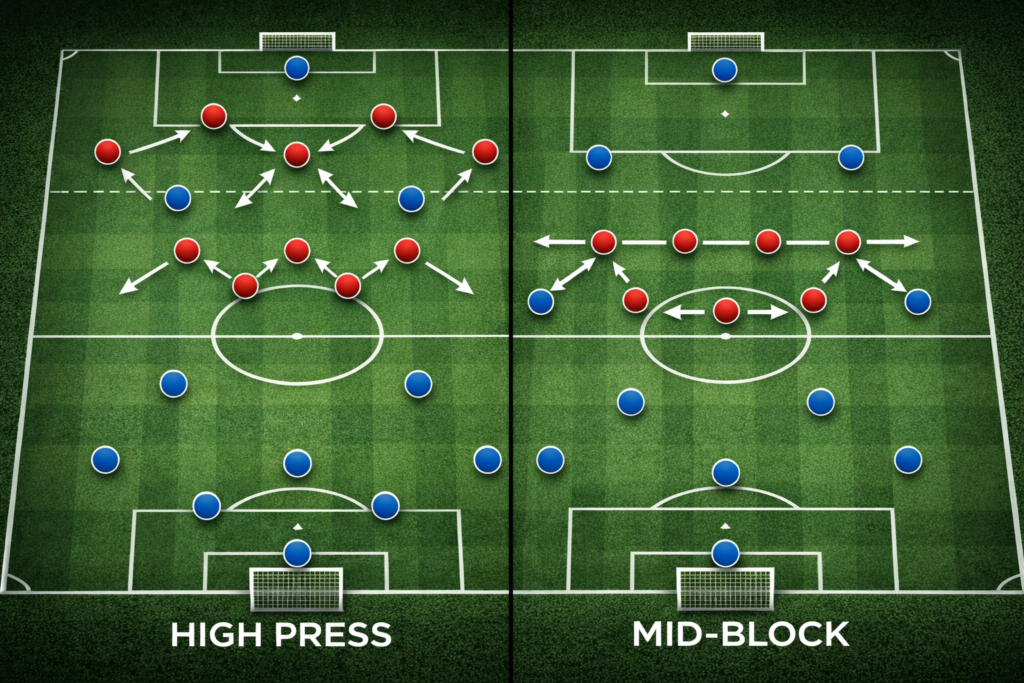
High Press vs Mid-Block
Frequently Asked Questions (FAQs)
Is tactical fouling considered cheating?
By the letter of the law, it is an infringement. However, in professional analysis, it is viewed as “Game Management.” Cheating implies deception (like diving). Tactical fouling is an open exchange: a foul for a free-kick. It is a strategic transaction accepted within the sport’s competitive framework.
Why don’t referees give more yellow cards for tactical fouls?
Referees judge fouls based on “force” and “promising attack.” Smart players commit these fouls in areas (like the opponent’s half) where the attack doesn’t yet look “promising” to the referee, or they use low force (a light tug) that doesn’t warrant a booking on its own. It is a gray area that elite players exploit.
Who is the best tactical fouler in football history?
While players like Sergio Ramos and Roy Keane are famous for fouling, the true “tactical” masters are players like Fernandinho, Casemiro, and Sergio Busquets. They mastered the art of breaking up play without getting sent off, sustaining their team’s dominance for over a decade.
Which players are known for tactical fouling?
Fernandinho, Casemiro, Rodri, Fabinho, and Declan Rice are among the most recognised tactical foulers in modern football – combining positional intelligence with the restraint to avoid yellow cards.