


Watch Sergio Busquets take a goal-kick for Pep Guardiola’s Barcelona and the first thing he does is disappear. He drifts backwards, slots between the two centre-backs, and a 4-3-3 quietly becomes a back three. Two forwards sprint up to press and find three defenders where they expected two, so the move is half-won before it has properly started.
That backwards step is the whole idea behind one of football’s most influential modern player roles. The instruction sounds absurd: to play forward, first go backward. Yet the half-back role has reshaped how nearly every elite possession side builds out of its own box.
In simple terms: A half-back is a defensive midfielder dropping into the back line in build-up to create a spare man against the press.
This breakdown covers where the half-back role came from, how it manufactures that spare man, who plays it best today, and the price a team pays every time its pivot vacates midfield.
Key Takeaways
- The drop manufactures a 3v2: A half-back turning a back two into a back three hands the build-up a permanent free man against a two-striker press.
- It is a job, not a position: The half-back role is a phase-specific task. The same player defends as an ordinary midfielder the moment the ball is settled.
- Guardiola industrialised it: Pep Guardiola borrowed the salida lavolpiana from Ricardo La Volpe and made Sergio Busquets its definitive interpreter at Barcelona.
- The modern version is the 3-2-5: Rodri at Manchester City and Martín Zubimendi at Arsenal drop to spring the same shape that overloads the central and wide zones.
- The cost is the centre: Every drop empties midfield for a beat, and the best counter-pressing teams hunt exactly that gap.
Table of Contents
What Is the Half-Back Role?
The half-back role is a defensive midfielder’s job of dropping into the defensive line during build-up to outnumber the opposition’s first line of pressure. The player is a midfielder by trade and a temporary defender by function. He retreats between or beside the centre-backs, the back line widens, and the team builds with a numerical advantage it did not hold a second earlier.
Think of it as a trapdoor in front of the goalkeeper. When two forwards press a back two, the maths is even and a mistake is one bad touch away. A deep-lying midfielder filling that trapdoor makes it 3v2, so one defender is always free to step out with the ball.
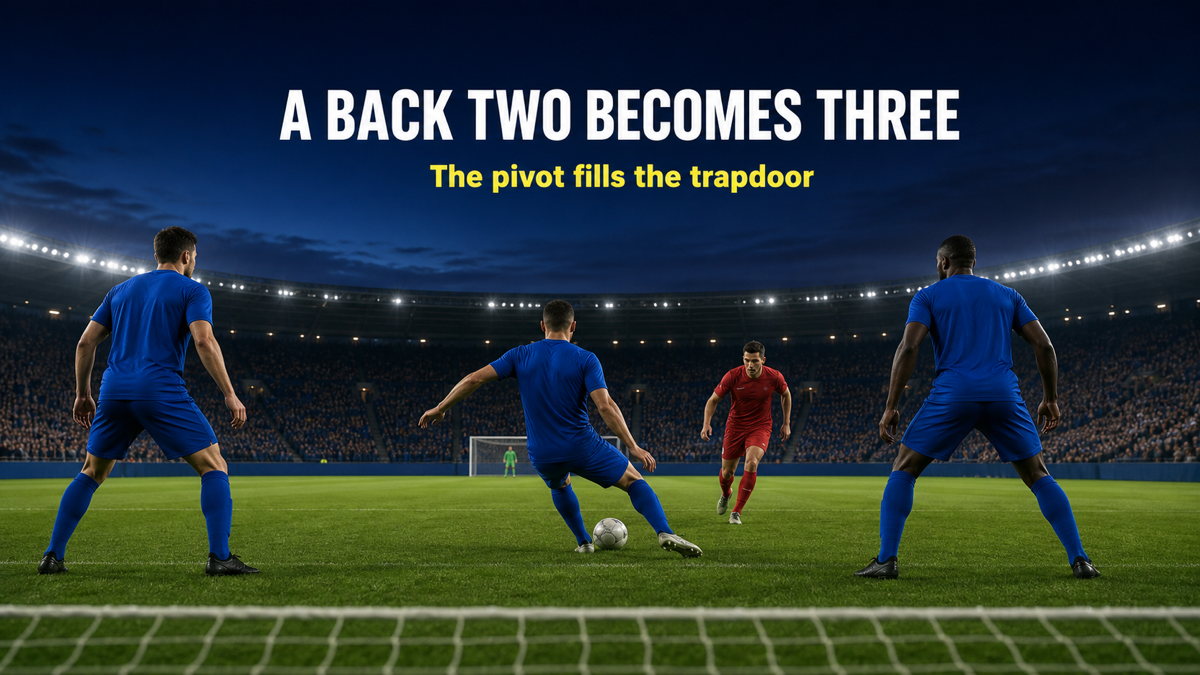
The role only exists in the build-up phase. Once the ball is safely progressed, the half-back climbs back into midfield and works as a single pivot, screening the defence like any holding player. That dual identity, defender then midfielder inside the same possession, is what separates a half-back from a simple third centre-back.
The role is therefore defined by timing, not territory. Drop too early and the press calmly adjusts; drop too late and the goalkeeper is already in trouble. The best half-backs read the first presser’s body angle and move on the half-beat before he commits.
The Salida Lavolpiana: Where the Drop Was Born
The salida lavolpiana is the build-up pattern that gave the half-back role its name and its logic. The term honours Ricardo La Volpe, the Argentine coach whose Mexico sides in the early 2000s dropped a midfielder between the centre-backs to beat the first press. La Volpe built a whole philosophy, later nicknamed Lavolpismo, around controlled progression from the goalkeeper.
Pep Guardiola watched La Volpe’s Mexico at the 2006 World Cup and absorbed the idea completely. At Barcelona he handed the job to Sergio Busquets, whose timing, body shape and composure turned a clever pattern into a repeatable system. Busquets did not just start moves from deep, he carried them out and then reappeared to shield the defence.
The genius was never the drop itself. It was the realisation that one disappearing midfielder reorganises the whole pitch, pulling a presser out of shape and opening passing lanes that did not exist a moment before.
By the time Guardiola reached Manchester City, the drop was no longer a secret weapon but a baseline expectation. Opponents now plan for it, which is why the modern half-back has to disguise the timing of the move rather than rely on surprise.
How the Half-Back Beats the First Press
The half-back role’s whole purpose is to win the first phase of build-up before the opponent can set a trap. Adding a body to the back line guarantees a spare passer against a two-forward press, which is the foundation of clean playing out from the back. Progression through the thirds, per The Analyst, leans heavily on winning this opening exchange, and elite sides treat the goal-kick as a planned route rather than a gamble.
The drop also bends the opponent. When the half-back retreats, a pressing forward must choose: follow him deep and abandon his post, or hold and let a defender carry the ball forward unopposed. Either choice hands the build-up an edge, and the second pass usually finds the space the presser left behind.
There is a second benefit that rarely makes the highlight reel. Pulling a forward out to chase the drop drags the whole opposition block forward. That stretches the distance their midfield must cover, and the first vertical pass attacks exactly that gap.
The numbers below show the structural shift in plain terms. A single pivot stays high and builds with the back two, while the half-back drop converts the same eleven into a 3-2-5 with a guaranteed overload at the first line.
| Build-up structure | 4-3-3 single pivot | Half-back drop (3-2-5) | Tactical implication |
|---|---|---|---|
| Defenders facing a two-forward press | 2 | 3 | A permanent spare man to beat the first line |
| Players screening ahead of the back line | 1 | 2 | A double pivot forms once the ball progresses |
| Bodies committed to the build-up | 3 | 4 | More control deep, fewer runners high up |
Data reflects average structures across elite possession-based sides. Individual team and season variance applies.

The Defensive Job: Screen, Sweeper, Pivot
Without the ball, the half-back is simply the team’s single pivot again, screening the space in front of the centre-backs. The drop is a possession instruction, not a defensive shape, so the moment possession is lost the player snaps back into a holding midfield station. The role only looks unusual when the team has the ball.
This is where the modern application lives. Rodri at Manchester City spends much of a match as a holding midfielder, then drops between the centre-backs to spring Pep Guardiola’s 3-2-5, and, per The Analyst, does far more than shield his defence. Martín Zubimendi has brought the same control to Arsenal under Mikel Arteta, anchoring a box-midfield shape and starting every Premier League match of their 2025-26 title win.
In transition the job flips one more time. When Manchester City win the ball high, Rodri becomes the pivot that smothers the counter before it starts, occupying the exact space he had just vacated to build. Screen, sweeper, pivot, all inside one possession.
The demand is relentless because it is constant. A half-back may run this defender-to-midfielder switch forty or fifty times in a single match, each one asking for a different body shape and a different first thought. The role rewards reading and composure far more than raw athleticism.
The Weakness: When the Drop Becomes Predictable
The half-back role’s hidden cost is the half-second when midfield sits empty. Every time the deep-lying midfielder vacates his station to join the back line, the centre of the pitch loses a body, and a team that wins the ball in that instant attacks straight through the vacated zone.
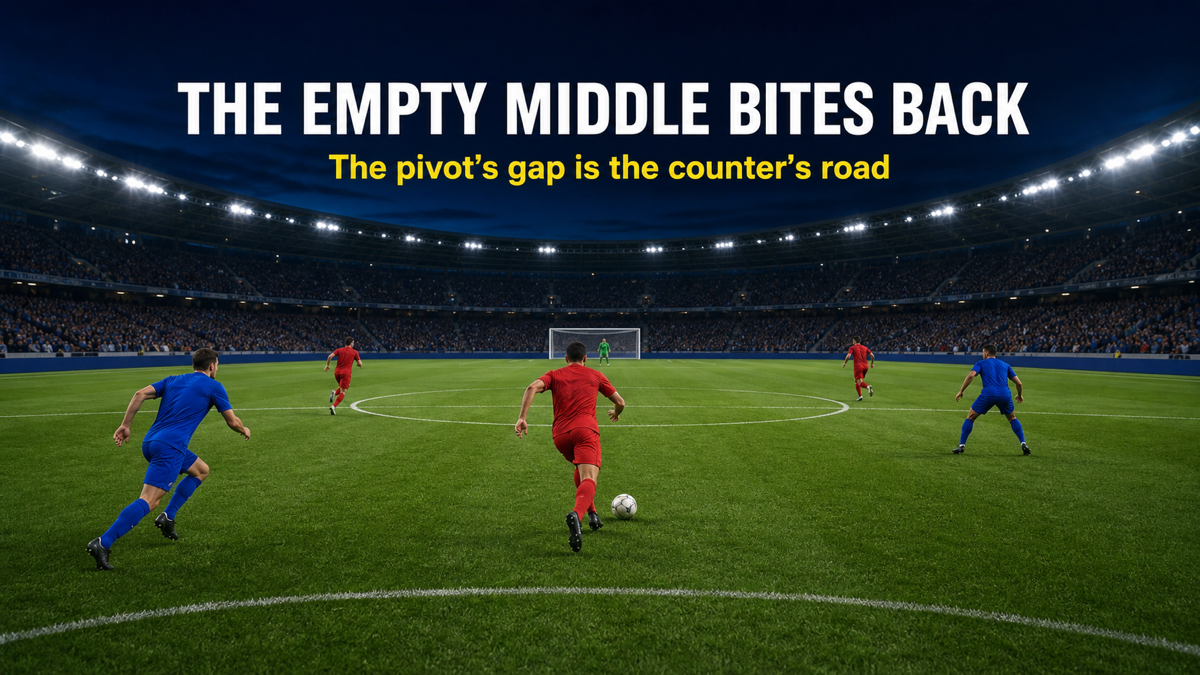
Smart pressing sides bait the drop on purpose. Jürgen Klopp’s Liverpool built a decade of goals on this exact trigger, pressing the back three to force a rushed pass and swarming the gap where the pivot used to be. A man-oriented press, like the one Marcelo Bielsa favoured, simply follows the half-back into defence and turns his clever movement into a 3v3 with no spare man at all.
The counter is positional discipline and a fast exit. If the centre-backs cannot beat the first line in two passes, the drop becomes a slow-motion invitation, and the half-back’s gift to his own build-up turns into a gift to the opponent’s transition.
The fix is rarely tactical alone. A half-back who cannot beat a man or split a line under pressure becomes a liability the instant the press arrives, no matter how sound the shape around him.
Final Thoughts
The half-back role is not a trick or a gimmick. It is the cleanest solution football has found to the oldest problem in build-up: how to beat a press without hoofing the ball away and surrendering possession. Guardiola did not invent the drop, but he proved a team could win everything by trusting one midfielder to disappear at the right moment.
The role’s future is already here in the 3-2-5 shapes of Manchester City and Arsenal, where the line between defender and midfielder is drawn in pencil. The half-back is the player who rubs that line out and redraws it, several times a minute, every time his team has the ball.
What Do You Think?
Rodri and Martín Zubimendi both drop to build, but Manchester City ask Rodri to carry the ball forward while Arsenal want Zubimendi to release it early. Which version of the half-back role is harder to press, the carrier or the releaser? Drop your take below.
Want to read any match like this?
The framework behind these breakdowns, in one place. The four phases, a 15-minute method for diagnosing both teams before the drinks break, a printable match-watching worksheet, and 51 terms defined. 40 pages.
Get the pack$9, instant downloadRelated Tactical Breakdowns
The Regista: Football’s Most Misunderstood – and Most Essential – Midfielder
Why it connects: The regista works the same deep zones but stays in midfield to dictate tempo, where the half-back physically joins the back line to build it.

Hybrid Centre-Back Explained: How the John Stones Role Redefined Modern Defense
Why it connects: The John Stones role is the half-back in reverse, a centre-back stepping up into midfield instead of a midfielder dropping into defence.
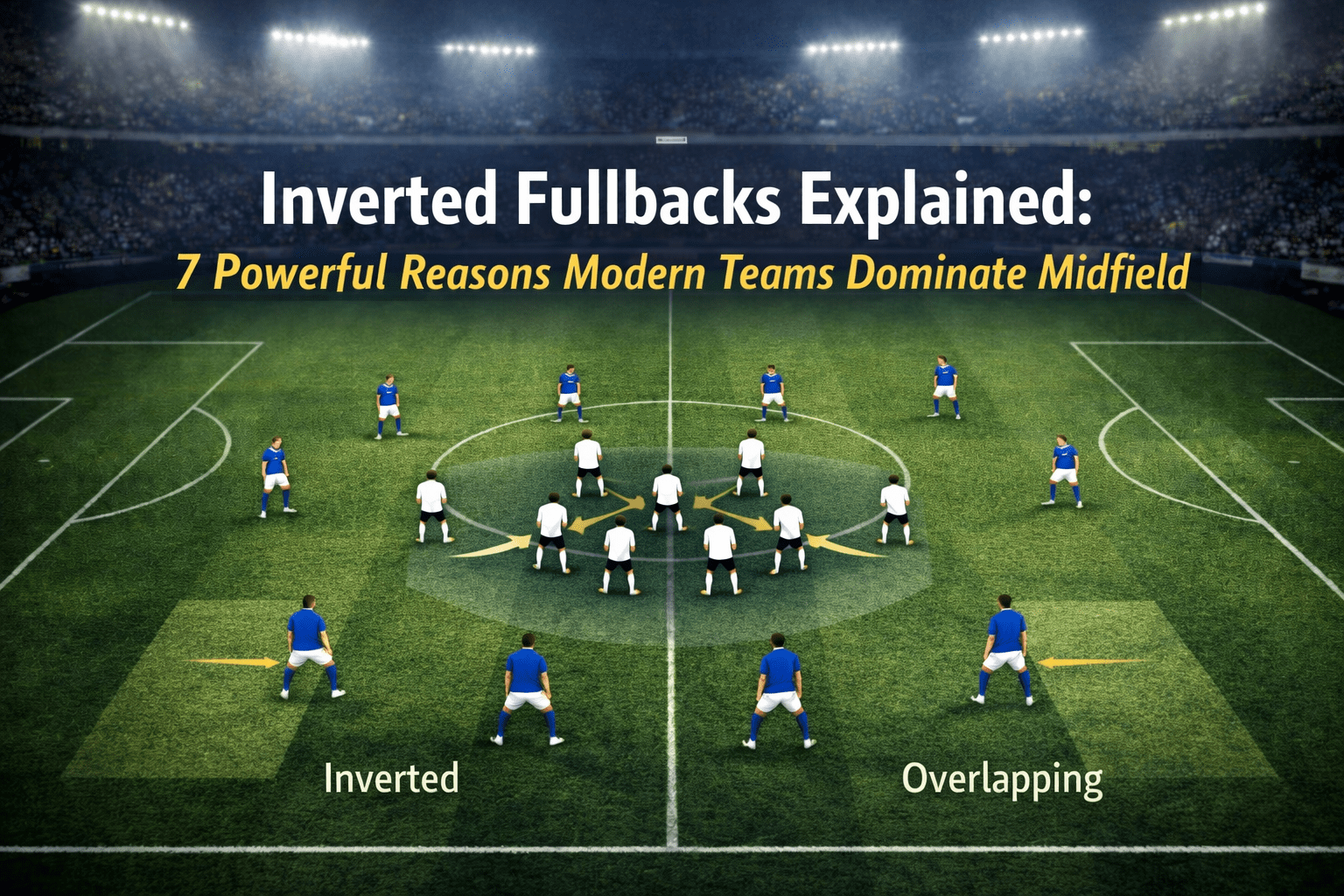
Inverted Fullbacks Explained: How Modern Teams Control the Center
Why it connects: Inverted full-backs and the half-back both manufacture central overloads in build-up, often inside the very same 3-2-5 shape.
Speak the language of the game
Get the free 47-term tactical glossary. Gegenpress, half-space, xT, low block, each defined in plain language and linked to a full breakdown. It is yours for an email.
Frequently Asked Questions
What is a half-back in football?
A half-back is a defensive midfielder who drops into the back line during build-up to create an extra defender against the press. The role exists only in possession. Once the ball is progressed, the player returns to midfield and screens the defence as a normal holding midfielder would.
Is the half-back role the same as a regista?
No, the half-back and the regista are different jobs that share deep territory. A regista stays in midfield and dictates tempo with his passing range. A half-back physically drops into the defensive line to manufacture a spare man, then climbs back into the single pivot once the build-up is safe.
Who invented the salida lavolpiana?
Ricardo La Volpe popularised the salida lavolpiana, the build-up pattern of dropping a midfielder between the centre-backs. The Argentine coach used it with Mexico in the early 2000s. Pep Guardiola later adopted the idea at Barcelona and made Sergio Busquets its most famous interpreter.
Why do teams drop a midfielder into defence?
Teams drop a midfielder into defence to outnumber the opposition’s first line of pressure. Against two pressing forwards, a back two is even and risky. Adding a deep-lying midfielder makes it 3v2, guaranteeing a free man to carry or pass the ball past the press and into midfield.
Which players play the half-back role best today?
Rodri at Manchester City and Martín Zubimendi at Arsenal are the leading examples in 2026. Both drop from a single pivot into the back line to spring a 3-2-5 in possession. Sergio Busquets remains the archetype, the player whose decade under Pep Guardiola defined the modern half-back role.