
Last updated: September 19, 2026
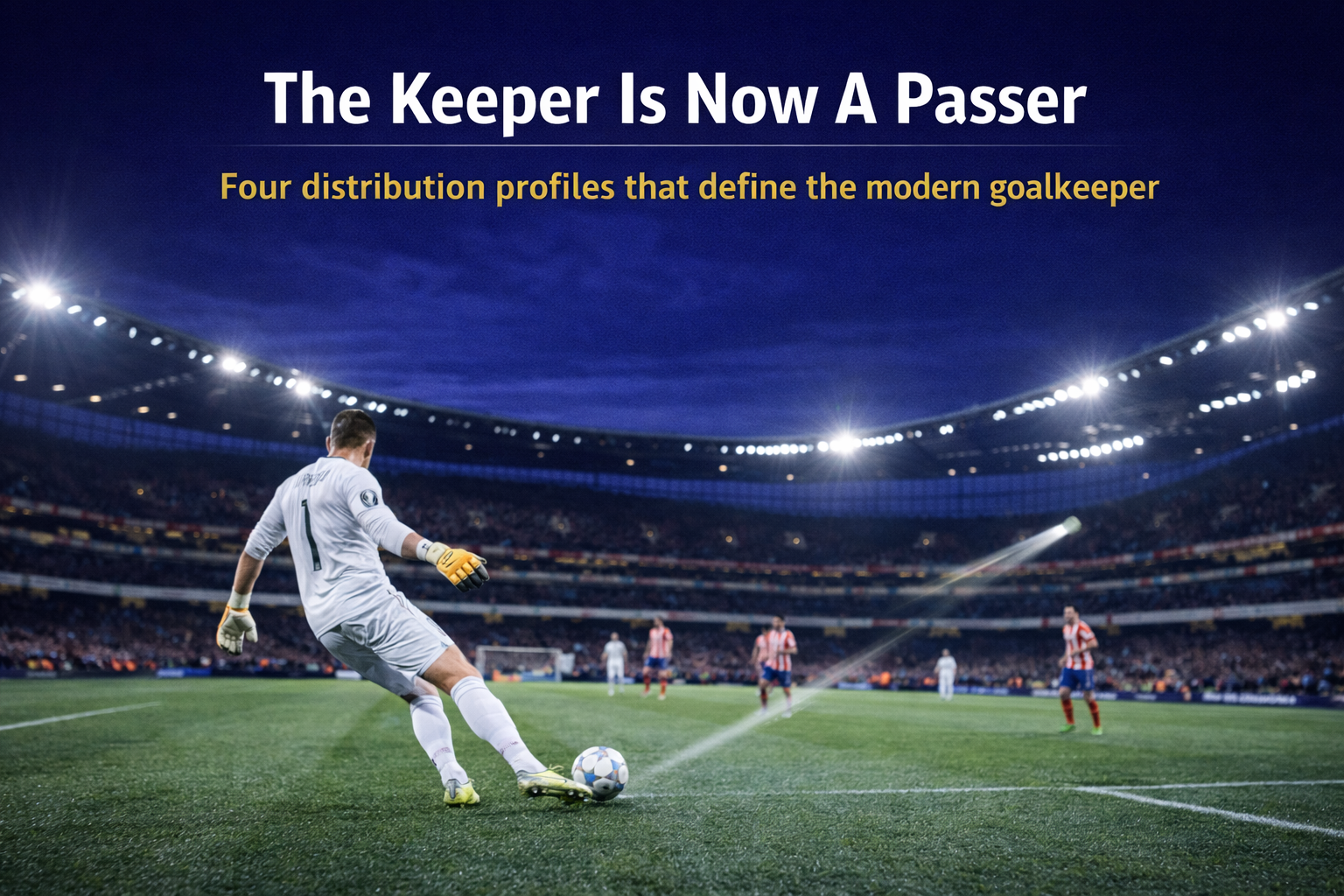
When Ederson clipped a driven 60-yard pass onto Sergio Agüero’s boot for a goal against Huddersfield in August 2018, he became the first Manchester City goalkeeper to register a Premier League assist. That wasn’t a novelty; it was a declaration that one of football’s most distinct goalkeeper distribution profiles had crystallised into a recognisable template.
Premier League goalkeeper distribution accuracy climbed from the low 40s in the mid-2000s to nearly 60% by 2019-20, according to public match data; a fifteen-point jump in one position in fifteen years is reinvention, not evolution. Our Football Tactics hub frames the broader cluster of modern player roles this article belongs to.
In simple terms: A goalkeeper distribution profile is the stylistic category that describes how a keeper releases the ball, matched to what their team needs from build-up play.
This piece breaks down the four distribution archetypes that dominate the elite game, the teams each one fits, and where every profile gets exposed.
Key Takeaways
- Pass-map node: Elite keepers register pass volumes closer to a defensive midfielder than a shot-stopper, directly shaping first-phase build-up.
- Four profiles cover the elite game: The Playmaker, the Long-Ball Distributor, the Sweeper-Distributor Hybrid, and the Shot-Stopper Specialist, each tied to a specific team system.
- Accuracy is a system signal: A 90% pass-completion keeper in a possession side and a 65% completion keeper in a direct side can both be elite.
- Every profile has a pressing vulnerability: Playmakers get baited; long-ball keepers surrender possession; hybrids get caught high; shot-stoppers cede build-up.
- Coach preference dictates the profile: Goalkeeper distribution is set by coach systemic preference and opposition pressing more than by raw keeper skill, per StatsBomb.
Table of Contents
What Are Goalkeeper Distribution Profiles?
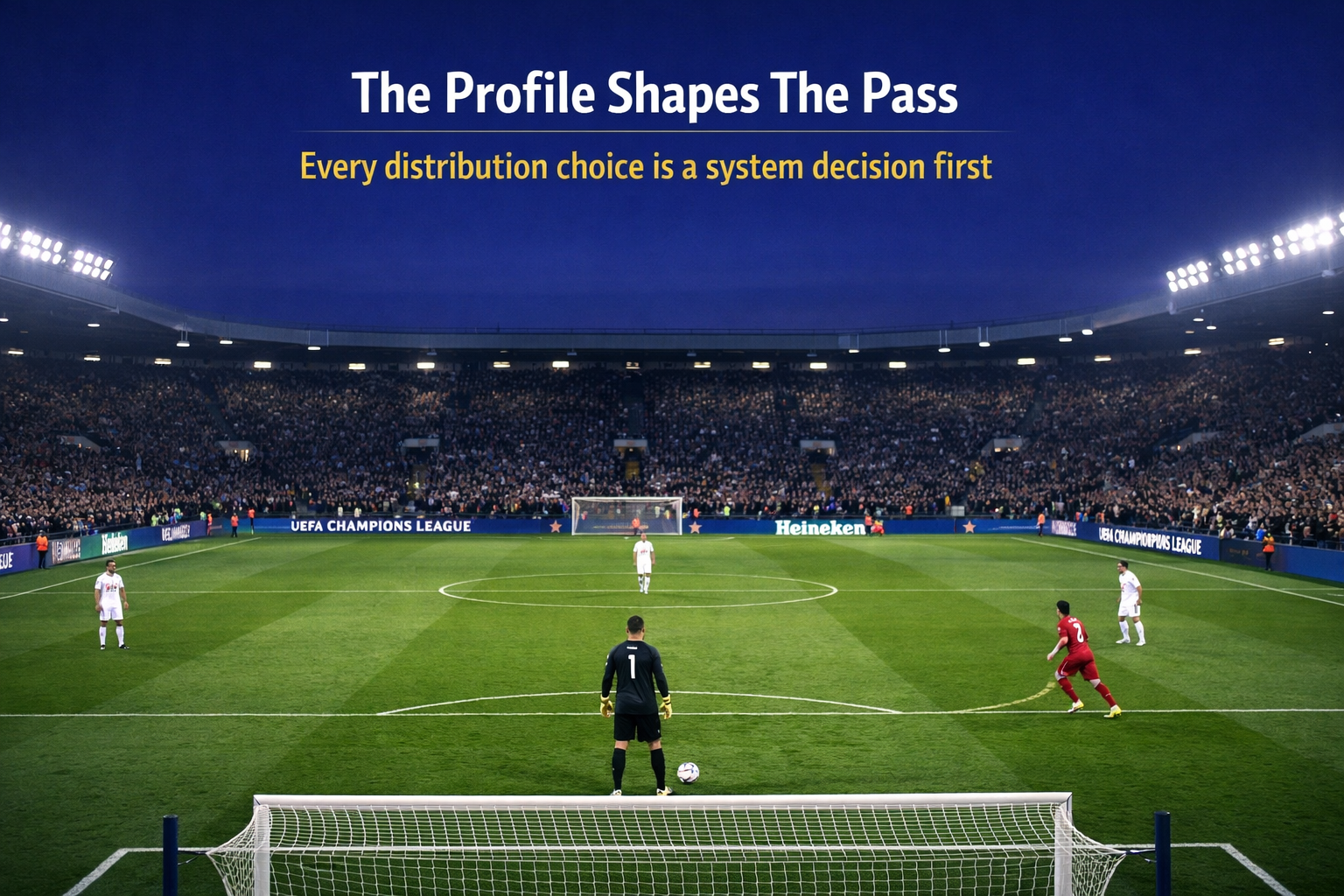
A goalkeeper distribution profile is the stylistic signature of how a keeper restarts play, combining pass length, completion rate, and the pressure environment those passes are executed in. Think of it the way you would think of a centre-back as a ball-player or a stopper. The keeper is classified by what they consistently do with the ball, not by what they occasionally manage.
The framing matters because a goalkeeper’s distribution choices are never made in isolation. Goalkeeper distribution is dictated more often by coach systemic preference, build-up shape, and opposition pressing than by the keeper’s personal comfort, per the framework StatsBomb lays out in its goalkeeper radar.
Alisson at Liverpool passes shorter on a Tuesday at Anfield than he does on a Saturday at the Emirates. That has nothing to do with his foot. It has everything to do with the press he is facing and the build-up shape Arne Slot has scripted.
Short, unpressured passes at 92% completion tells you one thing. Long, pressured passes at 65% tells you something completely different. Neither is inherently better, which is why a single accuracy figure is not the right grade for a modern keeper.
Profile 1: The Playmaker (Ederson Template)
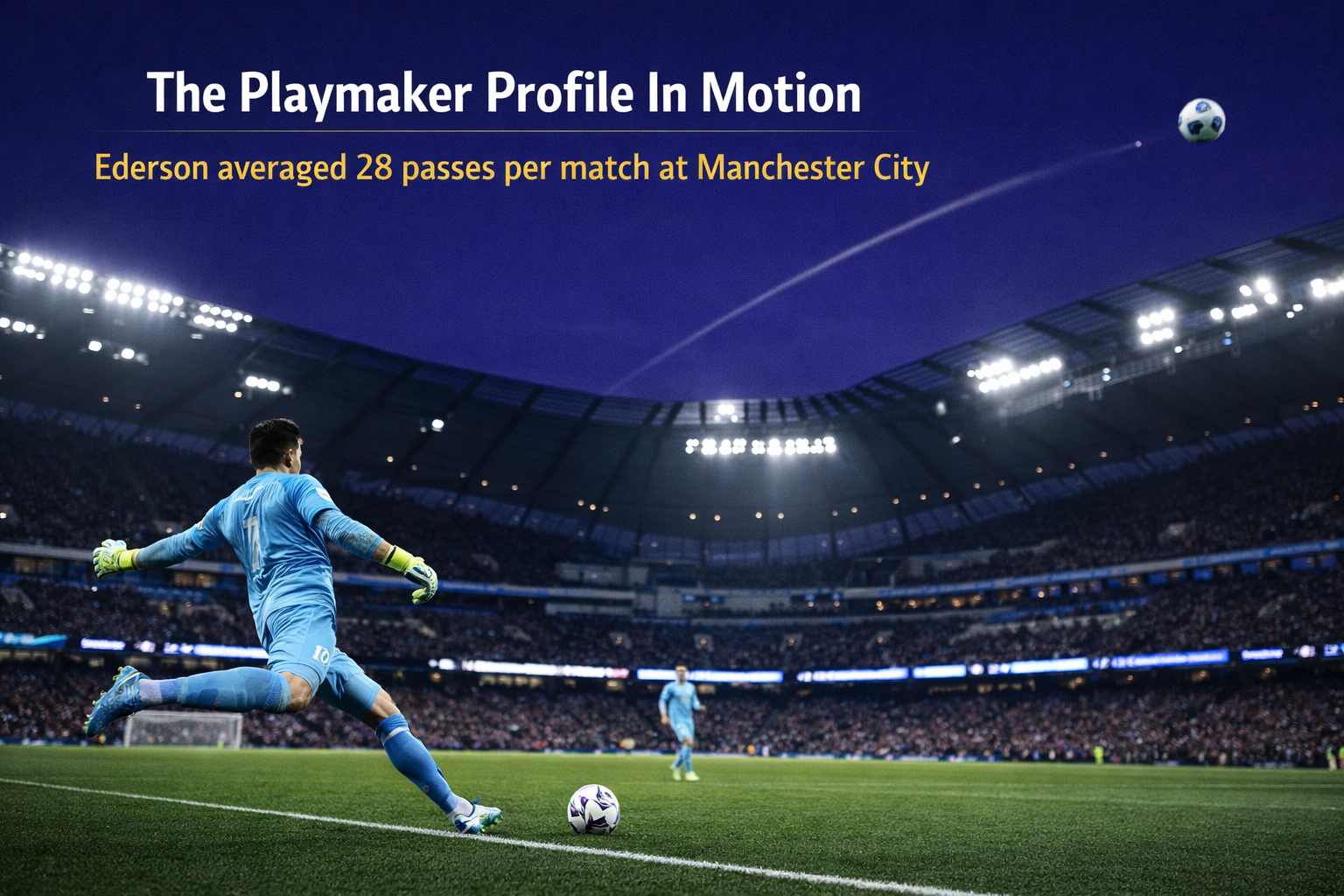
The Playmaker is the most demanding goalkeeper distribution profile in modern football, asking the keeper to act as the deepest passing node on the team rather than the last defender, distributing short-first with high volume and progressive intent.
Ederson, during his eight seasons at Manchester City under Pep Guardiola, was the defining example. Per FBref, Ederson averaged 28 to 35 passes per match with a completion rate between 82% and 90% on attempts that travelled at typical lengths of 28 to 35 yards. He was capable of driving 50-yard diagonals onto a winger’s front foot with the same body shape he used for a five-yard pass to John Stones.
The profile fits possession teams with a high rest-defence line and multiple short receiving options. It only works if the back four is comfortable receiving under press, and if the holding midfielder is willing to drop into the keeper’s pass map to manufacture a third passing option.
Ederson’s departure to Fenerbahçe in September 2025 ended the defining playmaker-keeper era of the Guardiola project. The recruitment of Donnarumma as his successor signalled a deliberate shift toward a different profile.
Profile 2: The Sweeper-Distributor Hybrid (Alisson Template)
The Sweeper-Distributor Hybrid is the goalkeeper distribution profile that combines aggressive off-line positioning, composure when the press arrives, and the willingness to play through pressure rather than around it.
Alisson at Liverpool is the cleanest modern example. He sits in the 22 to 28 short-pass-attempts-per-match band with completion rates between 75% and 82%, lower than Ederson because he plays under more direct pressing more often. That distribution range pairs with one of the highest defensive-action-outside-the-box rates of any elite Premier League keeper, the same defensive-line work covered in our sweeper-keeper breakdown.
The hybrid profile is demanded by teams running high defensive lines. A compressed 40-metre gap between the keeper and the last defender only works if the keeper can sweep, so the profile is as much about defensive geography as it is about distribution.
Under Arne Slot’s first 18 months at Liverpool, Alisson’s distribution map shifted slightly shorter as Slot layered a more possession-heavy frame onto the existing transition skeleton. The hybrid profile is the only one that absorbs that kind of mid-season tactical pivot without forcing the keeper out of his system.
Profile 3: The Long-Ball Distributor (Direct-Football Template)
The Long-Ball Distributor is the goalkeeper distribution profile that flips the build-up logic, treating the keeper’s pass as the first action of a counter-attack rather than the first action of a possession sequence.
Completion rates drop into the 45 to 55% range and short-pass attempts halve, but that drop is accepted because the value is in territory gained and second-ball setups, not possession retention. The profile fits direct teams, promoted sides operating against superior opponents, and managers who want to bypass midfield entirely, the same logic underneath our attacking transitions breakdown.
Aerial centre-backs and aggressive recovery midfielders are non-negotiable. A team that picks this profile without committing the rest of the recruitment to second-ball duels ends up donating possession every restart for no return.
The model is not extinct at the elite level. Sean Dyche’s Burnley sides and Diego Simeone’s Atlético Madrid in their European knockout years have both leaned on long-ball distribution patterns when the game state demands compressing the pitch.
Profile 4: The Shot-Stopper Specialist (Oblak Template)
The Shot-Stopper Specialist is the rarest modern goalkeeper distribution profile, still alive and still elite, distinguished by a deliberate decision to keep volume low so the keeper can hold the line at maximum reactive sharpness.
Jan Oblak at Atlético Madrid has built a Ricardo Zamora Trophy collection around this profile. Simeone’s system does not ask Oblak to conduct play; it asks him to keep the scoreline manageable while the 4-4-2 absorbs and counters. Distribution lands in the 55 to 65% completion band with average pass lengths of 42 to 50 yards, numbers that look mediocre in isolation and are exactly correct in context.
The profile is a system fit, not a skill gap. Oblak’s foot is technically capable of playing the short-first patterns Ederson uses; Simeone simply does not want him to.
The Data Signature: How Profiles Separate in the Numbers
Goalkeeper distribution profiles are visible in three columns of data before they are visible on the pitch: short pass attempts per 90, completion percentage, and average pass length. The table below shows how the four archetypes separate across a typical elite season.
| Distribution Profile | Short Pass Attempts / 90 | Avg. Pass Completion | Avg. Pass Length (yards) |
|---|---|---|---|
| The Playmaker | 28-35 | 82-90% | 28-35 |
| The Long-Ball Distributor | 8-14 | 45-55% | 50-60 |
| The Sweeper-Distributor Hybrid | 22-28 | 75-82% | 34-42 |
| The Shot-Stopper Specialist | 12-18 | 55-65% | 42-50 |
Data reflects average metrics across elite European top-five-league goalkeepers across 2022-2025 seasons, compiled from public FBref passing and goalkeeping data. Individual team and season variance applies.
A keeper who completes 58% of his passes is not worse than one who completes 88%; he is in a different job. The numbers separate cleanly only when read alongside the pass length and the pressing environment, which is why StatsBomb treats these three columns as profiling data rather than performance data.
How Coaches Choose a Profile: System First, Player Second
Coaches do not pick a goalkeeper distribution profile by signing the keeper who matches it; they pick the profile by deciding what kind of football the team will play and then recruit the keeper backwards from that decision.
Pep Guardiola did not inherit Ederson’s passing range, he built a system that needed it. Diego Simeone did not ask Jan Oblak to play like Ederson, he built a system that did not need him to.
The decision precedes the signing in both cases, which is why a club that swaps its game model often discovers its keeper is suddenly the wrong goalkeeper distribution profile for the new plan. The same systemic logic underpins our relationism vs positionism analysis.
Mikel Arteta’s Arsenal lived through this exact sequence with David Raya, brought in specifically because the existing keeper’s distribution range did not fit the hybrid game model Arteta was layering on. Raya’s short-first numbers in his first two seasons map almost exactly to the hybrid band, and that is by design.
Recruitment now leads with distribution data. Public scouting tools and proprietary club platforms both rank goalkeepers on pass length and completion under pressure before save percentage, as analytics shops like The Analyst detail in their scouting frameworks.
The Weakness: Where Every Profile Breaks
No goalkeeper distribution profile is complete. Each archetype has a failure mode, and elite coaches build their pressing schemes around forcing the keeper into the pass they are weakest at making.
Playmaker keepers get baited. The most effective counter is the trigger-press used by Roberto De Zerbi’s sides and increasingly by Unai Emery’s Aston Villa, where the keeper is allowed the first pass to the centre-back and the press collapses on the return. The system’s insistence on short options becomes the very thing the press weaponises.
Long-ball distributors surrender possession by design. Against a team with dominant aerial centre-backs, the profile becomes a possession donation. The 45-55% completion ceiling is the weakness, full stop; it is sustainable only when the team’s mid-block and counter-press can reclaim second balls reliably.
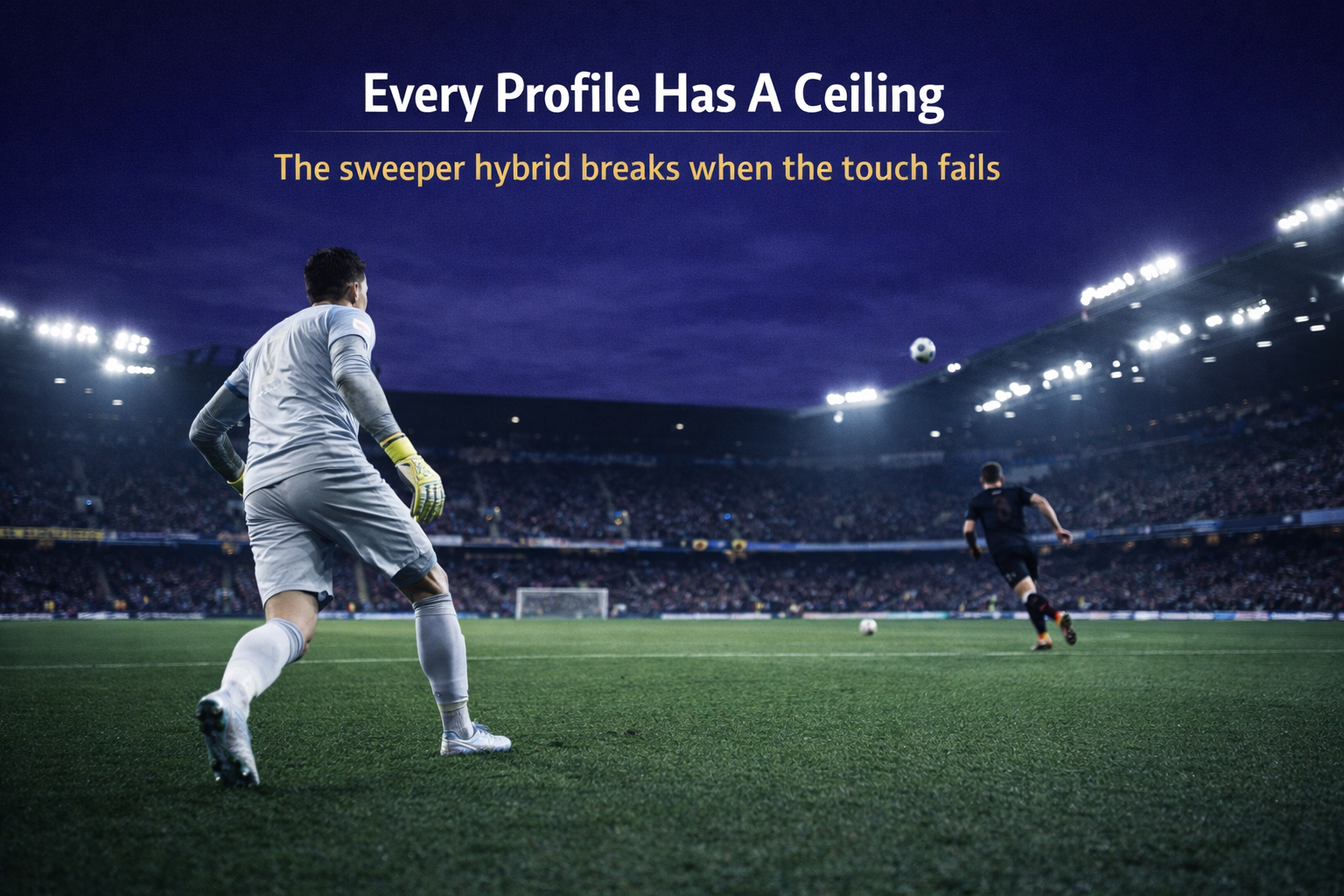
Sweeper-distributor hybrids get caught high. Alisson’s 2018 World Cup quarter-final moment against Belgium is the case study, where leaving the box to clear a long ball became a disaster the moment the touch was heavy and the attacker arrived first. Teams that press the hybrid keeper’s decision window, typically with a direct runner on the shoulder, force the error.
Shot-stopper specialists cede the first phase entirely. Against teams that press the build-up aggressively, the ball goes long every time and the attack starts from second-ball duels rather than passing sequences. In Champions League knockout football, where opponents refuse to let you counter on their terms, the profile’s ceiling is visible.
Where This Leaves Us
The most useful thing a tactical viewer can do is stop grading goalkeeper distribution on a single accuracy axis. A keeper who completes 58% of his passes is not worse than one who completes 88%; he is in a different job. The error the mainstream broadcast still makes is to treat “good on the ball” as a binary skill rather than a systemic requirement.
Pep Guardiola did not inherit Ederson’s passing range; he built a system that needed it. The profile is the plan, and the plan is the manager’s first decision, not the keeper’s.
The next five years will force a further split. Expect the Hybrid goalkeeper distribution profile to dominate because pressing intensity will keep rising, and only keepers who can both play and sweep will survive the squeeze.
What Do You Think?
Ederson’s departure to Fenerbahçe in September 2025 ended the playmaker-keeper era of the Guardiola project, and Donnarumma’s lower passing volume marks a deliberate goalkeeper distribution profile shift. Is Guardiola quietly admitting the pure playmaker keeper has run its course at the elite level, or is this a one-window pragmatic signing? Drop your take below.
Want to read any match like this?
The framework behind these breakdowns, in one place. The four phases, a 15-minute method for diagnosing both teams before the drinks break, a printable match-watching worksheet, and 51 terms defined. 40 pages.
Get the pack$9, instant downloadRelated Tactical Breakdowns
What Is a Sweeper-Keeper? The Complete Guide to Modern Goalkeeper Tactics
Why it connects: The sweeper-keeper is the defensive side of the same role-expansion trend that produced distribution profiles, and reading them together explains the full modern goalkeeper job.
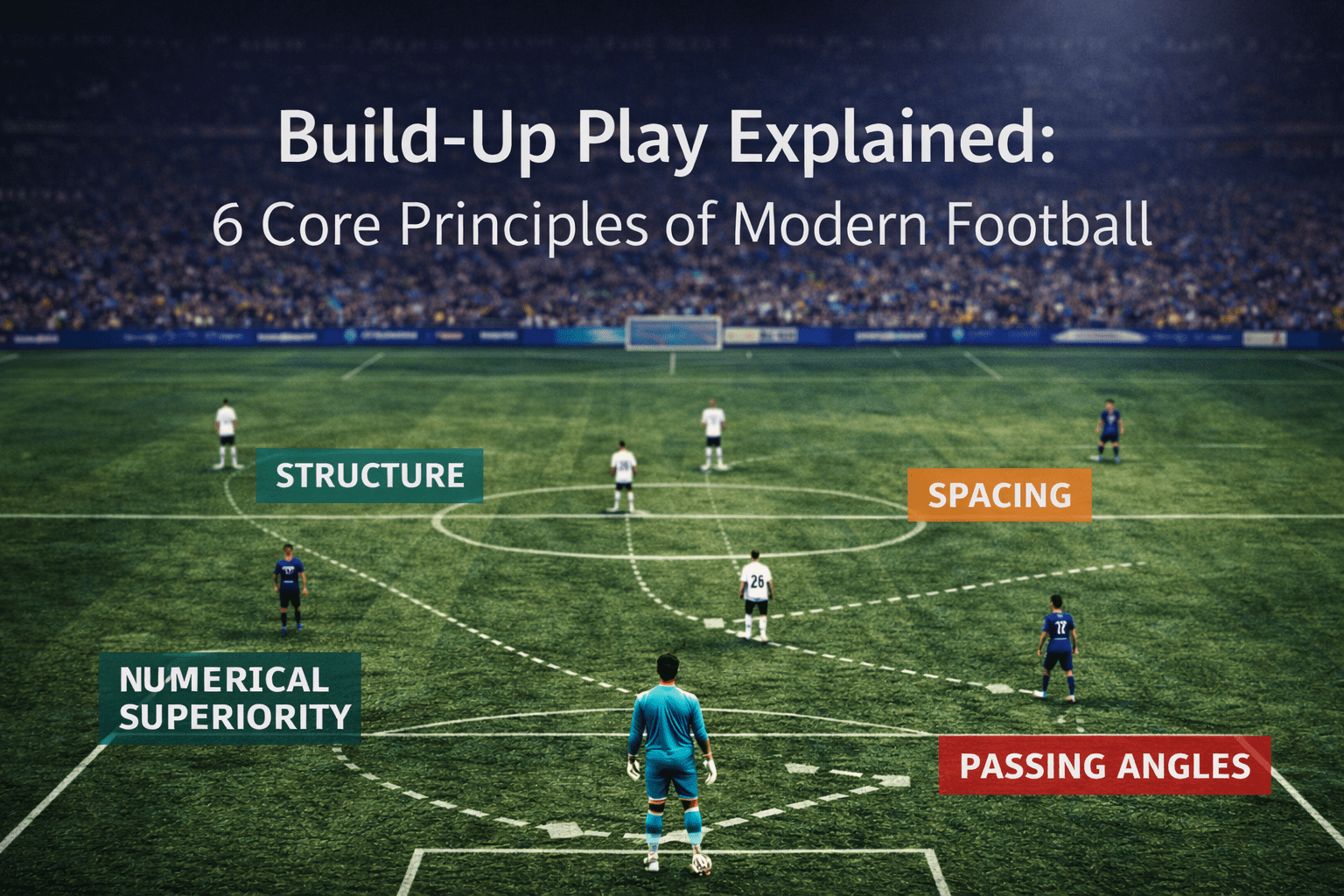
Build-Up Play in Football: How Teams Progress Under Pressure
Why it connects: Goalkeeper distribution is the first pass of build-up, and the whole first-phase structure is designed to receive that pass.
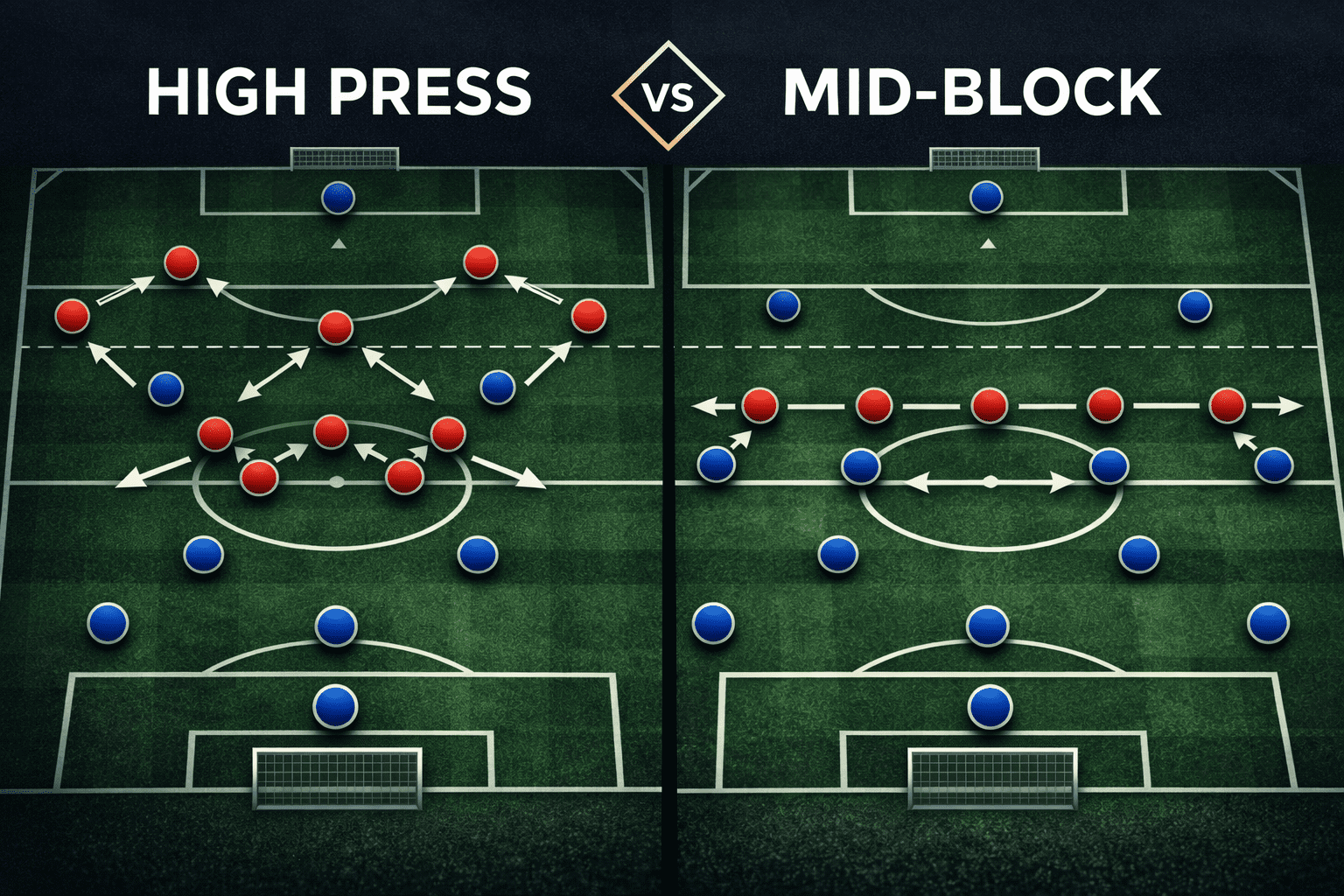
High Press vs Mid-Block: 7 Tactical Differences That Define Modern Football
Why it connects: Every distribution profile is defined by the press it faces, and the press type a team runs dictates which keeper profile counters it best.
Speak the language of the game
Get the free 47-term tactical glossary. Gegenpress, half-space, xT, low block, each defined in plain language and linked to a full breakdown. It is yours for an email.
Frequently Asked Questions
What are the main types of goalkeeper distribution?
Modern football recognises four goalkeeper distribution profiles: the Playmaker, the Long-Ball Distributor, the Sweeper-Distributor Hybrid, and the Shot-Stopper Specialist. Each profile fits a different team system and serves a different phase of play. The Playmaker is short-first and high-volume, the Long-Ball Distributor is vertical and transition-focused, the Hybrid is aggressive off the line, and the Specialist keeps volume low by system design.
Which current goalkeepers are best at distribution?
Alisson at Liverpool is the benchmark hybrid profile, combining a high starting position with composure under press. Ederson, now at Fenerbahçe, set the modern playmaker template during his eight seasons at Manchester City. Jan Oblak at Atlético Madrid remains the elite shot-stopper specialist whose distribution output stays low by system design rather than by limitation.
Why has goalkeeper passing accuracy increased so dramatically?
Premier League goalkeeper passing accuracy climbed from the low 40s in the mid-2000s to nearly 60% by 2019-20 because coaches shifted from long-ball clearances to short build-up starts. Goalkeeper recruitment and academy training now prioritise ball skills alongside shot-stopping, which has changed the talent pipeline. The position itself was redefined, not just the players selected to fill it.
How does a coach decide which goalkeeper distribution profile to use?
A coach picks the profile by deciding what kind of football the team will play, then recruits the keeper backwards from that decision. Pep Guardiola wanted a Playmaker because the rest of his Manchester City system required one; Diego Simeone wanted a Specialist because his Atlético block did not need a passing keeper. The system precedes the player, every time.