
Last updated: September 19, 2026
Editor’s Note (updated July 2026): This is a historical breakdown of Klopp’s 2023-24 tactical rewire – the structure Arne Slot inherited and carried through Liverpool’s 2024-25 title win, and the baseline Andoni Iraola takes over from summer 2026.
Anfield, April 9, 2023. Liverpool are 2-0 down to Arsenal inside 28 minutes, their season already drifting toward a fifth-place finish. Klopp’s answer that afternoon is structural: Trent Alexander-Arnold, no longer a right-back. He starts defensive phases wide, then slides into central midfield the moment Liverpool have the ball, building a temporary back three around Virgil van Dijk. Liverpool draw 2-2. Alexander-Arnold sets up the equaliser. The shape stays.
That one half was the first public draft of Liverpool 2.0 – the project Klopp spent the summer of 2023 formalising into a full tactical reload of a football tactics system that had run out of runway. This wasn’t a cosmetic refresh. It was a structural rewrite of how Liverpool built possession, pressed, and controlled central space.
In simple terms: Liverpool 2.0 was Klopp’s 2023-24 tactical reboot – an inverted-fullback, rebuilt-midfield version of his Gegenpressing system designed to survive the departure of Henderson, Fabinho, Milner, and Firmino.
This breakdown covers what actually changed, why it worked for long stretches, and where the system cracked when it mattered most.
Key Takeaways
- The shape shift: Liverpool 2.0 built through a 3-2 structure in possession – three defenders plus two pivots – with Alexander-Arnold inverting from right-back into central midfield alongside a single six.
- The midfield reload: Mac Allister, Szoboszlai, Endo, and Gravenberch replaced Henderson, Fabinho, Keita, and Oxlade-Chamberlain in a single summer window – roughly £145m invested in one department.
- The output: 82 points, third place, 86 goals, 87.8 xG, 41 goals against, and a League Cup trophy in Klopp’s farewell season.
- The weakness: The 3-2 build left a 2-2 rest-defence. Pacy wingers attacking the right-back channel exploited it – especially in the March-April run-in where the title slipped.
- The bridge: Liverpool 2.0 wasn’t just Klopp’s last version. It became the tactical floor Arne Slot built on, evidenced by a league-low 9.89 PPDA in 2024-25.
Table of Contents
What Is Liverpool 2.0?
Liverpool 2.0 is the shorthand Klopp himself used at the start of the 2023-24 season to describe a team that had been deliberately rebuilt from the engine room outward. It was not a new philosophy. Klopp’s identity – aggressive counter-press, vertical attacking intent, high defensive line – remained. What changed was the architecture holding that identity together.
Think of the original 4-3-3 under Fabinho, Henderson, and Wijnaldum as a muscle car. Brute force, three engines in midfield, Firmino dropping from the nine to create central overloads. Liverpool 2.0 replaced that chassis with something closer to a positional-play hybrid. The front line no longer generated the overload through Firmino’s movement. The build-up generated it through Alexander-Arnold stepping into the pivot.
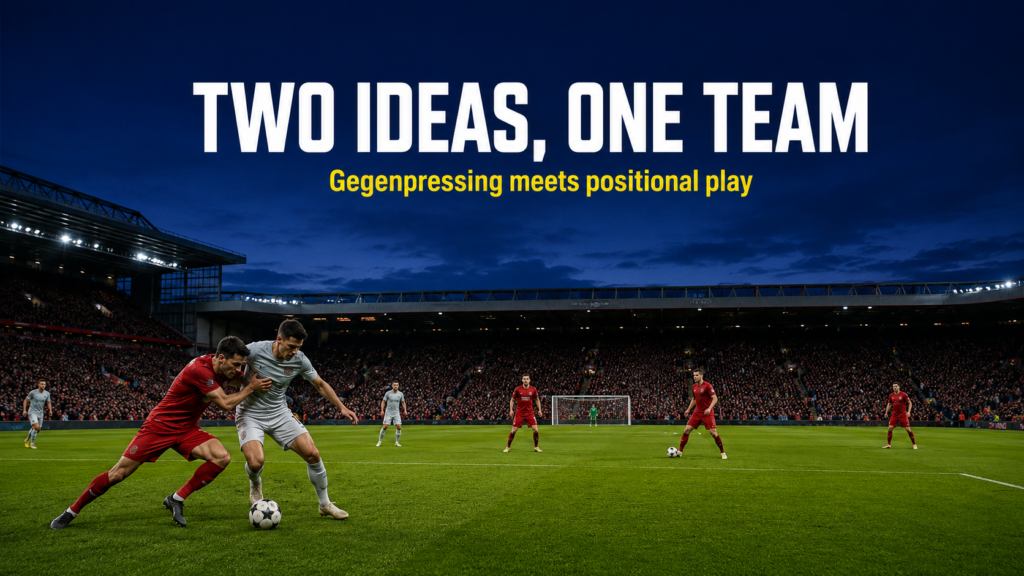
In a typical 2023-24 build-up, the back line split into a temporary trio – Andy Robertson or Joe Gomez as the left centre-back, Van Dijk central, Ibrahima Konate right. Alexander-Arnold slid inside next to the single six (Mac Allister early season, then Endo or Gravenberch). Alisson became the fourth builder when pressed. The front three – usually Salah, Nunez, and Diaz – stayed higher and narrower, feeding off Szoboszlai’s ball-carrying and Alexander-Arnold’s vertical passing from the centre.
The result was a team that pressed like Klopp’s 2019 side but built like a Pep Guardiola team. That hybrid is the entire story.
The Catalyst: Klopp’s April 2023 Trent Switch
The first public draft of Liverpool 2.0 arrived in April 2023, not summer. At Anfield on April 9, Liverpool fell 2-0 behind to Mikel Arteta’s Arsenal inside 28 minutes, their season already drifting toward a fifth-place finish. Jurgen Klopp’s adjustment that afternoon – a ‘big step’, he admitted afterwards – changed everything: Trent Alexander-Arnold would no longer hold his right-back position when Liverpool had the ball.
In defensive phases, Alexander-Arnold stayed wide. In possession, he slid inside next to Fabinho, forming what Klopp himself called a “double six.” Andy Robertson dropped into a temporary back three alongside Virgil van Dijk and Ibrahima Konate. Mohamed Salah pulled one back on the stroke of half-time, and Alexander-Arnold completed the comeback in the 87th minute, ghosting past Oleksandr Zinchenko to cross for Roberto Firmino’s equaliser. 2-2.
Three weeks later, Alexander-Arnold became the first player in Premier League history to assist a goal in five consecutive matches twice. The fix worked too well to be temporary. Klopp spent the summer rebuilding the rest of the squad around the version of his fullback that emerged in those last weeks of 2022-23.
The 3-2 Build-Up: How Liverpool Inverted The Pitch
The 3-2 build-up is what Liverpool 2.0 was actually built on. In the 2023-24 season, when Liverpool had settled possession, the back line split into a temporary trio: Andy Robertson or Joe Gomez wide-left, Virgil van Dijk central, Ibrahima Konate wide-right. Alexander-Arnold slid inside to partner the single pivot. That gave Liverpool a 3-2 base, with five attackers ahead of it.
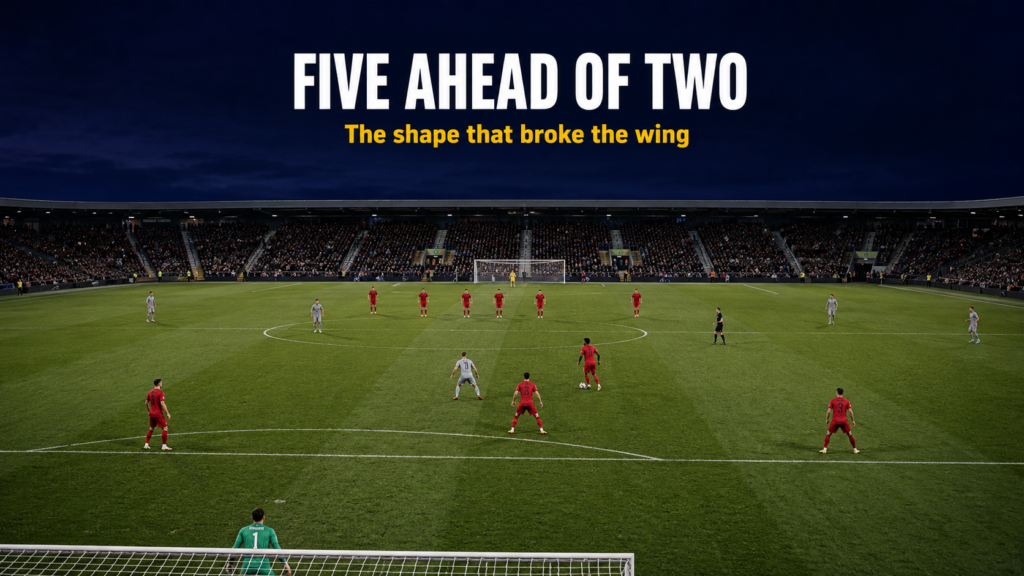
This was a structural break from peak-era Liverpool. The 2018-20 side built through Andy Robertson and Alexander-Arnold pinning wide and whipping crosses; per Coaches’ Voice, Liverpool had ranked top two in Premier League crosses every season from 2018 onward. In 2023-24, that number collapsed to their lowest crossing total since 2018. The team had stopped needing to cross. The central overload through the inverted-fullback role was generating chances from inside the opposition block rather than around its edges.
Alisson Becker became the fourth builder when pressed, stepping out to form a back four with the temporary three. The front line stayed narrow: Mohamed Salah right, Darwin Nunez central, Luis Diaz left, all higher and tighter than under Klopp’s earlier teams. The space Roberto Firmino used to occupy when dropping deep was now filled by Alexander-Arnold arriving from the opposite direction.
The £145m Midfield Reload
Liverpool 2.0’s engine room was rebuilt in a single window. The 2022-23 season ended with Jordan Henderson, Fabinho, Naby Keita, James Milner, Alex Oxlade-Chamberlain, and Roberto Firmino all leaving or about to leave. Klopp had to replace nearly an entire midfield department before the new season started.
The replacements arrived fast. Alexis Mac Allister came from Brighton for around £35m. Dominik Szoboszlai joined from RB Leipzig for roughly £60m. Wataru Endo was bought late from VfB Stuttgart for £16.2m after Liverpool’s pursuits of Moises Caicedo and Romeo Lavia collapsed. Ryan Gravenberch arrived from Bayern Munich for about £34m. Total midfield spend in one window came to roughly £145m, the largest single-department rebuild of Klopp’s tenure.
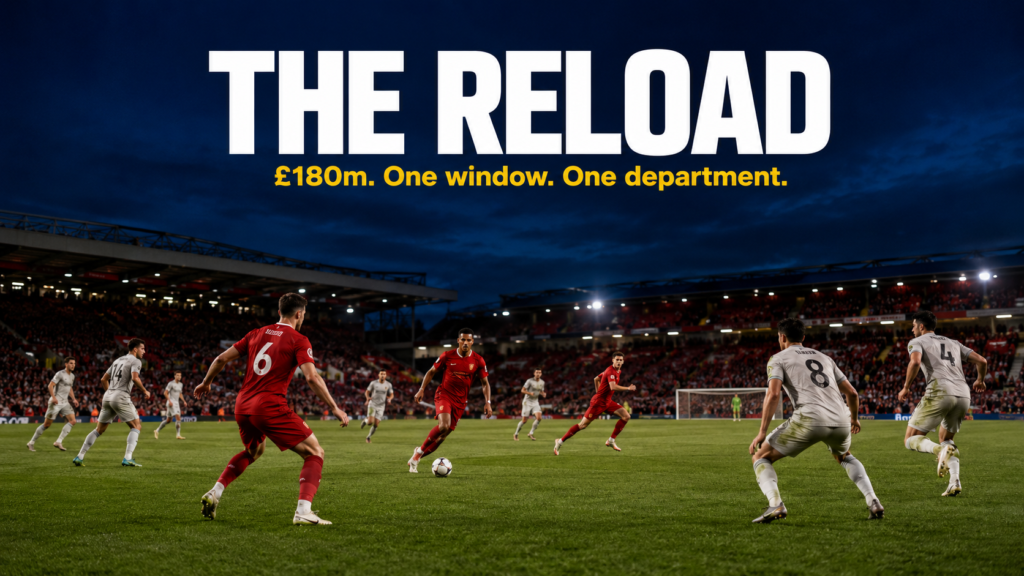
Each signing had a specific structural job. Mac Allister was the deep-lying distributor, the Fabinho replacement, although not a defensive-midfield specialist. Szoboszlai delivered the ball-carrying from deep that none of the departing midfielders had offered. Per Coaches’ Voice, his dribbling and driving forward from central midfield helped Liverpool rediscover their counter-attacking potency from midfield regains. Endo was the emergency ball-winner. Gravenberch, slowly integrated through the season, offered the press-resistance the others sometimes lacked.
Alexander-Arnold’s Role: Right-Back As Deep-Lying Playmaker
The most-cited number from Liverpool 2.0 is also the most misunderstood. Per FBref, in 2023-24 Trent Alexander-Arnold ranked sixth in the Premier League for total through balls completed, with no other defender close in the rankings. That stat tells you he was not a fullback playing midfield. He was a deep-lying playmaker operating from a right-back shirt.
The distinction matters. An inverted fullback like Oleksandr Zinchenko under Arteta circulates possession, acts as a decoy, and creates positional symmetry. Alexander-Arnold did the opposite. From his central position, he sprayed vertical passes between the lines or over the top of the opposition defensive line, generating transitional moments rather than smothering them. The role suited the player; the system was built to suit the role.
What it did not solve was his back-to-goal play. Receiving with a marker behind him and pressure arriving, Alexander-Arnold was less press-resistant than a natural midfielder. As the 2023-24 season progressed, Klopp tried to get him in more situations facing forward outside the opposition block. The compromise capped the ceiling of the system, but it kept the through balls flowing.
The Pressing System: Why Liverpool Pressed Less But Won More
Liverpool 2.0 quietly pressed less than peak-era Liverpool. Per Sky Sports’ aggregated pressing data, in October 2023 Liverpool were recording 199.5 player pressures per game, ranking sixth in the Premier League, down from the volume that defined the 2018-19 side. The team’s reputation was still high-press chaos. The reality was a more selective, structured version of Klopp’s Gegenpressing system.
Two factors drove the shift. First, the 3-2 build-up gave Liverpool more control before turnovers happened, which reduced how often they needed to counter-press. Second, the midfield rebuild gave Klopp athletic, press-resistant ball-carriers in Szoboszlai and Gravenberch who could escape pressure with carries rather than relying on pure recoveries.
The output backs the trade. Per FBref, the 2023-24 side conceded 41 Premier League goals against an xGA of 45.7, both improvements on the 47 conceded in 2022-23. Fewer pressing actions, fewer chaotic transitions, and a stronger defensive baseline. The selective press paired with the structured build was the entire mechanism behind the jump from 67 to 82 points.
Liverpool 2023-24 Output vs The Klopp Benchmark Seasons
| Metric | 2022-23 (Pre-reboot) | 2023-24 (Liverpool 2.0) | Tactical Implication |
|---|---|---|---|
| Premier League Finish | 5th | 3rd | Reload arrested the decline. |
| Points | 67 | 82 | +15 points from a structural shift, not new stars. |
| Goals For | 75 | 86 | Central overloads replaced wing overloads. |
| xG | ~72 | 87.8 | Better chance quality, not just volume. |
| Goals Against | 47 | 41 | 3-2 build left fewer chaotic transitions. |
| Crosses | Top 2 (2018-22) | Lowest since 2018 | Alexander-Arnold inverted – crossing volume collapsed by design. |
Data reflects Liverpool’s Premier League output as published by FBref for the 2022-23 and 2023-24 seasons. Individual match variance applies.
The crossing drop is the tell. Liverpool had ranked top two in Premier League crosses every season from 2018 onward. In 2023-24, that number fell off a cliff. The team was not worse at crossing – it had simply stopped needing to. The central overload through Alexander-Arnold and Szoboszlai meant Liverpool were playing through the middle far more than round the edges.
The Weakness: Where Liverpool 2.0 Leaked
Every tactical innovation has a cost. Liverpool 2.0’s cost was rest-defence.
When Alexander-Arnold inverted, Liverpool’s in-possession shape was 3-2-5. That looks solid on paper. The problem arrives on turnover. Transitioning from 3-2-5 back to a settled 4-4-2 block requires Alexander-Arnold to track from the centre of the pitch all the way back to the right channel. In the seconds that takes, Liverpool are defending a 2-2 rest-defence – two centre-backs, two pivots – against a counter.
Managers noticed. Pep Guardiola noticed. Thomas Tuchel’s Bayern noticed during the pre-season. The exploit pattern was specific: pacy, direct left-wingers attacking the space behind Alexander-Arnold before he could recover.
Atalanta, under Gian Piero Gasperini, executed this with precision in the Europa League quarter-final first leg at Anfield. Their man-marking system isolated Liverpool’s inside-midfielders and forced turnovers into exactly the zone Alexander-Arnold had vacated. Liverpool lost the tie 3-1 on aggregate. A similar pattern showed up in the March defeat to Manchester United in the FA Cup and the stumble against Crystal Palace and Everton in the Premier League run-in – moments where the central build-up slowed and the rest-defence got punished.
Unai Emery at Aston Villa exposed a different flaw: the single-pivot structure meant that if Mac Allister or Endo got pressed off the ball, there was no second screener in front of the back three. Emery’s wingers baited Liverpool’s build-up specifically to trigger this.

The deeper issue was positional. Alexander-Arnold was an elite passer but not a natural midfielder. As ESPN’s scouting piece put it, his back-to-goal play was a mixed bag, making him more vulnerable to pressing than midfielders or even select inverted full-backs. The inversion worked because of his passing, not because of his midfield IQ. That ceiling capped the system.
The Slot Inheritance: Why Liverpool 2.0 Was A Bridge
Liverpool 2.0’s most important legacy is not Klopp’s third-place finish. It is what Arne Slot inherited. When Slot arrived at Anfield in June 2024, he did not start from scratch. He kept the 3-2 build-up. He kept Mac Allister, Szoboszlai, and Gravenberch as the midfield core. He kept the inverted-fullback principle and just cleaned up its weakness.
The cleanup was specific. Slot moved Liverpool to a double-pivot base in possession, with two genuine midfielders sitting in front of the back four rather than a fullback sliding in to cover the second pivot slot. That solved the rest-defence vulnerability the Atalanta tie had exposed under Klopp. The 2-2 rest-defence became a 2-3, with a permanent screener in front of the centre-backs every time Liverpool turned the ball over.
Per The Analyst, the 2024-25 Liverpool side averaged a league-low PPDA of 9.89 on their way to the title. That is the Klopp pressing identity, executed inside a Slot structural correction. Liverpool 2.0 was not a finished system. It was a working foundation Slot could finish, and that is the rarest gift one manager can leave the next.
Final Thoughts
Liverpool 2.0 is usually remembered as a farewell lap. That framing undersells it. What Klopp actually did in the summer of 2023 was rare: he rebuilt a championship squad’s entire midfield in one window while simultaneously rewriting how that team built possession. Most managers get one of those or the other. Klopp tried both, at 56, in his ninth season, while quietly running out of energy.
The honest verdict is that Liverpool 2.0 was a successful bridge system that briefly looked like a title-winning one. It produced 82 points and 86 league goals while defending fewer catastrophic transitions than the 2022-23 side. But the structural compromise at right-back was always going to limit its ceiling against elite opposition over a long campaign. Slot inherited the architecture, handed the pivot duties back to genuine midfielders with Alexander-Arnold restored to right-back, and turned the ceiling into a title – Trent himself left for Real Madrid in June 2025.
That is not a demotion of what Klopp did. It is the point of it. The best tactical systems do not just win the next match – they leave the next manager with something to build on. Liverpool 2.0 did exactly that.
What Do You Think?
Arne Slot kept the 3-2 build and went on to win the 2024-25 Premier League with a league-low 9.89 PPDA. But Slot has two pivots, not a fullback playing pivot. Was Liverpool 2.0 ever a destination system, or was it always going to be a transitional model that a different head coach would finish? Drop your take below.
Want to read any match like this?
The framework behind these breakdowns, in one place. The four phases, a 15-minute method for diagnosing both teams before the drinks break, a printable match-watching worksheet, and 51 terms defined. 40 pages.
Get the pack$9, instant downloadRelated Tactical Breakdowns
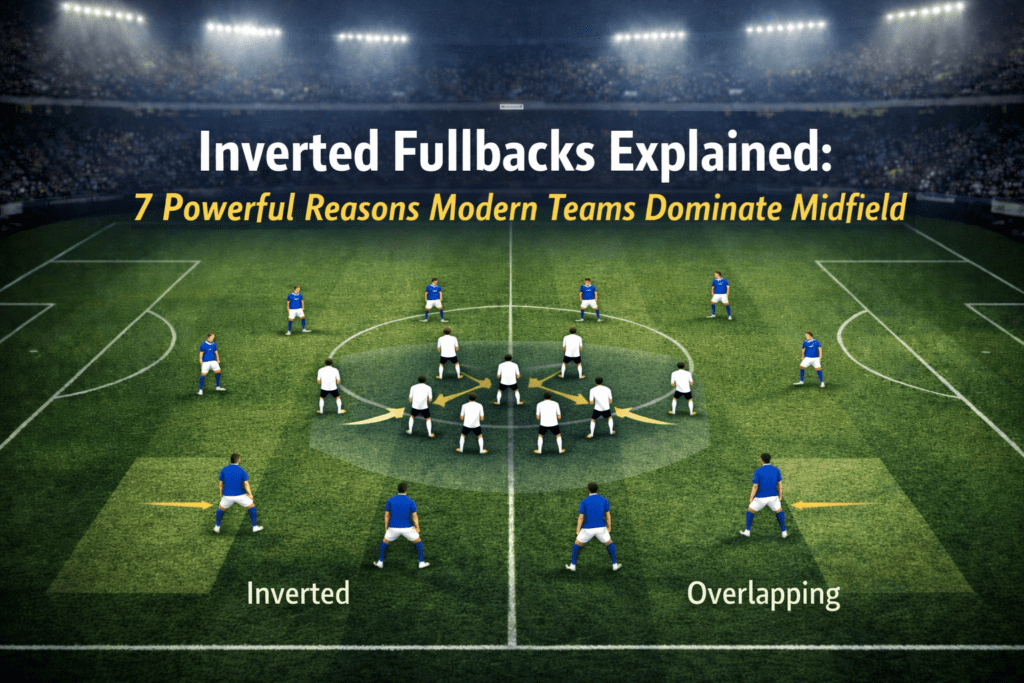
Why it connects: Alexander-Arnold’s 2023-24 role is the cleanest case study of the modern inverted-fullback template, and this piece unpacks the mechanics behind why the position exists at all.
PPDA Explained: The Metric That Measures Pressing
Why it connects: Liverpool 2.0’s pressing intensity dropped versus peak Gegenpressing Liverpool. Understanding PPDA shows exactly how Klopp traded raw press volume for structural control.
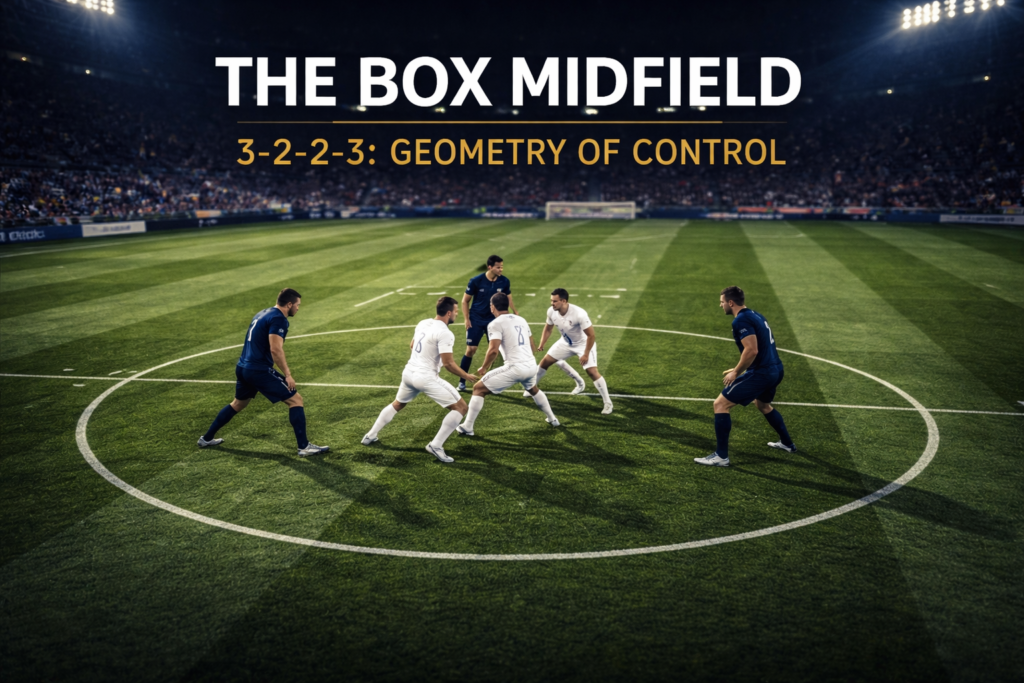
Why it connects: The 3-2 build-up Klopp used in 2023-24 is the foundation of the box midfield structure that has since taken over elite football, from Manchester City to Arsenal to Slot’s Liverpool.
Speak the language of the game
Get the free 47-term tactical glossary. Gegenpress, half-space, xT, low block, each defined in plain language and linked to a full breakdown. It is yours for an email.
Frequently Asked Questions (FAQs)
What was Liverpool 2.0 under Klopp?
Liverpool 2.0 was Klopp’s term for his 2023-24 tactical reboot of Liverpool after the fifth-place 2022-23 finish. It involved a full midfield rebuild – Mac Allister, Szoboszlai, Endo, and Gravenberch replacing Henderson, Fabinho, and others – plus a structural shift to a 3-2 in-possession shape with Alexander-Arnold inverting into central midfield.
Why did Klopp change Liverpool’s tactics in 2023-24?
The 2022-23 season finished fifth with 67 points, Liverpool’s worst full-season points tally under Klopp. The departures of Henderson, Fabinho, Milner, and Firmino forced a midfield rebuild, and the 3-2 build-up with an inverted Alexander-Arnold solved a central-overload problem that Firmino’s dropping had previously handled. The change was both necessity and evolution.
How did the inverted fullback role work at Liverpool?
Alexander-Arnold started defensive phases as a right-back. When Liverpool had possession, he slid inside next to the single pivot, forming a temporary 3-2 base. The back three was Van Dijk plus Konate plus Robertson or Gomez. This gave Alexander-Arnold central space to deliver through-balls – he ranked sixth in Premier League through balls completed in 2023-24, the only defender in that tier.
What happened to Liverpool 2.0 after Klopp left?
Liverpool 2.0’s structural blueprint survived Klopp’s departure. Arne Slot inherited the 3-2 build-up and the rebuilt midfield in summer 2024, kept the inverted-fullback principle but moved it to a double-pivot setup, and produced a league-low PPDA of 9.89 per The Analyst, winning the 2024-25 Premier League. The system worked. The right operator had to finish it.