

Last updated: August 9, 2026
Inverted fullbacks step inside during possession to overload midfield, resist pressing, and provide rest defense. Below: how they work, tactical variations, and the risks involved.
For decades, the role of the fullback in football was simple and predictable. Fullbacks defended wide areas, supported wingers on the overlap, and delivered crosses from advanced wide zones. Their positioning was largely fixed to the touchline, reinforcing width rather than central control.
Modern football has gradually dismantled that idea.
As pressing systems became more aggressive and central midfield spaces more contested, teams began rethinking how they progressed the ball and protected themselves in transition. One of the most influential solutions has been the use of inverted fullbacks – defenders who step inside the pitch during possession rather than advancing down the flank.
Inverted fullbacks are not a stylistic trend. They are a structural response to pressing, space occupation, and rest-defense requirements. Understanding them is essential to understanding how elite teams control matches today.
This guide is part of KharaSportsDaily’s Football Tactics Framework.
Table of Contents
What Are Inverted Fullbacks?

Inverted-fullbacks are wide defenders who move inside the pitch during possession, occupying central or half-space zones rather than overlapping on the outside.
Instead of providing width, they:
- Support central midfield
- Help form numerical superiority in buildup
- Stabilize possession behind the ball
Their inversion usually occurs:
- During first or second phase build-up
- When the team establishes sustained possession
- As a reaction to opposition pressing shape
This movement changes the team’s structure from a traditional back four into shapes such as:
- 3-2 build-up
- 2-3 build-up
- box midfield
The goal is not positional novelty. It is control.
That instinct — treating positions as fluid reference points rather than fixed addresses — traces back through Dutch football’s spatial education. David Winner unpacks the cultural origins in Brilliant Orange, the clearest explanation of why roles like the inverted fullback feel inevitable once you accept space as the central character.
UEFA coaching resources include different positional play concepts
Why Teams Use Inverted Fullbacks
The rise of inverted fullbacks is closely linked to modern pressing and compact defensive blocks.

1. Central Overload
By stepping inside, fullbacks create numerical superiority in midfield, allowing teams to:
- Progress the ball through central lanes
- Resist man-oriented pressing
- Maintain short passing distances
This aligns directly with principles explained in Build-Up Play Explained, where central access is prioritized over early width.
2. Improved Rest Defense
Inverted fullbacks often position themselves behind the ball, which:
- Reduces counter-attack exposure
- Allows immediate counter-pressing
- Protects central spaces after possession loss
This makes them structurally important in teams that emphasize counter-pressing, rather than deep recovery runs.
3. Positional Play Stability
In positional systems, every zone must be occupied responsibly. Inverted fullbacks help maintain:
- Balanced spacing
- Vertical compactness
- Passing triangles in midfield
Rather than stretching the pitch horizontally, they compress it intelligently.
Inverted Fullbacks in Build-Up Play
One of the clearest applications of inverted fullbacks is during the build-up phase.
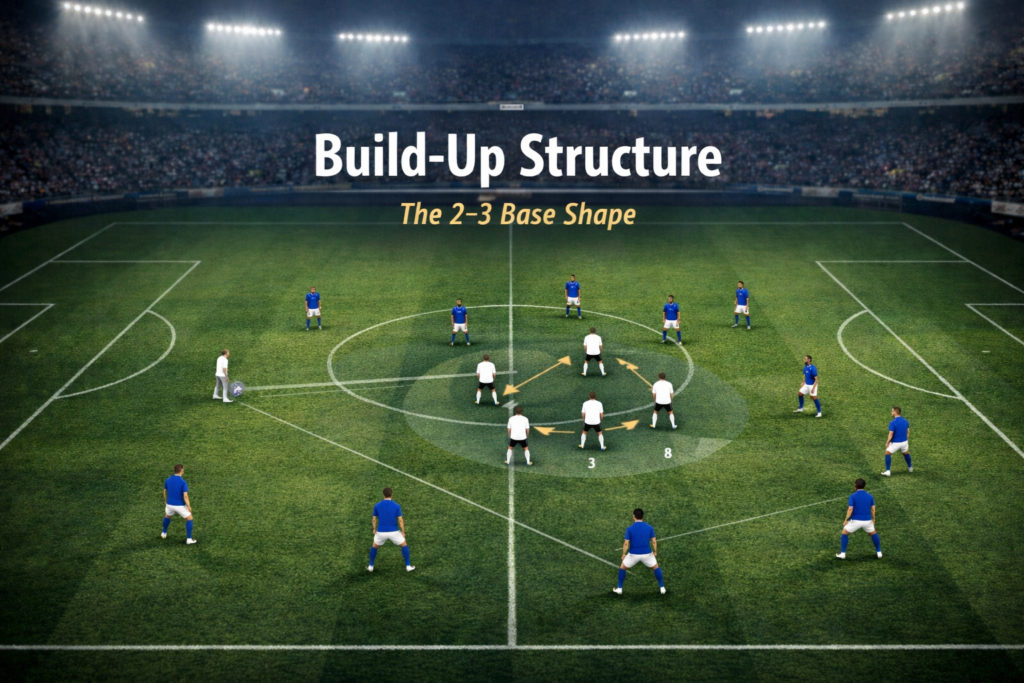
Common Build-Up Structures
| Shape | Description |
|---|---|
| 3-2 | One fullback inverts, one stays deeper |
| 2-3 | Both fullbacks invert into midfield |
| Box | Fullbacks form a square with midfielders |
In these structures:
- Center-backs split wider
- Inverted fullbacks operate next to or behind midfielders
- Goalkeeper becomes an active distributor
This structure:
- Creates multiple passing lanes
- Prevents isolation under press
- Enables clean progression through the thirds
For a deeper understanding of structural buildup, see Build-Up Play Explained in the pillar series.
Role in Press Resistance and Central Control
Press resistance is not about dribbling alone. It is about structure.
Inverted fullbacks contribute by:
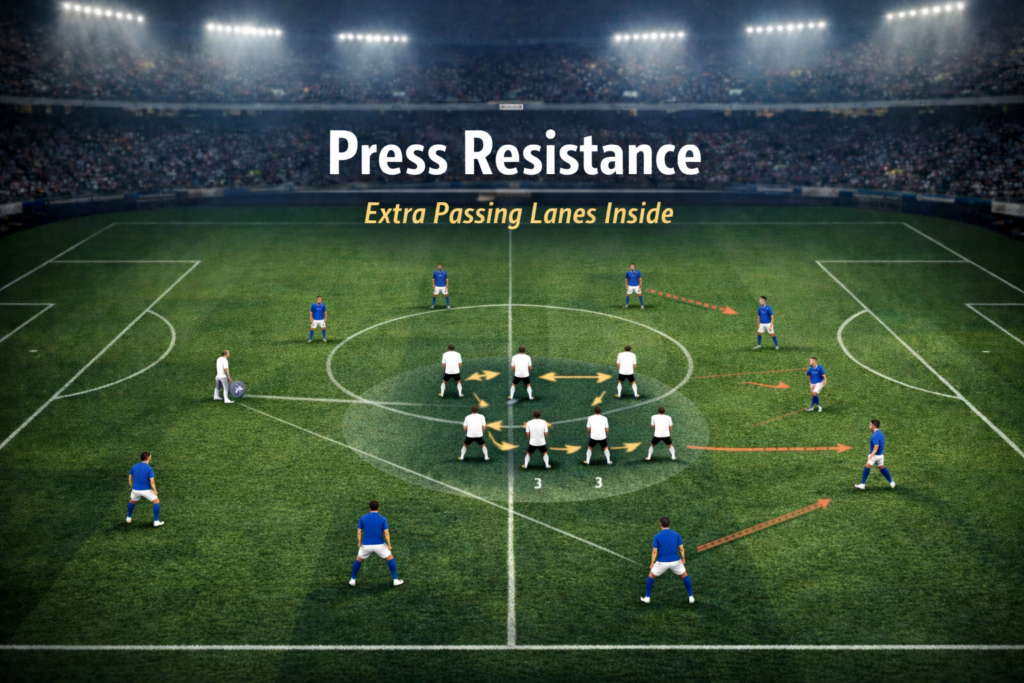
- Offering short central outlets
- Supporting third-man combinations
- Occupying pressing triggers
Because they begin from wide positions, their inward movement often disrupts the opponent’s pressing references. This forces pressing teams to choose between:
- Leaving midfield space unprotected
- Breaking compactness to follow runners
This structural dilemma is one reason inverted fullbacks are particularly effective against:
- High presses
- Man-oriented midfield schemes
- Narrow defensive blocks
Defensive Responsibilities and Rest Defense
Inverted fullbacks are not attacking midfielders. Their defensive role is critical.
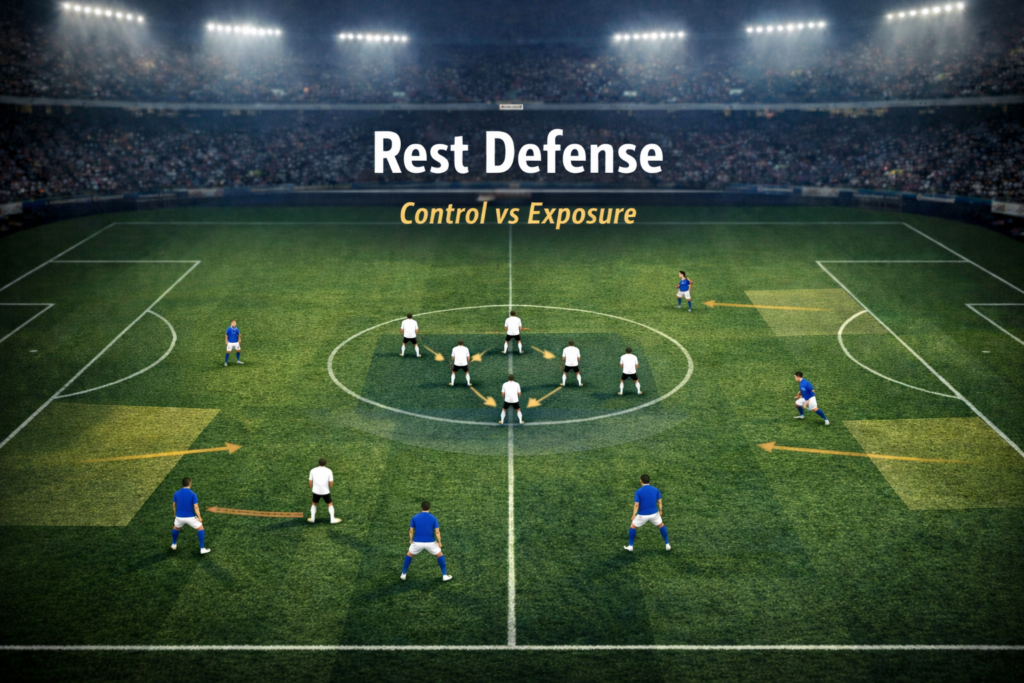
Key Defensive Functions
- Screening central lanes
- Supporting counter-pressing
- Delaying transitions
- Maintaining compactness behind the ball
When possession is lost, inverted fullbacks are already positioned to:
- Compress space immediately
- Prevent vertical counters
- Support midfield recovery
This is especially important in teams that defend higher up the pitch or avoid deep defensive blocks, as discussed in High Press vs Mid-Block.
Tactical Risks of Inverted Fullbacks
Despite their benefits, inverted fullbacks introduce structural risk.
1. Wide Defensive Exposure
If possession is lost poorly:
- Wide areas can be exposed
- Recovery runs become longer
- Opponents can exploit channels
2. Demanding Skill Profile
Inverted fullbacks must:
- Be press-resistant
- Read space intelligently
- Defend centrally and wide
Not every fullback profile fits this role.
3. Transition Vulnerability
If timing is off, teams can become vulnerable to:
- Direct switches
- Diagonal counters
- Fast wide attackers
This risk must be managed through:
- Compact spacing
- Coordinated counter-pressing
- Intelligent positional staggering
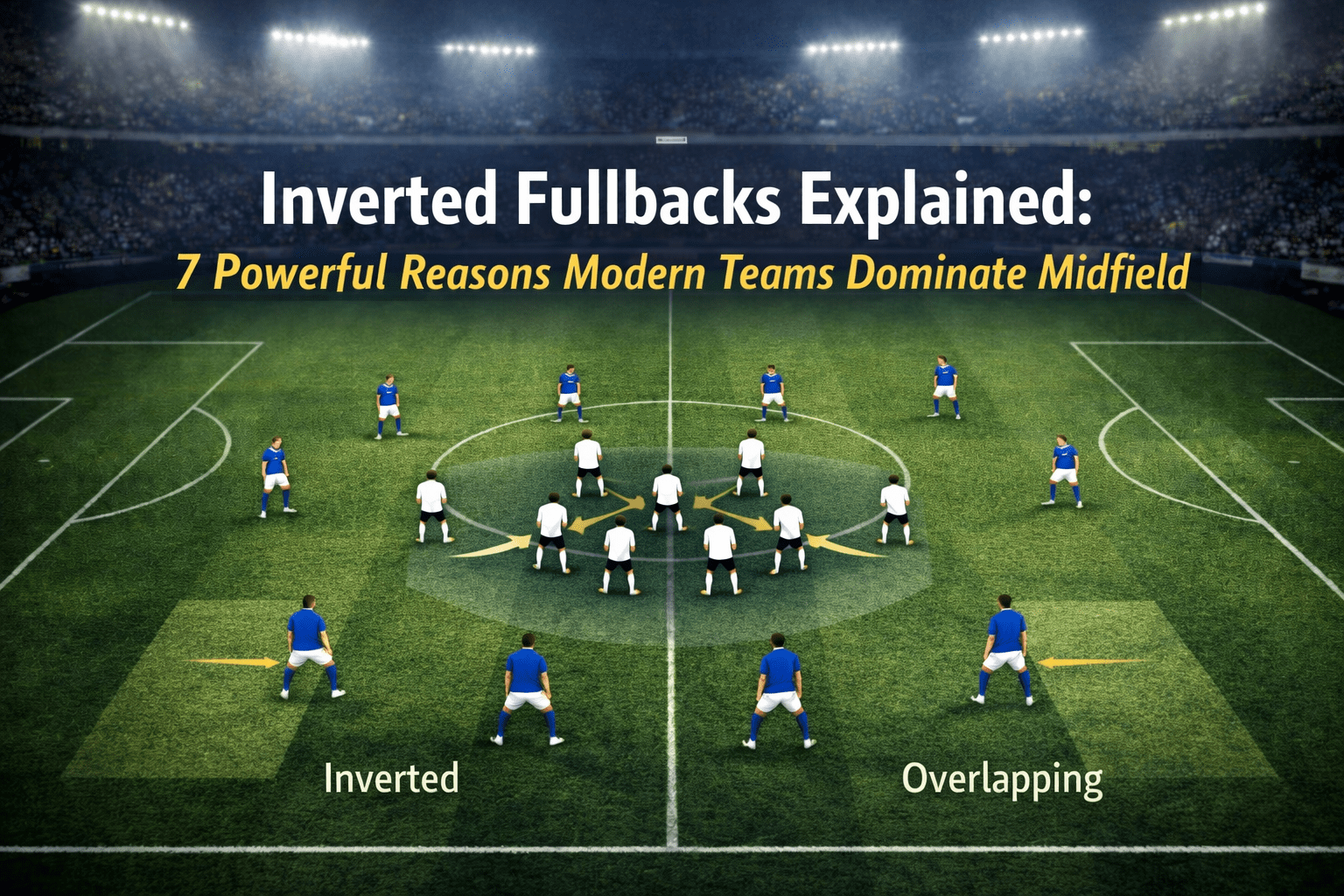
Inverted Fullbacks vs Overlapping Fullbacks
Why is the fullback inverting instead of overlapping?
Because the space worth attacking has moved. Compact defensive blocks now concede the touchline and crowd the middle, so a fullback hugging the chalk adds width the opponent is happy to give away. Inverting instead puts that player where the game is actually decided: he adds a passing option in central build-up, occupies a pressing trigger, and is already goal-side when possession is lost. Overlapping still wins when a team has a touchline winger who isolates defenders 1v1 and needs the underlap-or-cross threat behind him – inversion wins when a team needs central control, press resistance, and protection against counters.
| Aspect | Inverted Fullbacks | Overlapping Fullbacks |
|---|---|---|
| Primary zone | Central / half-space | Wide channels |
| Main purpose | Control & stability | Width & crossing |
| Build-up role | Structural support | Limited |
| Defensive transition | Strong | Risk-prone |
| Best used in | Possession-dominant teams | Direct attacking teams |
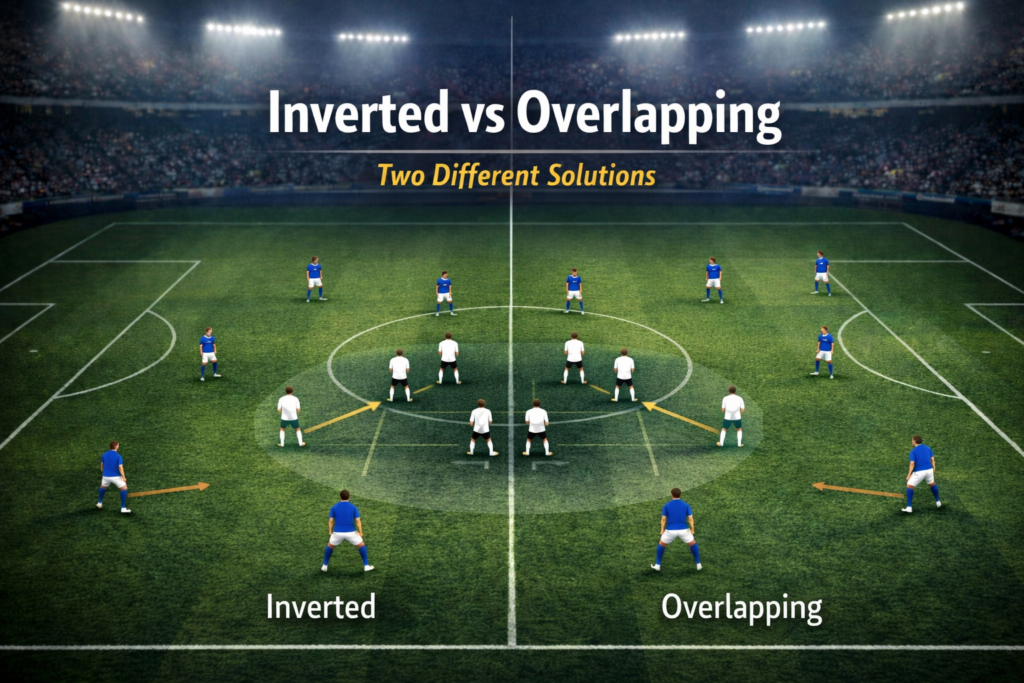
Neither role is inherently superior. The choice depends on:
- Team identity
- Midfield profiles
- Defensive approach
Teams using low blocks or direct attacks may still prefer traditional overlapping fullbacks, as discussed in Low Block Defense Explained.
Famous Examples of Inverted Fullbacks in 2025-26
Several elite fullbacks have defined the inverted role in recent seasons:
- João Cancelo: the definitive reference model for the role, forged during his peak years under Guardiola at Manchester City, where he redefined what a right-back could offer in possession phases; now at Al-Hilal in the Saudi Pro League, but the tactical template he built remains the standard
- Myles Lewis-Skelly and Riccardo Calafiori: the pair who carried Arsenal’s inverted left-back brief through the title-winning 2025-26 season. Oleksandr Zinchenko made the role famous in England under Arteta, but after his 2025 loan move to Nottingham Forest, Arsenal’s academy graduate and Italian international now execute the inversion that creates Arteta’s functional three-man midfield in possession
- Joshua Kimmich: Bayern’s midfield anchor who began the position’s structural evolution at right-back before transitioning into the deep-lying playmaker role he now owns at club and international level
These players demonstrate how the inverted fullback role requires midfield intelligence, not just defensive recovery.
Key Tactical Variations
Inverted fullbacks are not a fixed instruction. Variations include:
- One fullback inverting, one overlapping
- Inversion only during build-up
- Inversion triggered by opponent press
Flexibility is key. The best systems adapt inversion to game state, not ideology.
Final Thoughts
Inverted fullbacks are not a fashionable tweak. They represent a deeper shift in how teams value control over width, structure over chaos, and prevention over recovery.
Their success depends not on individual brilliance but on collective understanding. When integrated correctly, inverted fullbacks help teams dominate the center, resist pressure, and defend proactively.
When misused, they expose space and demand defensive compromises.
Understanding inverted fullbacks is ultimately about understanding modern football’s obsession with space, timing, and structure – not positions on a team sheet.
What do you think?
Which current fullback do you think executes the inverted role most effectively right now – and is there an underrated player who dominates that inside channel that most people overlook?
Want to read any match like this?
The framework behind these breakdowns, in one place. The four phases, a 15-minute method for diagnosing both teams before the drinks break, a printable match-watching worksheet, and 51 terms defined. 40 pages.
Get the pack$9, instant downloadRelated Tactical Breakdowns
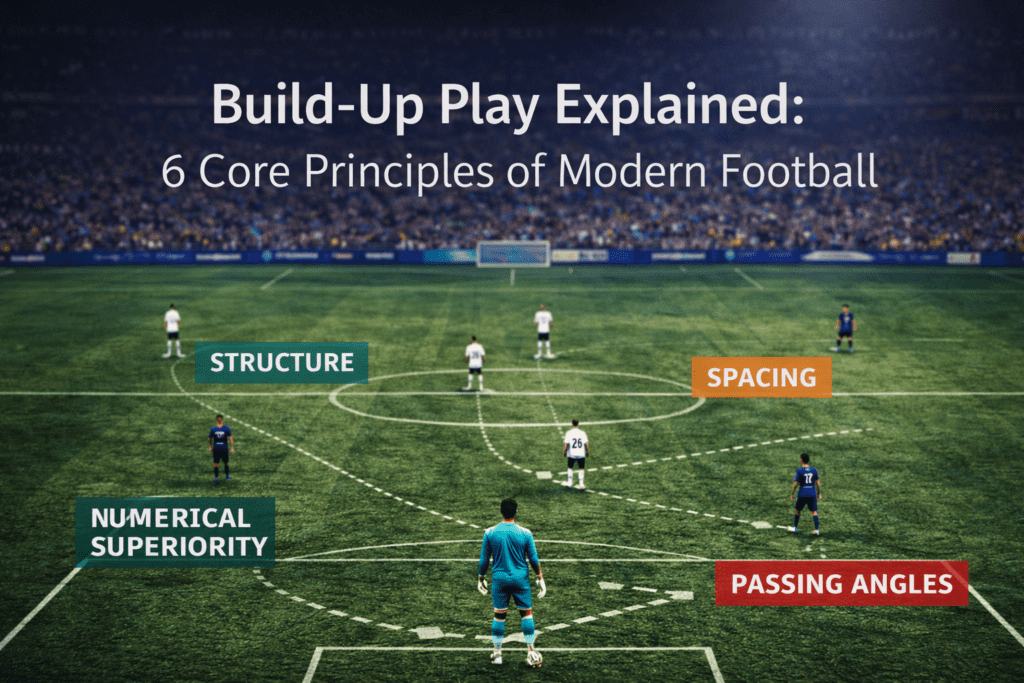
Inverted fullbacks only function when the build-up phase has already beaten the press – this is how elite teams create the space for them to operate inside.
Build-Up Play Explained
Mid-Block Pressing

Don’t just watch football. Understand it.
Join KharaSportsDaily for occasional deep tactical insights most fans miss.
Frequently Asked Questions (FAQs)
What is an inverted fullback in football?
An inverted fullback is a wide defender who moves into central areas during possession to support midfield control and build-up.
Why do teams invert fullbacks instead of overlapping?
To create central overloads, improve press resistance, and strengthen rest defense.
Are inverted fullbacks risky defensively?
They can be if spacing and counter-pressing are poorly coordinated.
Do inverted fullbacks replace midfielders?
No. They support midfield structure rather than replacing it.
Can any fullback play inverted?
No. The role requires strong technical ability, positional awareness, and defensive intelligence.