
The Serious Reading List.
15 books for readers who want to understand how football is actually played – not just who scored.
Affiliate disclosure: As an Amazon Associate I earn from qualifying purchases. This does not change the analysis, the order, or the books included.
Start here
Quick Picks by Reader Type
Best overall tactics book
Inverting the Pyramid
Best books like Inverting the Pyramid
Zonal Marking · The Mixer
Best Pep Guardiola tactics book
Pep Confidential
Best football analytics book
Net Gains
Best book to understand xG
The Numbers Game
Best book on Dutch football
Brilliant Orange
Best for pressing analytics
Football Hackers
Best for learning to read matches
How to Watch Soccer
Jump to a book
Formation, Evolution & the Logic of Change
Why tactics exist. Where systems come from. What shapes are really arguments about space.
These three books share one premise: football did not arrive at its current shape by accident. Every system is a solution to an older problem. Reading tactical history this way – as a series of arguments being won and lost – is the fastest route to understanding the modern game.

Inverting the Pyramid
This is still the default starting point because it treats formations as living arguments, not static diagrams. Wilson’s value is not that he gives you a neat timeline from 2-3-5 to 4-3-3. It is that he shows why shapes change: teams find new ways to protect space, overload zones, press the ball, or free an extra attacker between lines. The book can feel dense, but that density matters. Modern football did not appear from nowhere. The box midfield, the false nine, the inverted fullback, and the pressing forward all sit inside older debates about risk, control, and where superiority should be created. Read it less as a museum tour and more as a tactical operating system. Once you understand why older systems solved older problems, modern tactical trends stop looking like inventions and start looking like upgraded answers.

The Mixer
Cox’s best skill is making tactical change feel concrete. The Mixer works because it does not pretend the Premier League was always tactically sophisticated. It shows the league moving from physical directness into a more layered game: imported managers, technical midfielders, false nines, pressing systems, inverted wingers, and fullbacks who became creators rather than runners on the outside. The book explains why English football changed at role level. Strikers stopped being only penalty-box targets. Midfielders became tempo setters. Wide players became inside forwards. Center-backs had to pass under pressure. It also shows how tactical ideas become league-wide norms once clubs copy what wins. If you want to understand why the modern Premier League became a tactical laboratory rather than just a fast league, this is one of the clearest routes in.

Zonal Marking
Zonal Marking is not only about defensive marking. It is about how football ideas travel through countries, clubs, managers, and competitions. Cox uses European football as a tactical map: Italian control, Dutch spatial education, Spanish possession, German pressing, Portuguese pragmatism, and the way those traditions collide in the Champions League. The value is comparative. You start to see that tactical systems are rarely isolated inventions. They are cultural habits refined under pressure. A back four, a pressing trigger, or a midfield rotation means different things depending on the football environment that produced it. It is a good corrective against treating every system diagram as tactically universal. For readers who already know the basic vocabulary, this book helps explain why the same tactical word can behave differently in different leagues.
Guardiola, Mourinho & the Great Ideological Divide
Two theories of control. One era. Both still defining how elite football is coached.
The central question – do you control the game through the ball or through denying the opponent the game they want – runs through both books. Understanding that divide makes most modern tactical debates make sense.

Pep Confidential
There are many Guardiola books. This is the one that feels closest to the work. Perarnau tracks Guardiola’s first Bayern season with enough access to show how tactical ideas become training-ground problems: distances, occupation, player profiles, timing, and the constant search for free men. Possession is never treated as decoration. It is a defensive tool, a pressing tool, and a method of forcing the opponent to reveal weakness. The Bayern context matters because it pulls Guardiola away from the simplified Barcelona myth. He has elite wingers, different center-backs, a new league, and opponents who attack his ideas with different reference points. The detail is not always neat, which is the point. Elite tactical work is iterative. That messiness is where the real Guardiola study lives.

The Barcelona Legacy
This book works because it treats Barcelona as a tactical argument, not a museum piece. Wilson follows the line from Cruyff to Guardiola, then contrasts it with Mourinho’s counter-argument: control through the ball versus control through denying the opponent the game they want. Guardiola wants the ball to organize the team. Mourinho often wants the opponent’s possession to become the trap. The book is also useful because it shows how ideas mutate once they leave their original environment. The same Barcelona inheritance can produce purists, pragmatists, and opponents. It is strongest when it shows how modern football’s biggest ideological divide is not attack versus defense, but different theories of control.
Spatial Thinking, National Identity & the Dark Arts
Two football cultures with entirely different relationships to space, control, and freedom.
The Dutch treated the pitch as geometry. The Argentines treated it as a confrontation. Neither reduced football to a system. Both produced something that still shapes how the game is thought about today.

Brilliant Orange
Brilliant Orange is less tactical manual than spatial biography. Winner tries to explain why Dutch football became obsessed with geometry, width, rotation, and collective intelligence. The tactical point is that Dutch football treated space as something players could redesign in real time. Positions mattered, but not as fixed addresses. They were reference points for movement, exchange, and occupation. You can draw a line from that logic to modern ideas around inverted fullbacks, roaming center-backs, and midfield boxes. Some football cultures produce systems. The Dutch produced a way of thinking about the pitch. Its best passages help explain why Dutch influence is still present whenever teams rotate to create central access – it makes space the central character of every match.

Angels with Dirty Faces
Wilson’s Argentina book matters tactically because it refuses to flatten Argentine football into Maradona nostalgia or romantic street-football mythology. It shows a football culture repeatedly pulled between expression and sabotage: creators, destroyers, dribblers, enforcers, anti-football, and genius operating inside pressure. Argentina’s history is full of teams trying to solve the same problem: how much control can you impose without killing individuality, and how much freedom can you allow before the structure collapses? The book also gives better context for the darker parts of football strategy. Fouls, intimidation, rhythm-breaking, and emotional control are not side issues. They are part of how matches are managed. Sometimes control is interruption, provocation, and the refusal to let the opponent settle. The book understands that tension.
Metrics, Models & the Analyst’s Toolkit
Data does not replace the eye test. It sharpens it – when you know which questions to ask.
Six books covering the full arc of football analytics: from the foundational argument that the game is more random than we believe, to how elite clubs now use spatial value, recruitment models, and possession metrics to build title-winning squads. Read them in order if you are new to the space. Skip to Net Gains or How to Win the Premier League if you already know what xG is.
Soccermatics
Soccermatics is the analytics book for readers who want the game to feel more measurable without becoming sterile. Sumpter is interested in patterns: movement, networks, passing structures, probability, and the way small decisions produce large tactical effects. The strength of the book is that it frames football as a system rather than a collection of isolated actions. A pass is not only completed or incomplete. It changes field position, defensive stress, future options, and the opponent’s next decision. It gives numbers a football reason to exist. It keeps the game alive, not flattened. It helps readers move from “who played well?” to “what did this action do to the game state?” – which is the right question for modern analysis.
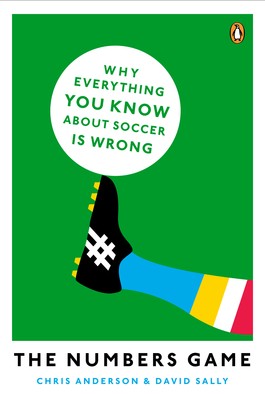
The Numbers Game
The Numbers Game is not the newest analytics book, but it remains one of the most useful because it attacks football’s worst habit: overconfidence. Anderson and Sally push hard in the other direction. Football is low scoring, noisy, and shaped by chance. That does not make tactics irrelevant. It makes tactical evaluation harder. The book is most useful when read as a warning against single-match certainty. A team can create better chances and lose. A manager can make the right structural call and still be punished by finishing variance. It also explains why long-term process matters more than narrative comfort – essential when judging low blocks, pressing plans, and shot profiles over time. Without that humility, every post-match tactical claim becomes a disguised scoreboard reaction.
Football Hackers
Football Hackers is valuable because it follows analytics into the places where decisions are actually made: recruitment rooms, coaching departments, ownership groups, and clubs trying to gain an edge before the rest of the market catches up. Biermann is not just explaining metrics. He is explaining institutional change. Football data only becomes useful when clubs know what question they are asking. Pressing intensity, shot quality, passing networks, and player valuation are not magic numbers – they are tools for reducing uncertainty. The book is especially strong on the uneasy relationship between scouts, analysts, and coaches, and on the politics of adoption: who trusts the model, who resists it, and who knows how to translate it into football language. That translation layer is where many clubs fail.

Net Gains
Net Gains is useful because it arrives after the first wave of football analytics. The argument is no longer “data matters.” That argument is over. The better question is what kind of data matters, who interprets it well, and how it changes decisions on recruitment, tactics, player development, and match analysis. O’Hanlon writes with enough skepticism to avoid treating models like oracles. The best analytics does not remove football’s complexity – it gives analysts a better way to interrogate it. The value for a tactical reader is in how the book pushes beyond basic xG into possession value, player contribution, and the hidden work that traditional stats miss. It is one of the better bridges between public metrics and what clubs are actually measuring now.
Expected Goals
Rory Smith’s Expected Goals is strongest as a story of football’s intellectual shift. It is not just about the metric itself – it is about how the sport moved, slowly and unevenly, from intuition-heavy decision-making toward probabilistic thinking. Many fans now use xG without understanding why it was disruptive. The metric challenged a culture built on certainty: finishers were clinical, managers were brave or cowardly, winners wanted it more. Expected goals made some of those claims harder to defend. It did not solve football, but it gave analysis a more honest starting point. For tactical readers, it is a reminder that every structure eventually has to answer a basic question: what kind of shots does it create and concede?

How to Win the Premier League
Ian Graham’s book belongs here because Liverpool are one of the clearest modern examples of data becoming sporting power. The tactical lesson is not that analytics found a secret formula. It is that recruitment, coaching, and squad design become more coherent when a club knows what its model of football demands. Liverpool under Klopp needed specific traits: repeat sprinting, pressing aggression, transitional threat, fullback production, forwards who could attack space while defending from the front. Data helped identify and stress-test those traits. A pressing system is not just a coach’s idea – it is a recruitment problem, a fitness problem, and a squad-building problem. This book makes that argument with more authority than any other on the list because the author actually built the models.
How Roles Evolve. How to Watch.
Systems change player job descriptions before they change formation names.
These two books watch individuals rather than structures. One isolates the decisions that define modern roles – the sweeper-keeper, the pressing forward, the scanning midfielder. The other trains you to see those decisions live. They are the most practical books on the list.

Masters of Modern Soccer
Grant Wahl’s book is not a systems book in the strict sense. Its value is role detail. Modern tactics often get explained from the manager outward, but football is executed through specialists making fast decisions under pressure. Wahl’s profiles help isolate those decisions: what a goalkeeper sees before sweeping, how defenders read danger, how midfielders scan, how attackers manipulate markers. The Manuel Neuer material is especially useful because sweeper-keeping is one of the clearest examples of a role expanding because the system demanded it. Once a team holds a high line and builds from the back, the goalkeeper becomes depth controller, passing option, and emergency defender. The broader lesson: tactical systems change player job descriptions before they change formation names.
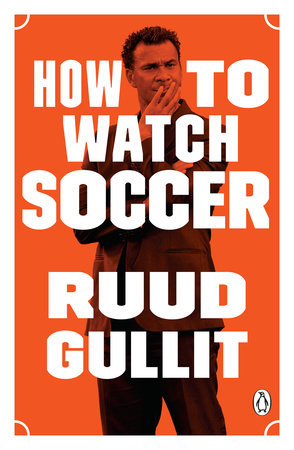
How to Watch Soccer
This is the most accessible book on the list, but it is not shallow. Gullit writes like someone who understands that watching football well is an active skill. The best sections are about where to look when the ball is not the story: defensive distances, movement before the pass, body shape, pressure, and the way elite players create advantages before the obvious action happens. That makes the book useful for serious fans who want to stop following only the ball. If the other books explain systems, Gullit helps train the eye that has to recognize those systems live. The book is strongest when it keeps attention on cues rather than labels. It teaches observation before opinion. That is not basic – it is the foundation of useful match watching.
Common questions
Football Tactics Books: FAQ
What is the best football tactics book to start with?
Start with Inverting the Pyramid if you want the full historical arc. Start with The Mixer if your main reference point is the Premier League. Start with How to Watch Soccer if you want to improve how you read live matches before moving into heavier tactical history.
What books are similar to Inverting the Pyramid?
The closest equivalents are Zonal Marking and The Mixer, both by Michael Cox. Zonal Marking covers European tactical cultures with the same comparative rigor. The Mixer applies the same framework to the Premier League specifically. If you want the same depth applied to a single national football culture, Angels with Dirty Faces is the Jonathan Wilson book that most resembles the Pyramid’s analytical seriousness.
What is the best book on football analytics?
For foundations, The Numbers Game is still the cleanest entry point. For a more modern view of where the analytics industry has moved, Net Gains is stronger. Soccermatics is best if you want the mathematical and spatial logic behind the numbers. Football Hackers sits between all three – it follows the data into real club decisions better than any of the others.
What is the best football analytics book published recently?
Net Gains by Ryan O’Hanlon is the most current on this list and the most relevant to where the industry is now. How to Win the Premier League by Ian Graham is the other essential recent entry – it is the only book written by someone who actually built the models that won trophies.
What book should I read to understand Pep Guardiola’s tactics?
Pep Confidential is the best starting point because it follows Guardiola inside a real season at Bayern Munich. The Barcelona Legacy is better for understanding the wider Cruyff-Guardiola-Mourinho ideological fight around possession, control, and risk. Read Pep Confidential first, then The Barcelona Legacy to see where that system sits in the broader argument.
Which books are good for understanding pressing?
Football Hackers covers pressing intensity as a measurable system and explains how clubs quantify it through metrics like PPDA. Inverting the Pyramid covers the historical origins of high-pressing. Pep Confidential shows how Guardiola designs pressing triggers at training level. All three approach the same problem from different angles – historical, analytical, and coaching-room.
Are these books useful for coaches?
Yes, but not as session-plan books. These are thinking books. They help coaches understand why tactical structures exist, how roles evolve, and how match control is built through spacing, pressing, recruitment, and chance quality.
Why is there no generic “best football books” ranking here?
Because that category is too loose. A tactical reader does not need a mixed pile of biographies, business books, and tournament stories. If a book does not improve how you understand space, roles, pressing, data, or football history, it does not belong here.
Newsletter
Don’t just watch football. Understand it.
Occasional tactical breakdowns that go deeper than any match report. The kind of analysis that changes how you watch the game – written by Jay Khara at KharaSportsDaily.
No spam. Unsubscribe any time.
Learn how to read a football match
The framework behind everything on this site, in one 40-page pack: the four phases, a 15-minute method for diagnosing both teams, a printable match-watching worksheet, and all 51 glossary terms connected.
Get the pack$9, instant download