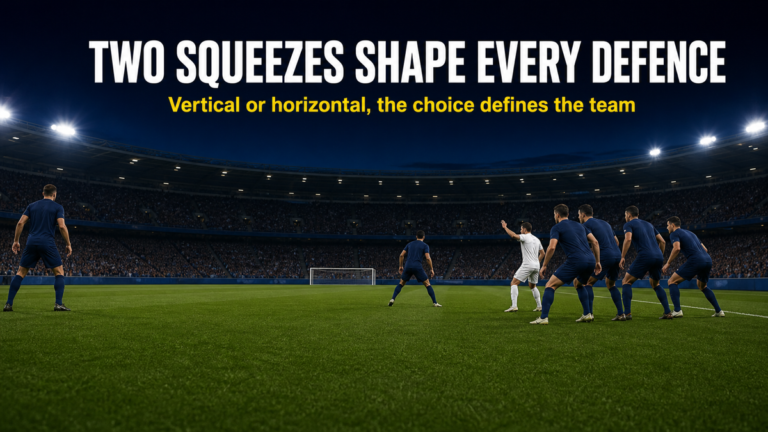


Watch a Diego Simeone defense for ten minutes and you notice what it refuses to do: it almost never dives into a tackle in the middle of the pitch. The players shuffle, they delay, and they quietly herd the ball toward the one place a defense can breathe. The touchline. That is defensive funneling, and it is one of the most underrated ideas in the modern game.
Most fans read a deep block as a team simply sitting back and hoping. The reality is colder and more deliberate. Elite defenses decide in advance where they want the ball to go, then bend every press, every body angle, and every covering run to send it there. This sits inside the broader art of defending without the ball, but funneling is its sharpest expression.
In simple terms: Defensive funneling is steering the opposition’s attack away from the central zones and into the low-value space near the touchline.
This breakdown covers how the block is built, why the touchline does so much of the defending, and where the whole system gets torn open.
Key Takeaways
- The touchline defends for you: A defender who forces play wide turns the sideline into a second marker the attacker cannot beat, shrinking a 360-degree problem into a 180-degree one.
- Wide chances are cheap: A headed chance from a wide cross averages roughly 0.05 to 0.08 xG, while a clean central shot can be worth several times more, per public Opta and StatsBomb shot data.
- Simeone built a dynasty on it: Atlético Madrid’s mid-block is engineered to deny central access first and concede wide territory second, the defensive identity that has outlasted richer rivals.
- Body angle is the mechanism: The trap is created by the curved approach run and a side-on stance, not by tackling, which is why disciplined funneling looks passive but is not.
- It can be broken: Quick switches of play, overlapping fullbacks, and third-man runs are the recognised counters when a block is set too narrow.
Table of Contents
What Is Defensive Funneling?
Defensive funneling is the deliberate act of channelling an attacking move into wide areas, away from the high-value space in front of goal. It is a steering principle, not a tackling one. The defense accepts that the ball will travel somewhere, so it decides where.
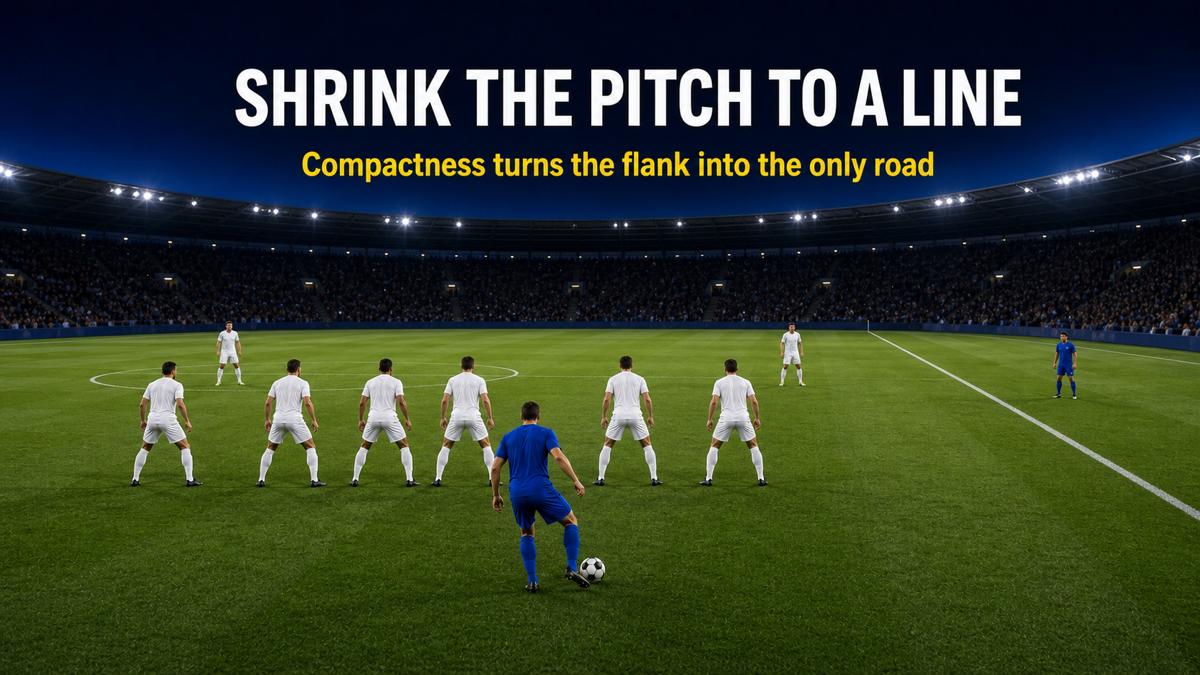
Think of a kitchen funnel turned on its side. The wide mouth is the halfway line, where the opposition has the whole pitch to choose from. The narrow spout is the touchline, where options collapse, so a good block squeezes play from the mouth to the spout until the ball arrives wide with almost nowhere left to go.
This depends on horizontal compactness. The defensive and midfield lines stay narrow enough that the central lane is physically closed, so the only open passing angle runs toward the flank. Every time the ball goes wide, the block slides across as a unit and resets the trap further down the line.
The point is rarely to win the ball immediately. The point is to make the next pass predictable. Once a defense knows the ball is going wide, it knows where to be, and that predictability is what lets ten outfield players defend as one.
Why the Touchline Is Football’s Best Defender
The touchline never gets beaten, never mistimes a tackle, and never needs cover. That is the analytical heart of the idea. Push an attacker toward the sideline and you remove half of his available space before anyone makes a challenge.
The numbers explain why defenses are happy to live out wide. Chance quality collapses the further play drifts from the central lane in front of goal, a pattern visible in every public expected goals model. A headed chance from a wide cross is one of the lowest-value shots in the game.
By contrast, the central zone the block protects is where xG concentrates. A clean shot from the penalty spot can be worth six or seven times a hopeful header from a wide delivery, per public Opta and StatsBomb samples. Funneling trades the expensive real estate for the cheap.
This is also why crossing-heavy attacks frustrate so easily. The Analyst’s work on chance creation notes that crosses produce lower-value chances, so teams reliant on them must win a volume battle they rarely win. The block is built precisely to force that losing trade, over and over.
Body Shape and the Curved Run: How Defenders Steer the Ball
The funnel is created with the body, not the boot. A defender approaching the ball runs a curved, bent path so that his standing position cuts off the inside pass and leaves only the outside lane open. The angle of the approach is the instruction: this way, not that way.
Coaches drill this as the side-on stance. The defender turns one shoulder toward the attacker, weight balanced, ready to shuffle rather than lunge, showing the man toward the line he is being invited to take. Lunge, and the funnel breaks, because a beaten defender opens the central lane the whole block was protecting.
These pressing angles have to be coordinated across the unit. If one midfielder presses square instead of curving his run, he leaves an inside passing angle that lets the ball escape into the middle, and the shape leaks. The same logic drives defending the half-space, where body orientation decides whether the dangerous inside channel stays shut.
Done well, it looks almost lazy. Defenders appear to let wingers receive the ball in space, then calmly usher them toward the byline where the only end product is a blocked cross or a throw-in.
Inside Simeone’s Atlético: Funneling as a System
Diego Simeone has won La Liga titles and reached Champions League finals on the back of a defensive block engineered to funnel. Atlético Madrid sit in a compact 4-4-2 that protects the central areas first and dares opponents to play around the outside. The shape is patient by design.
Atlético rarely press high inside their own structure. They hold a disciplined mid-block, stay vertically and horizontally compact, and force the opposition into wide areas before springing a tackle or a counter. Coaches’ Voice describes how Simeone’s side protects central areas while tempting the switch of play that a narrow block invites.
What makes this a compact defensive block rather than mere deep defending is the funneling intent. Every wide trap is a setup for the next phase: win the ball near the touchline, where the opponent is least protected, then release Antoine Griezmann and the front runners into the space behind.
The table below shows why the trade works. It maps rough chance values to the zones the block concedes against the zone it guards.
| Chance Type | Benchmark xG per Attempt | What the Funnel Does |
|---|---|---|
| Central shot inside the box | 0.20 to 0.35 | Denies it as the first priority |
| Cut-back from the byline | 0.10 to 0.15 | Tolerates it if the box is set |
| Headed cross from a wide area | 0.05 to 0.08 | Happily concedes this shot |
| Speculative shot from distance | 0.03 to 0.05 | Invites it all match long |
Data reflects average xG benchmarks across large public shot samples (Opta, StatsBomb). Individual team and season variance applies.

Read in isolation, the numbers look like a team begging to be beaten. In context, they are a defense quietly winning the only argument that matters: the running total of chance quality across ninety minutes.
The Weakness: When the Funnel Becomes a Surrender
A funnel set too deep or too narrow stops being a trap and becomes a siege the defense eventually loses. The weakness of funneling is that it cedes the initiative. Concede enough wide territory and a patient, technical side will simply manufacture the central entry you were trying to deny.
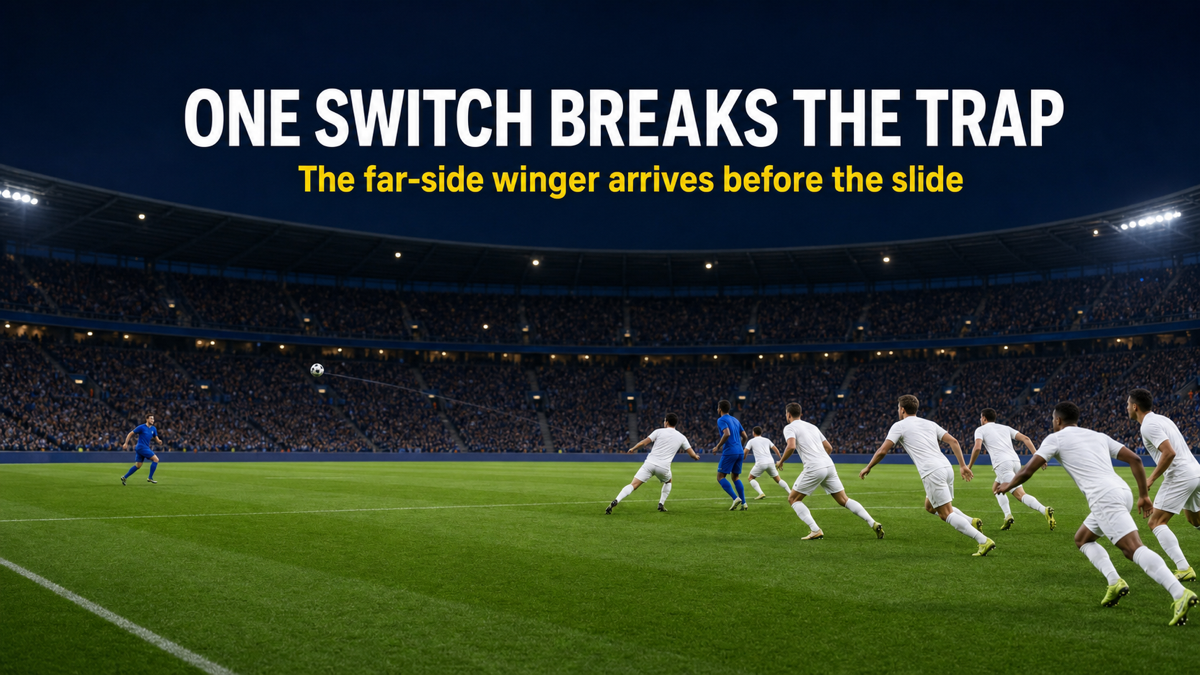
The cleanest counter is the rapid switch of play. Pep Guardiola’s Manchester City and other possession sides funnel the ball to one flank only to whip it across to an isolated winger on the far side, attacking the trap faster than the block can slide. The unit cannot reset its pressing angles in time, and the spare man arrives in space.
Overlapping and underlapping fullbacks attack the same seam. When a winger is funnelled wide and a fullback overlaps outside him, the defense faces a two-versus-one at the exact spot the block assumes is safe, and the low-value cross becomes a dangerous cutback.
Third-man combinations break it from the inside. A wall pass that skips the pressing defender turns the curved approach run into a liability, because the angle that shut the inside lane is now behind the ball.
This is why funneling demands relentless discipline. The moment one player stops curving his run, or the block stops sliding as a unit, the funnel inverts and feeds the attack instead of starving it.
Where This Leaves Us
Funneling is the most honest idea in defending, because it admits what every coach knows but few say aloud: you cannot protect the whole pitch, so choose what to give away. Giving away the touchline is the smartest concession in the game.
The teams that master it, Diego Simeone’s Atlético chief among them, understand that defending is an act of geometry before it is an act of effort. They do not defend harder than everyone else. They defend in a smarter shape, sending the ball to the one place where effort is barely required.
My view is that funneling is undervalued precisely because it looks passive. In an era obsessed with the high press and winning the ball back inside five seconds, the quiet discipline of steering an attack into nothing is a lost art worth relearning. The question is whether a modern side can win the biggest trophies funneling alone, or whether the press has made pure containment a relic.
What Do You Think?
Simeone has built a 14-year identity on funneling teams wide and living with low-value crosses. But in a Champions League where one switched-side counter can end your season, is funneling a sustainable route to a major trophy, or a brilliant way to lose a final 1-0? Make your case below.
Want to read any match like this?
The framework behind these breakdowns, in one place. The four phases, a 15-minute method for diagnosing both teams before the drinks break, a printable match-watching worksheet, and 51 terms defined. 40 pages.
Get the pack$9, instant downloadRelated Tactical Breakdowns
Low Block Defense in Football: What It Means & How It Works
Why it connects: When the funnel retreats into its own box it becomes a low block, where conceding wide territory stops being a choice and turns into the whole survival plan.
Zonal Marking vs Man-to-Man Defending: Which System Actually Wins?
Why it connects: Funneling decides where the cross comes from, while the marking system decides who actually wins the ball once it arrives in the box.
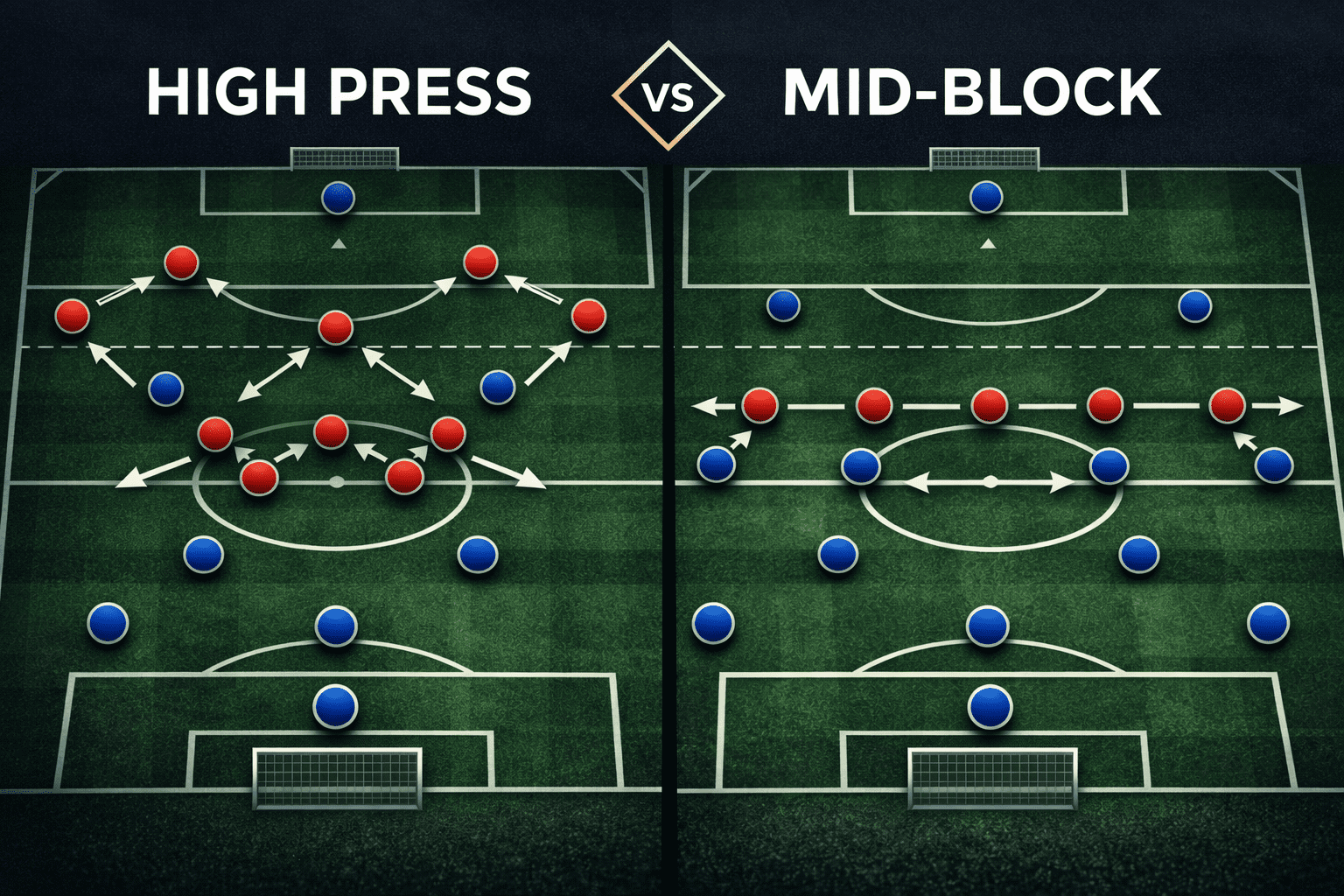
High Press vs Mid-Block: 7 Tactical Differences That Define Modern Football
Why it connects: This trap can be sprung from a high press or a settled mid-block, and the trigger height is what separates hunting the ball from trapping it.
Speak the language of the game
Get the free 47-term tactical glossary. Gegenpress, half-space, xT, low block, each defined in plain language and linked to a full breakdown. It is yours for an email.
Frequently Asked Questions
What is defensive funneling in football?
Defensive funneling is steering an attack into wide areas to protect the central zones near goal. The defense uses body angles and a compact shape to close the inside lane, leaving only the flank open. It trades low-value wide chances for safety in the middle.
Why do defenders force play wide instead of central?
Defenders force play wide because chance quality drops sharply away from goal. A headed cross from a wide area is one of the lowest-value shots in football, while a central shot can be worth several times more. Funneling deliberately concedes the cheap chance to deny the expensive one.
How do teams create a defensive funnel?
Teams create a defensive funnel through horizontal compactness and curved pressing angles. The midfield and defensive lines stay narrow to shut the central lane, and each defender approaches on a bent run that shows the attacker toward the touchline. The block then slides across as one unit.
Is defensive funneling the same as a low block?
No, defensive funneling is a steering principle, while a low block is a position on the pitch. A low block sits deep, but a funnel can operate from a mid-block or even a high press. Funneling is about direction, and the low block is about depth.
Which teams are best at forcing play wide?
Diego Simeone’s Atlético Madrid is the modern benchmark for forcing play wide. Their compact 4-4-2 protects central areas first and funnels opponents toward the flanks before countering. Disciplined Italian sides and most mid-block teams use the same principle to frustrate technically superior opponents.