

Arsenal went the first seven Premier League games of their title defence without a single non-penalty set-piece goal. Last season they scored 25, including a league-record 19 from corners, according to The Analyst. In late October Arsenal were still second, three points behind Manchester City, because Mikel Arteta’s side has found another way to win.
That shift is the real story of Arsenal tactics this season. The football tactics behind last season’s title, a dominant corner routine and a back line that conceded 27 goals in 38 games per The Analyst’s title-defence preview, have been reworked around a new midfield base, a rebuilt left flank and a habit of coming from behind.
In simple terms: Arsenal tactics this season mean a 4-2-3-1 with a two-man midfield base, a rebuilt left flank and open-play comebacks instead of corner goals.
The sample is small: the detailed figures below cover the first six league games, up to 12 October 2026, so every trend is an early signal rather than a verdict.
Key Takeaways
- The Arsenal formation has a new default: Every league XI in the first six games paired Declan Rice with one partner behind Martin Ødegaard, and Martín Zubimendi did not start any of them.
- Arsenal set pieces have gone quiet: There was no non-penalty set-piece goal in the first seven league games, per Sky Sports, after 25 last season, per The Analyst.
- The Arsenal title defence runs on comebacks: Arsenal won six points from losing positions in their first six league games, coming from behind to beat Chelsea and Leeds.
- The left flank was rebuilt: Gabriel Martinelli and Leandro Trossard left, and Christos Tzolis started five of six league games there before a hamstring injury.
- Brighton exposed the Arsenal midfield: The 3-0 defeat came from lost duels and second balls, by Arteta’s own diagnosis.
What Are Arsenal Tactics This Season?
Arsenal tactics this season are built on a 4-2-3-1 in which Declan Rice and one partner screen the back four, Martin Ødegaard roams behind Kai Havertz, and Bukayo Saka holds the right wing. The Arsenal formation is not new, but its status is. In 2025-26 Arteta lined up in a 4-2-3-1 in 14 of 38 league games, just under 37%, according to Arsenal.com’s season analysis, and used a 4-3-3 in the other 24.

The logic is control through a stable base. Two holding midfielders let the full-backs step forward and free the playmaker to drift, the balance explored in our breakdown of how a roaming playmaker and an anchor split one midfield. Last season that base sat underneath a title built on drilled standards, the story told in our piece on Arteta’s non-negotiables.
What changed in 2026/27 is who fills the base, who plays on the left and how the goals arrive. The structure Arteta used in roughly a third of league games last season is now his default in every one. Each change has a clear cause, and each one moves the risk somewhere new.
The Arsenal Formation: Why the Double Pivot Became the Default
The Arsenal formation has had a fixed spine in 2026/27: an Arsenal midfield base of Rice plus one partner in all six league starting XIs, according to the confirmed team sheets. Myles Lewis-Skelly partnered Rice against Coventry City, Aston Villa, Chelsea, Sunderland and Leeds United, and Bruno Guimarães started beside him at Brighton. Ødegaard has started every league game as the playmaker in front of them.
The back four has been rebuilt around an absence. William Saliba has been out with a back injury since the summer World Cup and was only back in individual training by mid-October, per Sports Mole, so Gabriel Magalhães has partnered Cristhian Mosquera or Ezri Konsa, signed from Aston Villa for a reported initial £51m. Riccardo Calafiori has started every league game at left-back, where Coaches’ Voice described him inverting into midfield last season.
The Arsenal formation is still efficient at the back, if slightly less airtight. Arsenal have conceded five goals in six league games, 0.83 per game, against 27 in 38 last season, 0.71 per game, per the Premier League table and The Analyst. Calafiori has chipped in with goals too, including the equaliser against Leeds.
The Arsenal Midfield After Zubimendi
The Arsenal midfield has traded a pure passer for more mobile partners. Coaches’ Voice described Zubimendi as the deeper passing link of last season’s double pivot, while Rice pushed forward between the lines. Up to mid-October, Zubimendi’s only start had come in the Carabao Cup at Ipswich Town, per Sports Illustrated, and an ankle injury picked up after the Leeds game has slowed him further.
Lewis-Skelly, who broke through at left-back, has been the first choice in the Arsenal midfield beside Rice. Guimarães, signed from Newcastle United for £75m according to Sky Sports, has been the impact option: both of his league goals have been winners scored off the bench, against Sunderland and Leeds, per ESPN. His first league start next to Rice came in the 3-0 defeat at Brighton, and Arteta defended the pairing afterwards as a partnership at an early stage.
The trade-off is visible in the results. With no specialist anchor, more of the screening work falls on Rice, and the Arsenal midfield looks most exposed when opponents swarm the second ball. Against teams that sit off, the extra mobility helps Arsenal arrive in the box in numbers.
A Rebuilt Left Flank: Life After Martinelli and Trossard
The left wing is the most rebuilt position in the Arsenal formation. Gabriel Martinelli joined Al-Hilal on 3 September in a £60m deal, a club-record sale according to ESPN, and Leandro Trossard left for Beşiktaş. Christos Tzolis arrived from Club Brugge for a reported £34m, per Sky Sports, as the direct replacement.
The purpose was balance. Last season 42.5% of Arsenal’s open-play chances came down the right, the highest share in the league, per The Analyst, which made Saka the main outlet. Tzolis set up Havertz’s goal in the Community Shield, per The FA, and started five of the first six league games on the left.
A hamstring injury on international duty has now interrupted that plan, per Sports Mole. Noni Madueke started on the left against Leeds, and Eberechi Eze, who scored against Lille, is the other option. The left flank is still a work in progress.
Havertz Over Gyökeres: The Striker Decision
Kai Havertz started all of the first six league games, and that choice defines how Arsenal attack. Havertz gives Arteta a centre-forward who links play with Ødegaard and Saka, and he scored in the wins over Coventry and Chelsea. Viktor Gyökeres, who scored 14 Premier League goals last season, has had to wait behind him.
The numbers behind that decision are stark. Against Lille, Gyökeres played 65 minutes, had around a dozen touches and took no shots, per Flashscore. Arteta has defended him publicly, but the selection says Arsenal value Havertz’s link play over a pure penalty-box finisher.
Arsenal Set Pieces: The Record Weapon Has Gone Quiet
Arsenal set pieces were last season’s most reliable weapon, and they have not yet produced a non-penalty goal this season. Seven games in, they were one of only four Premier League sides, along with Liverpool, Manchester United and Nottingham Forest, still waiting for one, per Sky Sports. Last season their set-piece expected goals difference was +14.1, the best in the league, per The Analyst.
The likeliest suspect for the drop in Arsenal set pieces is the stricter refereeing line on holding at corners, a risk The Analyst’s preview flagged before the league season began. Last season’s routines relied on inswinging deliveries attacking the central six-yard box, per The Analyst, while this season more deliveries have gone to the near post, the zone a near-post corner routine is built to attack. Six games is too small a sample to convict any single cause, and Arsenal also conceded from a Brighton corner.
The table below sets the first six league games of 2026/27 against the full 2025-26 title season. It shows a team still winning, but through different routes.
| Metric | 2025-26 (38 league games) | 2026-27 (first 6 league games) | Tactical implication |
|---|---|---|---|
| Goals scored per game | 1.87 (71 goals) | 1.67 (10 goals) | Attack slightly down without dead-ball goals |
| Goals conceded per game | 0.71 (27 goals) | 0.83 (5 goals) | Defence still elite but less airtight without Saliba |
| Non-penalty set-piece goals | 25 (19 from corners) | 0 | The old first-goal weapon has not fired |
| League position | 1st (champions) | 2nd, three points behind Manchester City | Results holding up despite the changes |
Premier League matches only: the full 2025-26 season and the first six games of 2026-27, up to 12 October 2026, per The Analyst and the Premier League table. Six games is a small sample.
Conceding First, Winning Anyway: The New Game State
The Arsenal title defence now runs on comebacks rather than control. Arsenal went 1-0 down for the third time in four league games against Leeds, after Chelsea and Brighton had also scored first. Coming from behind against Chelsea and Leeds has earned them six points from losing positions.
Last season’s model worked the other way round. Arsenal averaged 2.74 points per game after scoring first, winning 24 of those 27 games, per Arsenal.com’s season analysis, and Arsenal set pieces often supplied that first goal. This season Morgan Rogers scored for Chelsea after two minutes and James Justin put Leeds ahead at the Emirates, and Arsenal had to chase both games before winning 2-1.
That reversal is the biggest swing in Arsenal tactics this season, and it fits the game state models that explain how teams change shape when they trail. Europe has been calmer: Arsenal won 1-0 at Napoli with 26 shots, a club record for a Champions League away game according to the Associated Press, beat Lille 3-0 and then drew 2-2 at Bayern Munich. The Analyst still rated Arsenal as favourites to retain the title in late October.
The Weakness: Lose the Second Ball, Lose the Game
The weakness in Arsenal tactics this season is the space around the two-man base when opponents win the first contact. Fabian Hürzeler’s Brighton beat Arsenal 3-0 on 19 September by pressing high and winning the duels and second balls, according to Sky Sports, and Arsenal took 44 minutes to create a meaningful chance.

Arteta’s diagnosis was blunt. “Brighton had another bite, their timing was better and when the ball was 50-50, most of the time it was for them,” he told ESPN, adding that Arsenal “had no principles of play in situations”. Brighton scored twice from distance and once from a corner header by Chema Andrés.
The blueprint for opponents is now public: squeeze the Arsenal midfield, compete for every loose ball and try to score first. Xabi Alonso’s Chelsea led inside two minutes at the Emirates, and Leeds led for seven minutes in the second half. Arsenal recovered both times, but a team that keeps conceding first is relying on its bench and its nerve rather than its structure.
Arteta has three levers. Zubimendi’s return adds a positional anchor, Saliba’s return later this autumn restores the best defender in the squad, and a 4-3-3 version of the Arsenal formation would add a third midfielder to the second-ball battle. Sides that press the base the way pressing triggers teach will keep testing that choice.
Final Thoughts
Arsenal tactics this season are a bet on resilience over control. Last season Arsenal won by scoring first, often from a corner, and then locking the game down; this season they win by absorbing the first blow and outlasting opponents with substitutes. That second model is harder to sustain over 38 games.
The verdict is that the 4-2-3-1 Arsenal formation is right for this squad, but not in every match. Against pressing sides that hunt second balls, Arteta should add a third midfielder to the Arsenal midfield and accept less control in exchange for more bodies around the ball.
If Arsenal set pieces start scoring again, the Arsenal title defence looks strong. If they do not, can a comeback team really outlast Manchester City over a full season?
What Do You Think?
Arsenal have taken six points from losing positions but went the first seven league games without a non-penalty set-piece goal. Is a comeback side more likely to retain the title than last season’s score-first machine, or is this the first crack in the Arsenal title defence? Make your case below.
Related Tactical Breakdowns
Inverted Fullbacks Explained: How Modern Teams Control the Center
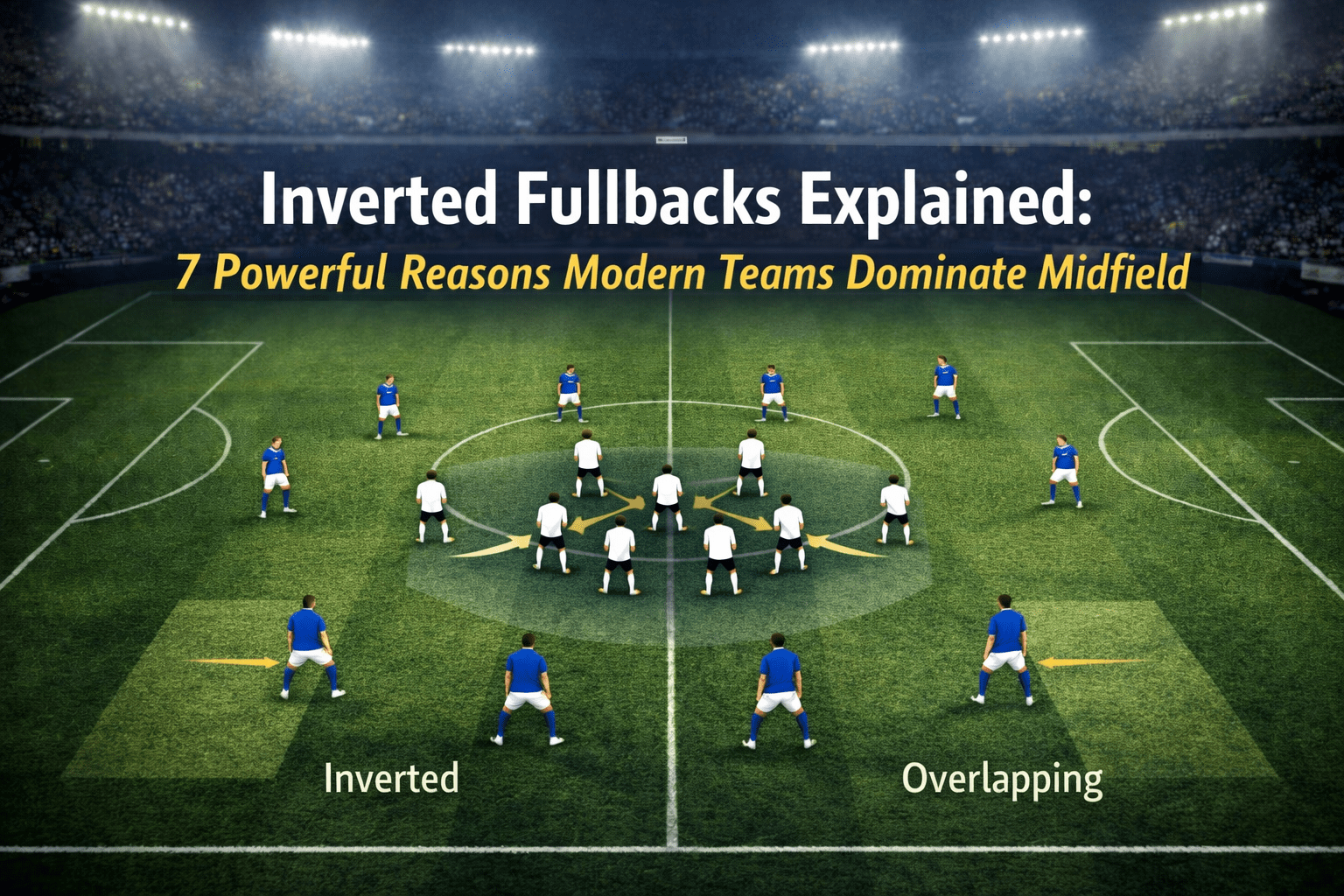
Why it connects: Calafiori stepping inside from left-back is the full-back mechanism that stops the Arsenal midfield base being outnumbered.
Rest Defense Explained: The 2-3 and 3-2 Structures That Kill Counter-Attacks
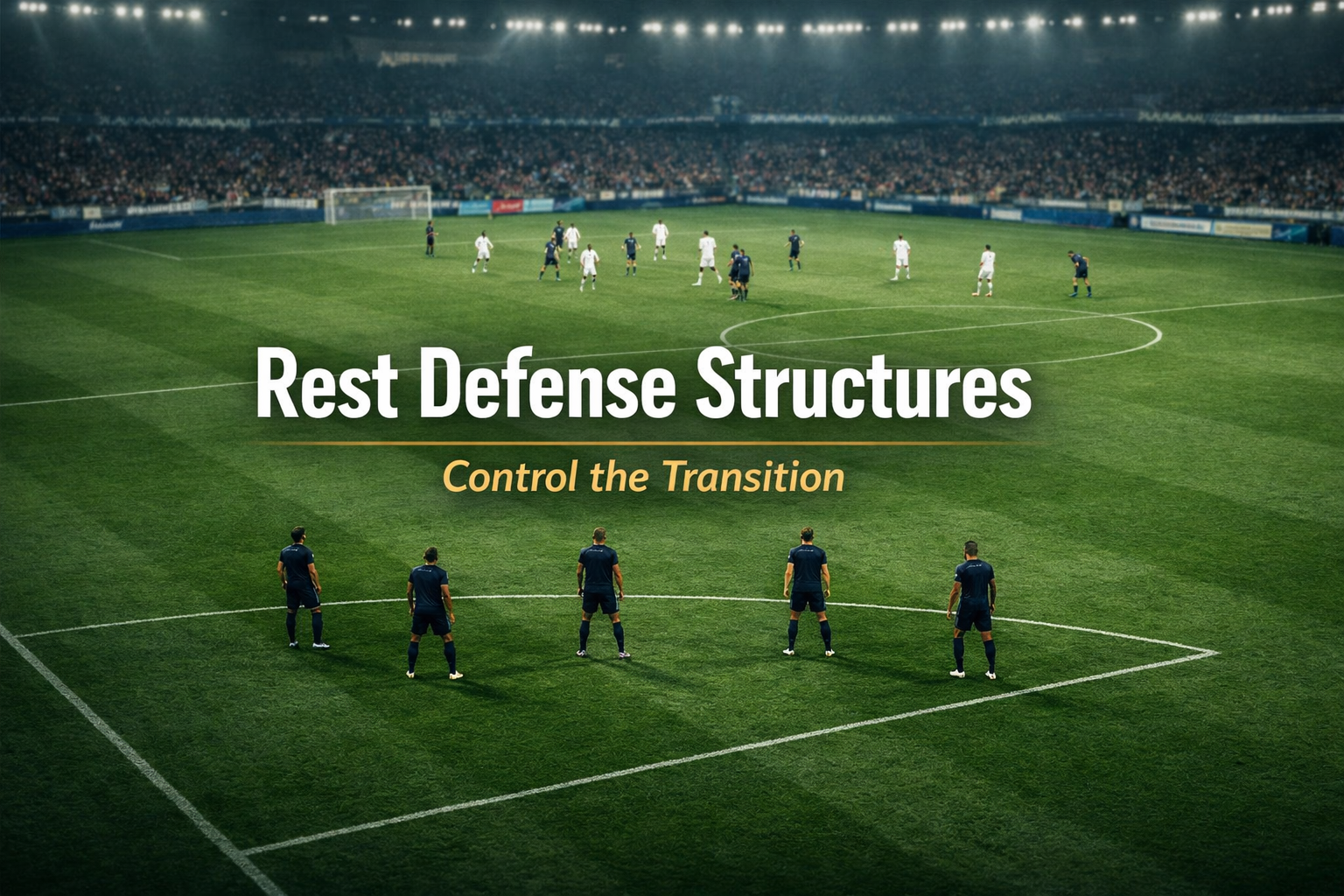
Why it connects: Chasing games from behind forces Arsenal to commit bodies forward, which makes the rest-defence structure behind the ball decisive.
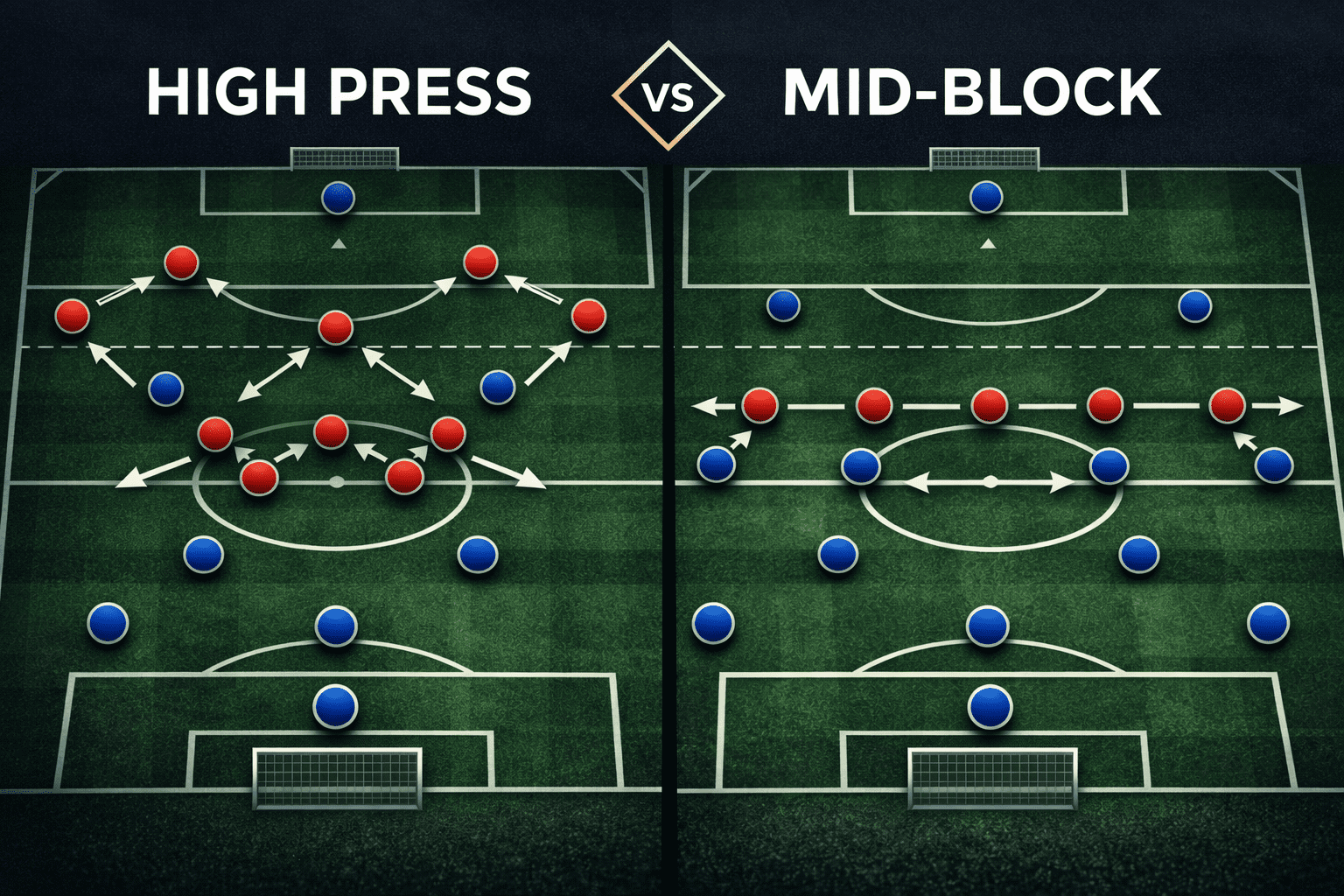
High Press vs Mid-Block: 7 Tactical Differences That Define Modern Football
Why it connects: Brighton's win showed how an aggressive press that wins second balls can unsettle even the champions' build-up.
Learn to read a match like an analyst
Get the free 33-page Starter Pack, How to Read a Football Match (the Four Phases, a 15-minute match read, a printable worksheet), plus the 70+ term tactical glossary. Both are yours for an email.
Frequently Asked Questions
What formation does Arsenal play this season?
Arsenal tactics this season are built on a 4-2-3-1, with Declan Rice and one partner in front of the back four. Martin Ødegaard plays behind Kai Havertz, with Bukayo Saka on the right. Last season Arteta alternated the Arsenal formation with a 4-3-3, but every league starting XI in 2026/27 has used a two-man midfield base.
Why have Arsenal stopped scoring from set pieces?
Arsenal set pieces did not produce a non-penalty goal in the first seven league games, per Sky Sports, and there is no confirmed single cause. The Premier League’s tougher line on holding at corners is one suspect, because last season’s routines relied on blockers around the six-yard box. Six games is a small sample, so the drought could end quickly.
Who has replaced Gabriel Martinelli on Arsenal’s left wing?
Christos Tzolis replaced Gabriel Martinelli as the first-choice left winger in the Arsenal formation. He joined from Club Brugge for a reported £34m and started five of the first six league games there. A hamstring injury has since ruled him out, so Noni Madueke started on the left against Leeds United, with Eberechi Eze another option.
Can Arsenal win back-to-back Premier League titles?
Yes, Arsenal are narrow favourites to retain the title, according to the Opta supercomputer. The Analyst still rated them favourites in late October, despite trailing Manchester City by three points. Arsenal have not retained the top-flight title since 1935, per The Analyst, so the Arsenal title defence is chasing something the club has not done in 92 years.